What are the methods for trapping rice field eels in autumn and winter
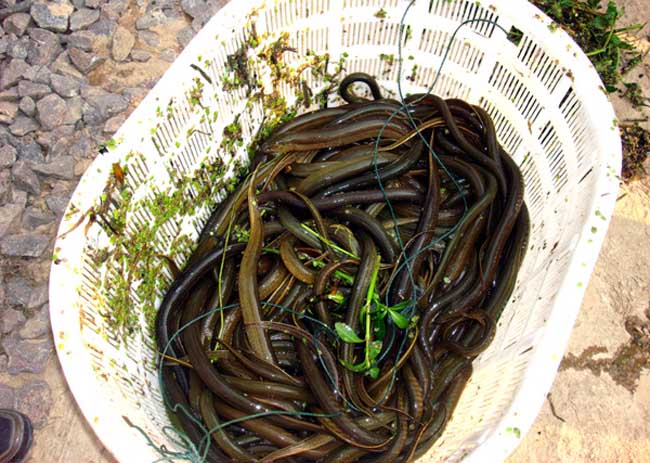
The market price of rice field eels in autumn and winter is several times that of summer, so now is the best time to market rice field eels. Catching rice field eels in winter is very difficult. The vast majority of farmers capture eels by digging mud from the entire pond to take the eels. This eel-catching method is labor-intensive, the eels are easily injured, the eel-catching process takes a long time, and at the same time it destroys the ecological structure of the eel pond carrier, which is harmful to production in the second year. Below, the editor of Qiannong Network introduces two relatively quick and safe rice field eel trapping methods for everyone's reference.
Grass mat trapping method for rice field eels in autumn and winter
1. Before draining the pond water, make preparations for trapping eels. Soak a relatively thick new grass mat or grass bag in a 5% quicklime aqueous solution for 24 hours to disinfect it, then air-dry it for 2 days for later use.
2. Lay the above-mentioned grass mat on the bottom layer of the mud ditch in the eel pond, spread disinfected rice straw (or wheat straw) about 5 cm thick on the grass mat, lay a second layer of grass mat on the rice straw, and then spread a layer of dry rice straw about 10 cm thick on the grass mat.
3. When the water temperature drops below 13°C, gradually drain the water to a depth of 6-10 cm; when the water temperature drops to 8°C-10°C, add another layer of rice straw about 20 cm thick above the mud ditch.
4. When the water temperature drops significantly again, completely drain the pond water. At this time, due to the "inversion layer effect" of the rice straw layer, the temperature within it is slightly higher than the temperature of the mud layer. In addition, the mud ridge has been exposed to cold air for a long time, which can effectively lead the rice field eels under the grass mat and between the two layers of grass mats.
5. Precautions
① This method can ensure for a long time that the rice field eels live in groups between the mud and grass and between the grass mats without escaping. If they need to be kept until the severe winter season, further cover with insulation materials should be added according to the freezing conditions to keep them warm.
② When collecting the rice field eels, do not remove all the rice straw at once; remove only as much as you need to collect. First spread a plastic film beside it, then remove the dry grass. When removing the grass, if many eels are hidden in the wet grass, the wet grass together with the grass mat can be lifted onto the plastic film for cleaning. This method is extremely effective and suitable for large-scale harvesting.
Fermentation pit trapping method for rice field eels in autumn and winter
1. Dig a soil pit about 30 cm deep in the corner of the pond in advance, and put an appropriate amount of fermented rice straw into the pit.
2. Method for making fermented rice straw
① Mix semi-dry rice straw that has been disinfected and treated to remove alkali with a starch adhesive (rice washing water can also be used as a substitute), until it is evenly distributed.
② After 1-2 hours, fully mix the fermentation starter ingredients (the fermentation starter formula is: 20% wheat bran, 30% dry cow dung, 30% yellow mealworm frass pellets, 20% distiller's grains) and sprinkle them into the rice straw. While sprinkling, stir with a fork so that the fermentation starter ingredients can evenly adhere to the rice straw.
3. Fill the pit with the fermented rice straw, gradually add pond water, and then cover with a thick layer of dry rice straw. In this way, the rice straw in the pit will generate a large amount of heat within a few days. In order to make the rice straw ferment slowly and control the temperature well (generally it only needs to be higher than the temperature under the mud; it is best not to exceed 15°C. If the air temperature has already reached 15°C, the temperature of the rice straw in the pit can be 2°C-3°C higher than the air temperature), when the temperature is too high, part of the dry rice straw covering the surface can be removed, and when the temperature is too low, some more dry rice straw can be added.
4. Precautions
① When taking eels, simply remove part of the rice straw in the pit to obtain a batch of rice field eels. This method is relatively flexible and simple, and can be used repeatedly in winter.
② If conditions permit, place an automatic electric heater in the rice straw for a better effect. This electric heater can also be directly connected in the water to heat and attract eels, with very ideal results.
Of course, there are many other methods for trapping rice field eels in autumn and winter, but the simplest and most effective methods are these two. If you have better other methods, please contact our editor, and we will help share your methods with friends who need them.