How to Treat Spasmodic Disease in Rice Field Eels? A Detailed Guide to Practical Prevention and Control Techniques
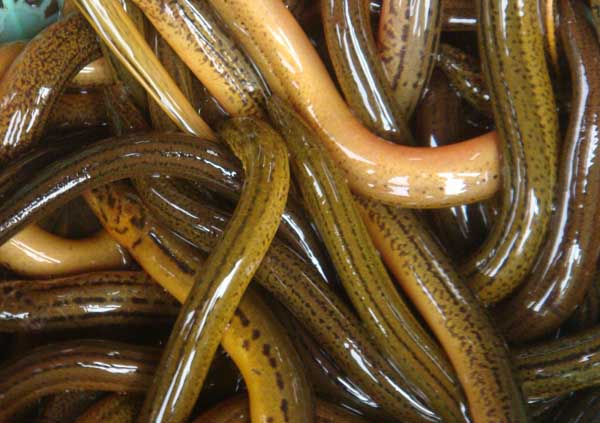
Since artificially bred rice field eel fry cannot yet be produced in large quantities, rice field eel farming still relies on wild fry caught from natural waters. Wild fry come from varied sources, and combined with improper handling and other factors, the phenomenon of rice field eels developing spasmodic disease shortly after stocking is very common. The mortality rate of spasmodic disease in rice field eels is quite high, causing great losses to farmers. The causes and preventive measures are briefly introduced below.
Symptoms of Spasmodic Disease in Rice Field Eels
Spasmodic disease generally appears 2-10 days after wild eel fry are stocked. The initial symptoms are refusal to feed and easy startling. Upon hearing sounds and vibrations, the fry will dart about and jump, and it takes several minutes before they gradually calm down. After 2-3 days, the fry begin to show bending symptoms and swim in circles in place, while their muscles become extremely tense, with the head and body forming an "S" or "O" shaped irreversible contraction, accompanied by involuntary biting of their own bodies. After 4-5 days, the fry begin to die. Surface examination of affected fry shows no inflammation or congestion, visual and microscopic examination of the body surface reveals no parasites, and anatomical examination of internal organs shows no lesions, but the blood appears darker red than normal. A large number of thorny-headed worms are found parasitizing the intestine, and capillary worms infect the abdominal wall. Since most wild rice field eels are parasitized by the above worms, parasitic factors can be ruled out as the cause. From the onset of continuous disease to the end of death, the time span is about 7-20 days, and the mortality rate is generally above 30%, and can reach 100% in severe cases.
Causes of Spasmodic Disease in Rice Field Eels
The main cause of spasmodic disease in rice field eels is a decline in the oxygen-carrying capacity of the blood, which leads to insufficient oxygen supply to the brain, resulting in brain hypoxia and brain necrosis, causing high concentrations of ammonia and hydrogen sulfide to seep into the eel's blood, resulting in blood poisoning.
1. Capture. During the rainy season, when the cages used to catch rice field eels are submerged, the eels that enter the cages have eaten the bait, which strengthens their metabolism. Combined with the increased oxygen consumption during struggling, the oxygen they breathe in the water can no longer meet the body's needs, and air breathing cannot be achieved either, causing the excretion of carbon dioxide from the body to be blocked. The accumulated carbon dioxide in the blood increases, causing blood acidosis. In severe cases, the eels are already dead when caught, but most still survive. Such fry have an extremely high probability of developing spasmodic disease after stocking.
2. Holding. After capture, the holding density of rice field eels is generally quite high, with the ratio of water to eels below 1:1, and the water is not changed for a long time. Under high-density conditions, the eels continuously secrete mucus from their body surface and excrete metabolic waste. Under the action of bacteria, these substances decompose into toxic and harmful gases such as ammonia and hydrogen sulfide. These toxic and harmful gases enter the blood through the eel's skin respiration, causing blood acidosis.
3. Transport. Dry transport has a more severe impact on eel fry. Due to the lack of water, the fry lose the medium for gas exchange, and respiration is severely inhibited, even reaching the point of suffocation. At the same time, the mucus and excreta secreted by the fry, without water to dilute them, produce high concentrations of hydrogen sulfide. The harm caused by this step is more serious than high-density holding, because the fry also undergo dehydration with loss of body fluids during this process. Generally, fry subjected to dry transport for more than 2 hours have a probability of developing spasms of over 90%.
4. Other causes. Excessive water temperature differences during purchase, storage, transport and stocking cause metabolic imbalance in the eel's body, commonly known as "catching a cold," and form a barrier within the body, preventing the excretion of carbon dioxide, resulting in excessively high carbon dioxide concentration in the blood and causing blood acidosis.
Prevention of Spasmodic Disease in Rice Field Eels
1. Avoid purchasing eel fry during the rainy season, reduce intermediate links, and purchase fry directly from eel catchers, avoiding purchases from markets or vendors.
2. The purchased fry should be caught on the same day, and catchers should be required to hold the fry in water at least 5 times the weight of the eels, avoiding holding purchased eels for long periods.
3. Transport fry with water, with the ratio of fry to water reaching at least 1:5. For long-distance transport, drugs should be used to protect water quality; some polysaccharide drugs, multivitamins or antibiotics can be appropriately added, and soaking with irritating drugs such as chlorine preparations and oxidants should be avoided.
4. Avoid excessive water temperature differences during purchase, storage, transport and stocking.