Detailed Explanation of Domestication Techniques for Wild Asian Swamp Eel (Monopterus albus) Seedlings
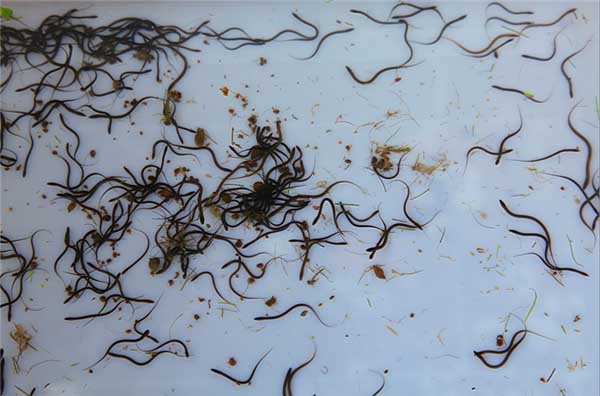
Currently, there are two types of Asian swamp eels (Monopterus albus) farmed in China. One is the tropical swamp eel from Thailand and Vietnam. This type has strong reproductive capacity, omnivorous feeding habits and fast growth, making it an excellent variety from a farming perspective. However, its market sales performance is poor, because its flesh is coarse and its taste is inferior, so its market price is very low, less than half the price of local swamp eels of the same period and the same size, and its sales channels are narrow, with bulk sales not going smoothly. At the same time, the most fatal factor for introducing tropical swamp eels into domestic farming is that they cannot overwinter naturally. The other type is China's native temperate swamp eel. This strain is mainly distributed north of the Pearl River basin and south of the Yellow River basin, with the largest distribution in the Yangtze River basin. Its natural habitat is mainly in shallow water zones such as fields, ditches and ponds.
For seedlings used in artificial farming, on the one hand, small-sized wild eel seedlings can be collected directly from the natural environment; on the other hand, bred eel seedlings of this strain can also be purchased from swamp eel breeding farms. From the perspective of farming results, artificially bred seedlings have a high survival rate and high weight gain multiple, and can directly feed on special complete-formula feed for swamp eels; the disadvantage is the higher price. The advantage of wild eel seedlings is their low price, but the survival rate and weight gain multiple are greatly affected by random factors, and in addition, wild seedlings have gradually become scarce in some areas. Therefore, farmers can make choices according to their own circumstances. At present, swamp eel farmers in most areas choose wild eel seedlings as the source of seedlings for farming, but the capture operation for wild swamp eels is designed with direct entry into the market for sale as the requirement, and the whole process has a relatively serious impact on the eel seedlings, yet ordinary farmers generally lack sufficient awareness of this problem. Therefore, standardizing the procedures for using wild seedlings is extremely necessary, but on the other hand, even with standardized operating procedures, some of the steps are in many cases impossible to control. So the use of wild eel seedlings must be done with caution.
Sources and Selection of Eel Seedlings
The sources and selection of eel seedlings directly involve input and risk, and are the first problem to be solved in swamp eel farming. At present, eel seedlings in production mainly come from the following sources.
1. Direct Capture from the Wild
From April to October each year, they can be captured in rice fields and shallow ditches using eel traps, especially on muggy days or after thunderstorms, when the swamp eels that come out to move about are most numerous, and more at night than during the day. One person can carry 200 eel traps at a time. Put them into the ditches and fields at night or after thunderstorms, and swamp eels can be caught after a few hours. When catching swamp eels with eel traps, two points must be noted: first, earthworms are best used as bait, and each trap should have eels taken from it 2 to 3 times a night; second, when placing the eel traps into the water, the tail of the trap must be slightly exposed above the water surface, so that the swamp eels can breathe air in the trap, otherwise they will suffocate or suffer from hypoxia. At dawn, retract the eel traps, sell the large individuals, and use the small ones as eel seedlings. Eel seedlings caught by this method are healthy and uninjured, and have a high survival rate when reared. Another method is to light a lamp at night, patrol along the edges of field ridges and ditches, and when swamp eels come out to forage are found, catch them with eel-catching tongs or by hand. When catching, injure the individuals used as eel seedlings as little as possible. The caught eel seedlings should be stocked immediately.
2. Market Purchase
When purchasing eel seedlings at the market, choose healthy and uninjured swamp eels. One should purchase cage-caught eel seedlings that have been kept in temporary holding with continuous water changes as the rearing objects. Swamp eels that have been poisoned by pesticides, as well as those caught by drugs, must not be raised either (drug-caught swamp eels mostly have small red spots on the belly; the longer the time, the more obvious the red spots, and the poorer their vitality). Generally, swamp eel varieties can be divided into three types: the first type has a yellow body color mixed with large spots; this kind of eel seedling grows fast. The second type has a greenish-yellow body color; this kind of eel seedling grows at an average rate. The third type has a gray body color with fine, dense spots, and grows slowly. The three kinds of eel seedlings should be raised separately. The meat gain multiple from eel seedling to market-size eel per kilogram is: the first type 1:(5-6); the second type 1:(3-4); the third type 1:(1-2). The size of eel seedlings is best at 20-50 tails per kilogram. If the size is too small, the survival rate is low, and they cannot reach the market in the same year; if the size is too large, the meat gain multiple is low, the unit net yield is not high, and the economic benefit is low. However, this is not absolute; what size of eel seedlings to stock must also take market factors into consideration. If around the Spring Festival the price of large-size commercial eels on the market is very high, farmers may also appropriately consider stocking large-size eel seedlings, or even market-size eels.
3. Seedling Cultivation from Semi-Artificial Breeding
(1) Simulate the natural spawning environment in the wild and let them reproduce naturally in the farming pond. At the end of each year, from artificially raised market-size eels, select individuals with a strong physique, a tail weight of 100-200 grams, and a yellow and glossy body color, concentrate them in a pond rich in organic matter soil to overwinter, and wait for natural spawning and reproduction in June-July of the following year. When the water temperature in the pond is above 15°C, feeding and rearing of this batch of eels should be strengthened. During the breeding period, close attention should be paid to the eggs produced and the hatched eel seedlings. If eggs are found, they can be taken out for special hatching, and if seedlings are found, they should also be promptly scooped out and stocked in separate ponds according to different sizes, to prevent the big from eating the small and mutual cannibalism. In the nursery pond, organic fertilizers such as chicken manure can first be used to cultivate zooplankton, and then the eel seedlings are put in, letting the eel seedlings grow by eating zooplankton. If zooplankton is insufficient, some cooked egg yolk slurry can be supplemented as feed. Once young eels begin feeding, they gradually disperse and become active.
(2) Collect fertilized eggs of swamp eels in the wild, then artificially hatch them into seedlings. In midsummer each year, in some lakeside marsh areas, rural ditches and paddy fields, foam-like clumps can often be seen floating on the water surface; these may be the hatching nests of swamp eels. When this phenomenon is found, it should be promptly and gently scooped up with a ladle or a rice-serving spoon, and placed in a basin or bucket already filled with fresh water. Afterward, the eel eggs are carefully placed in an eel egg incubator for hatching. The management during the hatching period is the same as the management during the artificial breeding and hatching period.
(3) Directly collect wild eel seedlings in the wild. Stock water hyacinth in ditches where swamp eels frequently appear, and from late June to early July, wild eel seedlings can be collected. The method is to first spread a plastic fine-mesh cloth on the ground, scoop the water hyacinth onto the mesh cloth with a dip net, and the eel seedlings originally hidden in the roots of the water hyacinth will automatically drill out and fall onto the mesh cloth. The collected wild eel seedlings can be put into an eel seedling pond for cultivation. Another method can also collect wild eel seedlings. In mid-June, in waters where swamp eels live, horse manure, cow manure and pig manure mixed with soil can be prepared in advance and made into block-shaped distributed fertilizer-rich water areas in the water. Many tubifex worms can grow in the fertilizer-rich areas, and young eels that have begun feeding will automatically drill into these fertilizer-rich areas to forage. At this time, they can be caught with a small dip net and put into a young eel nursery pond for cultivation.
4. Seedling Cultivation from Fully Artificial Breeding
That is, artificially bred eel seedlings are fed with tubifex and the like for artificial cultivation.
Collection Techniques for Wild Asian Swamp Eel Seedlings
1. Transport Tools before Eel Seedling Collection
Iron boxes that can hold 100 kg of water, or bamboo baskets lined with plastic film, polyvinyl chloride mesh sheets of more than two fingers, well water or clean river water (well water should be placed into the container 10 hours in advance), weighing tools, fine-mesh net bags, and woven-strip baskets.
2. Eel Seedling Collection Methods
(1) Cage catching is the best capture method, and electric capture may be selected in appropriate amounts.
(2) For purchases from contracted households, capture households are required to store the swamp eels caught each day in a ratio of 1 part swamp eel to 4 parts water, and the time from lifting the cage to storage should be controlled within 1 hour as much as possible.
(3) Farmers must purchase back the swamp eels caught that day every morning, and the time on the way must not exceed 4 hours. When purchasing, fill the container with water to the two-thirds level, and place 0.5 kg of polyethylene mesh inside. After the eel seedlings are transported back, change the water thoroughly immediately, with the proportion of water changed reaching 1:4 or more. During the soaking and washing process, remove injured and physically weak eel seedlings. After 1 hour, sort the swamp eels, with sizes divided into two categories: below 25 grams and 25-50 grams, and then put them into the eel pond. Throughout the entire operation, water changes should avoid excessive temperature differences (below ±2°C).
Domestication Techniques for Wild Asian Swamp Eel Seedlings
1. Significance of Domestication
Based on the natural feeding habits of swamp eels, domestic farmers generally use live bait for artificial farming. These live baits include earthworms, small trash fish, river mussels, snails or trapped insects. Their advantage is that swamp eels can quickly form feeding habits, but the disadvantages are also obvious, shown as a low weight gain multiple and the inability to stably supply quantities over the long term, especially in large-scale farming, where this limitation is even harder to overcome.
Whether artificial compound feed can be used to raise swamp eels is a problem that must be solved to implement large-scale swamp eel farming. Some farmers also prepare some artificial bait themselves for feeding, but due to insufficient understanding of the process of changing the feeding habits of swamp eels, the nutritional comprehensiveness of artificial bait preparation, and the preparation methods, both the feeding rate and weight gain are unsatisfactory. After many years of experiments by researchers, on the basis of repeated research on the digestive function of swamp eels, the nutritional comprehensiveness and edibility of artificial bait for swamp eels were successfully solved. Large-scale production trials show that with the use of special bait, swamp eels have a high feeding rate, fast weight gain and a low feed conversion ratio.
2. Preparatory Work before Domestication
Purchase live river mussels and place them in a pond for temporary holding and storage. Special artificial feed for swamp eels. Freezer: before use, river mussel meat should first be frozen. Meat grinder (large size), equipped with two die holes (3-4 mm, 6-7 mm).
3. Design and Construction of the Domestication Pond
The domestication pond is mainly used for the food-training of swamp eels, built with cement and bricks. The domestication area is generally small, 2-3 sq m per pond, with a pond height of 40-60 cm. Two water inlet holes are set on one side of the pond, and two drainage holes are set on the opposite side. One drainage hole is level with the pond bottom, and the other drainage hole is 15 cm above the pond bottom. Anti-escape metal mesh covers must be installed at the openings of the inlet and drainage holes.
4. Domestication Methods
This technique achieves an increased success rate in swamp eel domestication by establishing a sense of hunger in the swamp eels and making feed of a suitable shape. The domestication bait uses fresh mussel meat, which after freezing treatment is processed into meat paste with a 6-7 mm die-hole meat grinder. Mussel meat cannot be effectively digested by swamp eels, but it is one of the baits they like to eat. Feed every day from 5-7 pm, once a day, with the feeding amount controlled within 1% of the total weight of the eel seedlings. This amount is far below the 5%-6% satiation amount of swamp eels, so the swamp eels are always in a hungry state, creating a good opportunity to establish a conditioned reflex for concentrated group feeding. When feeding, first mix the river mussel meat paste with clean water, then sprinkle it evenly. After three days, when it is observed that the swamp eels feed vigorously, switch to fixed-point feeding, generally setting 4-6 points per pond, and continue feeding for two days, with the feeding amount still at 1%; at this time the swamp eels can basically finish eating within 3 minutes. On the sixth day, switch to artificial compound bait.
This rapid conversion to artificial compound bait is by no means effective for any artificial bait; this special artificial compound bait must have a specially processed feed shape and composition. First, take 50 kg of carefully prepared swamp eel feed and add 8% fresh river mussel meat slurry (made with a 3-4 mm meat grinder) and an appropriate amount of Wanlong No. 5, mix in the above proportions, stir thoroughly by hand or with a mixer, then press with a 3-4 mm die-hole meat grinder into soft strip-shaped feed with a diameter of about 3-4 mm and a length of 3-4 cm, dry slightly in the air, and it can be fed. When feeding, directly scatter it into the fixed-point feeding areas, with a feeding amount of about 2%, fed once a day from 5-7 pm. Pay special attention that the feeding amount should be based on finishing within 15 minutes, to improve feed efficiency and reduce the load on the carrier. This combined artificial compound bait has an extremely ideal feeding effect, and the swamp eels grow quickly.