Introduction to Five Commonly Used Feeds for Rice Field Eel Farming
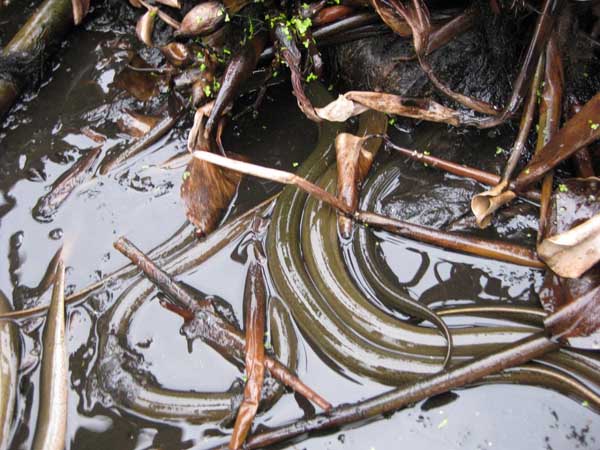
Generally speaking, the rice field eel (Monopterus albus) is a fish that mainly feeds on animal-based feed and requires fresh, live feed; it does not eat rotten animal-based feed. For artificial farming, rice field eel feed should be mainly animal-based, supplemented by plant-based feed. Ensuring sufficient, high-quality feed is the key to successful rice field eel farming and achieving high yields. The rice field eel is an omnivorous fish that mainly consumes animal feed; its feed sources are extensive and relatively easy to obtain, and rice field eel farmers can use existing resources to collect and cultivate live bait.
Cultivating Earthworms
Use cow dung, household garbage and other raw materials to breed earthworms; the best varieties are Daping No. 2, Beixing No. 2 and Eisenia foetida, among others. For earthworm cultivation, you can use discarded wooden buckets or wooden basins, drill a small hole 2 cm in diameter in the bottom, and cover it with gauze so as to allow ventilation and drainage; you can also dig a pit in a place with good drainage and irrigation or build a brick pond for rearing.
Cultivating Fly Maggots
You can make your own fly breeding cage and buy superior housefly seed stock from a fly maggot breeding farm to produce sterile fly maggots. Alternatively, grind 0.5 kg of soybeans into a slurry, pour it into a water vat that can hold 40-50 kg of water, add 2.5 kg of fresh pig blood and 10 kg of water, and mix well; after one week, maggots can be bred.
Polyculture of Snails
Hang several bamboo cages around the breeding pond, with mesh of 4-6 mu; place a certain number of parent snails in the cages, with two-thirds of the snail cage immersed in water. Most of the young snails bred will crawl out through the mesh and can be eaten by the rice field eels. You can also collect snails from ditches and rice paddies, remove the shells, chop them up and feed them to the eels.
Light Trapping of Insects
Above each eel pond, hang two black-light lamps, one above the other; the upper one should be suspended appropriately high to attract moths and insects from farther away, while the lower one should preferably be 20 cm from the water surface of the eel pond. Just after dark, turn on the high black-light lamp; when you find moths and insects gathering in clusters around the high lamp, then turn on the water-surface black-light lamp and turn off the high lamp. At this point, the moths and insects from high up will quickly swoop down and gather around the water-surface lamp. Because of the reflection of the electric lamp in the water, many moths and insects will plunge into the water and become feed for the rice field eels. When the moths and insects above the pond decrease, turn on the high black-light lamp again to attract them, and repeat this process.
Collecting Tubifex Worms
Dig a shallow pond at the drainage outlet, spread rotting mud on the bottom, keep the water depth at 5-6 cm, and regularly apply fermented organic fertilizer; tubifex worms will multiply in large numbers.