Detailed Explanation of Key Points for Ecological Pond Farming of Rice Field Eels
Pond Conditions
The farming pond should be built in a place with abundant water, good water quality, convenient water intake and drainage, and exposure to sunlight and ventilation. The pond area is generally 5-30 sq m, with a depth of 70-100 cm. The pond should be built along an east-west orientation, and the bottom soil should be moderately soft and firm. A water inlet should be dug at the higher end of the pond, and a water outlet should be left at the lowest point on the opposite side. Both the water inlet and outlet must be covered with fish-blocking mesh.
10-15 days before releasing the fry, use 150-200 g of quicklime or 10-15 g of bleaching powder per sq m of water surface, dissolve in water and splash over the entire pond for disinfection to kill harmful pathogens. Generally, 7-10 days after pond clearing and disinfection, fill the pond with water to a depth of 10-20 cm.
Rice field eels are suited to a farming environment of 15-30°C. Water hyacinth, duckweed and other aquatic plants can be moderately planted on 1/3 of the pond surface, and pumpkins, hyacinth beans and other plants can be grown along the pond edges for shade.
Fry Stocking
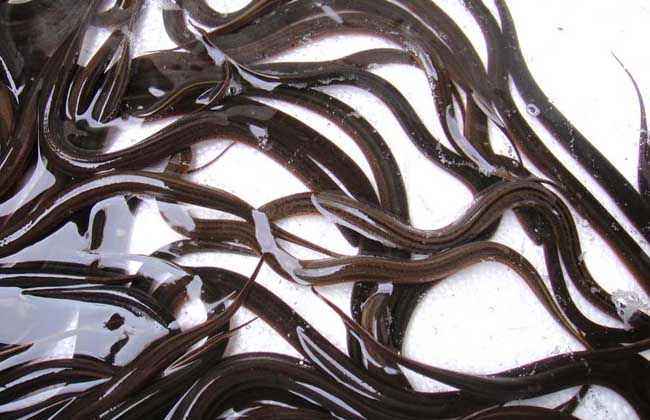
Fry can be collected from naturally breeding stock in the place of origin or purchased from reputable rice field eel farms. Select fry that are robust, have smooth body surfaces, are free of disease and injury, are strong in activity, and are uniform in size and basically consistent in size. Generally, a body weight of 20-30 g per fish is suitable. If large-sized eels weighing 30-50 g each are stocked, the survival rate is high and weight gain is fast. Early spring is the best time for stocking, and all should be stocked within one week. The stocking density is generally 50-60 fry per sq m. Before stocking, soak and disinfect in 3%-4% salt water or 10 mg/kg bleaching powder for 10-20 minutes; the water temperature difference during stocking should not be too large.
Feed Feeding
Rice field eels are omnivorous fish that are mainly carnivorous, and they prefer live bait such as small fish and shrimp, snails and clams, mussel meat, silkworm pupae, earthworms, and livestock and poultry offal. When feeding, animal-based bait should be the main component, supplemented with plant-based feeds with relatively high protein content such as rice bran and soybean cake.
Rice field eels are active at night and hide during the day, so feeding should preferably be done in the evening. Rice field eels are greedy feeders and tolerant of starvation, so feeding must be rationed. Generally, the daily feeding amount is about 5%-8% of the eel's body weight. The feed must be fresh and placed on feeding trays, with the amount judged by what is eaten by the next morning. When the eels grow quickly and the temperature is suitable, feed appropriately more and more frequently.
Water Quality Regulation
The water depth of the farming pond should be appropriate, generally 10-20 cm. The water body should be tender green or light brown, with no oil film on the surface. To ensure the water quality remains fresh and stable, change the water promptly during high-temperature seasons or when the water is too dense, achieving fertility, liveliness, tenderness and freshness. Splash quicklime over the entire pond once every 10 days, using 15-20 kg per 667 sq m of water surface each time. Once every half month, apply microbial preparations such as photosynthetic bacteria and Bacillus once to regulate water quality.
Disease Prevention and Control
Eel disease prevention should be based mainly on ecological prevention, with drug control as a supplement.
When building the pond, attention should be paid to pond clearing and disinfection, and fry should be soaked and disinfected before stocking. Feed should be provided at fixed points, and leftover bait should be removed promptly. Tools used in production should be disinfected regularly, 2-3 times per week. Chinese herbal medicines contain large amounts of flavonoids, alkaloids, organic acids, immune polysaccharides and other substances that can enhance the body's immune function and can be used to prevent rice field eel diseases. Therefore, they should be given priority. For example, for capillary nematodiasis, a mixture of Chinese herbal medicines such as Dryopteris crassirhizoma, perilla stem and Melia azedarach root bark can be decocted into juice and mixed into the feed for treatment.
At the same time, placing several toads in each pond and using their secretions to prevent plum blossom spot disease in rice field eels is also very effective.