Detailed Explanation of Key Techniques for Intensive Culture of Monopterus albus in Small Ponds
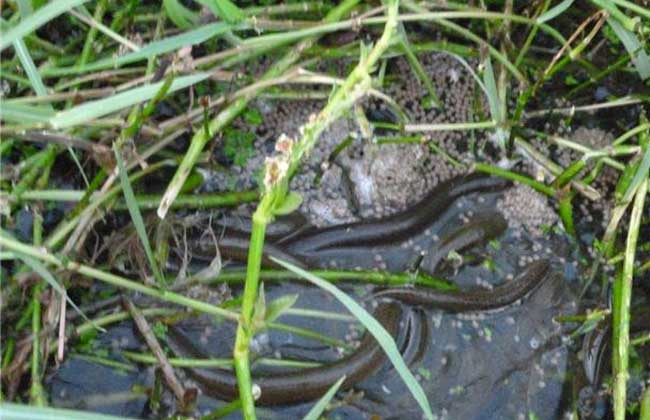
Because Monopterus albus (rice field eel) is a fish with carnivorous tendencies, it has the habit of cannibalism (large eating small) when feed is severely insufficient. Therefore, to carry out high-density intensive culture of Monopterus albus, it is necessary to use cement ponds, earthen ponds, or net cages with an individual area of less than 30 sq m to grade and culture Monopterus albus by size (referred to as: intensive culture in small ponds). Our years of practice have proven that using the small-pond intensive culture method to farm Monopterus albus has many advantages such as convenient management, high survival rate, fast growth, small land occupation, and very significant benefits per unit area. The key techniques are introduced below.
Design and Construction of Small Ponds
At present, the culture methods commonly used for Monopterus albus farming are three types: net cages, cement ponds, and earthen ponds. Which specific culture method to use can be determined according to local conditions and the farmer's own specific circumstances: those with fish ponds or reservoirs can use them to carry out net-cage culture of Monopterus albus; those with rice fields that have good water-storage conditions can slightly modify them into earthen ponds to raise Monopterus albus; those using dry land or rice fields with poor water-storage conditions to raise Monopterus albus need to build cement ponds.
1. Installation of net cages. The net cages for farming Monopterus albus are generally made of durable polyethylene mesh cloth (also called "screen gauze cloth" or "basket-bottom cloth"), generally costing 6-10 yuan per sq m and usable for about 3 years. The shape of the net cage is best rectangular, with a bottom area of 6-30 sq m, a depth of 1-1.5 m, and it can be sewn firmly with nylon thread. For setting net cages in ponds with a water depth of less than 1.5 m, the method of directly driving stakes into the pond bottom can be used to fix the net cages; for setting net cages in deep-water ponds or reservoirs, waste oil drums, tires, and the like can be used to set up floating net cages.
2. Construction of earthen ponds. The construction of earthen ponds is actually converting rice fields into small earthen ponds with a width of 3 m and a length of no more than 10 m by piling up mud ridges. Generally, converting 1 mu of rice field requires an investment of only about 3,000 yuan, making it currently the most economical way to raise Monopterus albus. Each pond is required to have a water-storage depth of more than 50 cm, and a drainage ditch should be set between every two rows of ponds so that the water of individual small ponds can be drained separately when needed. The perimeter of each earthen pond should be protected against escape with polyethylene mesh cloth: use polyethylene mesh cloth with a width of more than 1 m, bury it 20-30 cm under the soil, sew the joints well with nylon thread, and support the pond mouth with bamboo poles so that the mesh walls around it stand upright to prevent Monopterus albus from escaping.
3. Construction of cement ponds. The one-time investment in building cement ponds is relatively large, generally 30-50 yuan per sq m, but the service life is long (generally up to more than 20 years), and management is more convenient and water-saving performance is good, so it is also a method that Monopterus albus farmers are happy to adopt at present. The size of cement ponds can generally be 10-30 sq m, with a pond depth of 60-80 cm. The pond mouth should be paved with protruding bricks (to make an anti-climbing edge), and the four corners should be made into arcs to prevent Monopterus albus from escaping. The pond bottom should be paved with concrete so that the bottom slopes slightly toward the water outlet. On the lower side of the pond bottom, set up an overflow drainage pipe: take two plastic pipe elbows with a diameter of more than 5 cm, connect them with a section of pipe longer than the thickness of the pond wall, and bury it at the water outlet position so that one elbow is inside the pond and one elbow is outside the pond. The mouth of the elbow inside the pond should be level with the lowest point of the pond bottom, and a section of pipe matching its size should be inserted into the elbow outside the pond; the length of the pipe depends on the required depth of the pond water, generally 30-40 cm. At the mouth of the elbow inside the pond, invert a small plastic basket with small holes and press it down with 1-2 bricks to prevent Monopterus albus from drilling into the overflow drainage pipe and escaping. A corresponding drainage ditch should be set up between every two rows of cement ponds, and a blocking net should be installed at the lowest point of each ditch to prevent Monopterus albus from escaping if it ever gets out of the eel pond.
Treatment of Newly Built Eel Ponds (Cages) and Laying and Disinfection of Aquatic Plants
1. Dealkalization treatment of cement ponds. Newly built cement ponds should be filled with water and soaked for more than 7 days, then the pond walls and bottom should be scrubbed with a brush to prevent the floating ash of the cement from harming Monopterus albus. If urgent use is needed, an appropriate amount of acetic acid or other acid liquid can be added to the water to shorten the soaking time.
2. Soaking and softening of mesh cloth. Newly installed net cages should be placed into the water in advance so that some algae grow on their surface and make them smooth, so as to avoid scratching the body of Monopterus albus. Earthen ponds protected against escape with mesh cloth should also have their pond water added to the deepest level for soaking.
3. Laying of aquatic plants. After the cement pond has been soaked and washed, the pond water should be drained and new water injected before aquatic plants can be laid in the pond. For earthen ponds, aquatic plants can be laid directly. The method of laying aquatic plants in cement ponds and earthen ponds is: select fresh water hyacinth (scientific name "Eichhornia crassipes", also called "water hyacinth"); if there are dead old seedlings, they should be removed to avoid rotting after entering the pond and polluting the pond water. Lay the selected aquatic plants tightly into the pond (without leaving gaps), and block them around with bamboo poles so that there are no aquatic plants within 40 cm of the pond wall, in order to prevent aquatic plants from growing at the pond edge and making it convenient for Monopterus albus to escape. In net cages, either alligator weed (also called "revolution grass", "guo jiang teng", etc.) or water hyacinth can be laid. If the aquatic plants do not grow lushly enough, some decomposed human and livestock manure water can first be splashed to cultivate them.
4. Disinfection of eel ponds and aquatic plants. After the aquatic plants are laid, drugs should be used to disinfect and deworm the eel pond and aquatic plants. The method is: for each cubic meter of water, take 2 ml of "Shanbao No. 2" or 30 g of quicklime, mix with water and splash over the whole pond (use the clear liquid for quicklime), including splashing onto the aquatic plants. The amount of dilution water should be as large as possible to prevent burning the aquatic plants. At the same time, for each cubic meter of pond water, use 5 g of "Shanbao No. 1" or crystalline trichlorfon mixed with water and splash it to kill parasites in the water and on the aquatic plants. Two days after completing the disinfection and deworming work, eels can be put into the pond.
Selection and Release of Eel Fry
The sources of Monopterus albus fry are two methods: self-breeding and self-raising, and purchasing wild Monopterus albus for farming. Here the focus is on introducing the purchase of wild Monopterus albus for farming. Purchasing wild Monopterus albus for artificial farming is currently a method commonly adopted by the vast majority of eel farmers. Generally, they are purchased and farmed from April to September, and caught and sold on the market in winter or around the Spring Festival, with a weight gain of 1-5 times (depending on the length of the purchase and farming period). Generally, the summer purchase price is below 20 yuan/kg, and the winter selling price is above 40 yuan/kg, so the farming benefit is very considerable. The sources of Monopterus albus generally used for farming include: cage catching, electric catching, hand catching, etc.; for Monopterus albus caught by hooking or clamping, they should be selected as appropriate according to the degree of injury; Monopterus albus caught by drugs must absolutely not be used.
The methods of purchasing Monopterus albus are generally self-catching and self-raising, ordering from familiar eel catchers, or purchasing from township markets; Monopterus albus that has been stored at high density for a long time and Monopterus albus from large farmers' markets cannot be used for farming. When purchasing at township markets, check whether the Monopterus albus has redness or blackening of the gills (obvious congestion or congested blackening), red and swollen everted anus, obvious external injuries, and other phenomena. If the Monopterus albus of one household has these phenomena, do not purchase them; if you are not very good at identifying them when purchasing for the first time, you can look at a few more Monopterus albus and compare the gill color and anus, and it will not be difficult to tell. The Monopterus albus purchased for farming is best at 30-80 g per fish; too large means high cost and slow growth after reaching 300 g, while too small means relatively fragile and a relatively high mortality rate after being injured by catching. The purchased Monopterus albus should immediately be added to pond water and aquatic plants at no less than 4 times the body weight of the eels, and immediately transported for release. The release density of eel fry should be increased or decreased as appropriate depending on the intended farming time, generally 1-3 kg per sq m. On the evening of the day the eels are put into the pond, feeding should begin, using chopped earthworms, pig liver, river mussel meat, fish meat, etc. (if there are maggots, freshly scalded live maggots can also be used), and at the same time add the following drugs per 1 kg of fresh feed: 10 g of electrolytic multivitamins, 3 g of Shanbao New No. 4, and 5 g of Shanbao No. 5. Use a special adhesive or a small amount of wheat flour to adhere the drugs to the feed. The feeding amount is 0.5% of the body weight of Monopterus albus. The feed can be placed directly on the aquatic plants; in cement ponds, the feed can also be placed directly in areas of the pond without aquatic plants, and as many feeding points as possible should be set up. The next morning, for each cubic meter of pond water, use 5 g of Shanbao New No. 5 per 1 cubic meter of water, mix with water, and splash over the whole pond (cage). The above medication method should be carried out continuously for 3 days.
Taming Feeding and Daily Management of Monopterus albus
1. Taming feeding of Monopterus albus. After Monopterus albus enters the pond, we should often observe the feeding situation of the eels. For ponds (cages) with good feeding, the feeding amount should be gradually increased. When the feed intake reaches more than 2% of the body weight of Monopterus albus (fresh feed weight), compound feed (carp feed, longnose catfish feed, eel feed, etc.) should be gradually added to the feed, with the addition amount gradually increasing until the feeding amount is 5-10% of the body weight of Monopterus albus (wet feed weight). If there is leftover feed, it should be removed every morning.
2. Management of newly stocked Monopterus albus. Normal Monopterus albus should move freely in the aquatic plants and should not climb onto the grass for a long time. If Monopterus albus climbing onto the grass, rolling in the water, or showing other abnormal behavior is found, it should be picked out in time.
3. Cooling management. For pond-cultured Monopterus albus, in high-temperature seasons a shade net should be set up over the pond. On one hand, this lowers the water temperature, and at the same time it also reduces the intensity of light. In high-temperature weather, the pond water should be deepened to more than 40 cm, and the pond water temperature should be controlled below 32°C as much as possible.
Harvesting of Monopterus albus
For cement ponds and net cages, harvesting Monopterus albus is very convenient; after removing the grass, they can be caught directly. For earthen ponds, the method of piling grass to catch them should be used. The method is: leave only about 1 sq m of aquatic plants in one pond, and deepen the pond water to more than 50 cm. At this time Monopterus albus will generally gather in the aquatic plants. Every morning, use a dip net larger than 1 sq m to move upward from below the aquatic plants until it emerges from the water on all sides, pick out the aquatic plants, and then all the Monopterus albus will be in the net. Doing this 3 times can catch all the Monopterus albus in the pond. This method is only effective during the feeding season of Monopterus albus. If they need to be sold in winter, they should be caught in advance before feeding stops and temporarily kept in another pond (cage).