Control methods for putrid skin disease and tail rot disease in rice field eels
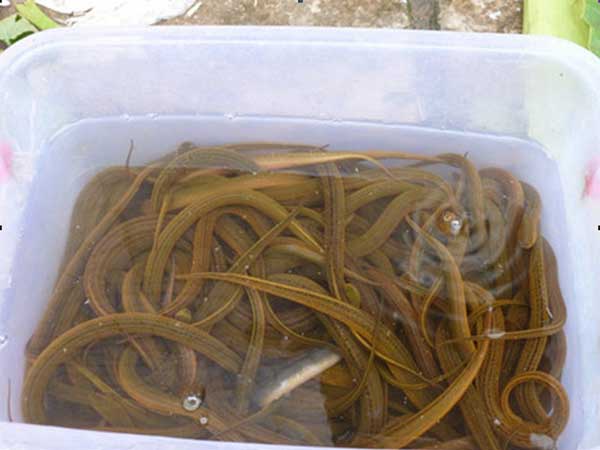
Putrid skin disease in rice field eels
[Symptoms] Putrid skin disease in rice field eels is prevalent from May to September. Eels suffering from this disease move weakly and keep their heads out of the water all day. There are many round red spots of varying sizes on the body surface of the eels, mostly on both sides of the abdomen, and some also show purple spots the size of mung beans on the abdomen. In severe cases, the epidermis rots into funnel-shaped small pits; if the rotten skin is peeled off, bones and internal organs can be seen. It often causes mass death of rice field eels, and treatment should be given promptly once discovered.
[Prevention and control] Clean the eel pond frequently and replace the pond water. Drug treatment: sprinkle erythromycin over the whole pond at 250,000 units per cubic meter of water once, and at the same time feed sulfathiazole mixed into the feed at 5 g per 50 kg of rice field eels, once a day, for 3 to 6 consecutive days.
Tail rot disease in rice field eels
[Symptoms] The tail of the diseased eel becomes inflamed and congested, followed by muscle necrosis and rotting, so that the muscle of the caudal peduncle or tail rots away and the tail vertebrae are exposed. The diseased eel holds its head out of the water, responds slowly, and moves weakly. This disease is prone to occur in densely stocked ponds and during transport, and often causes death of rice field eels.
[Prevention and control] Pay attention to the water quality and environmental hygiene of the eel pond to avoid massive bacterial growth.
[Treatment] Sprinkling 0.22 ppm furazolidone over the whole pond or soaking and disinfecting with 0.25 units/mL chlortetracycline gives good results.