Detailed Explanation of Key Points for Micro-Flow Water Rice Field Eel (Monopterus albus) Aquaculture Technology
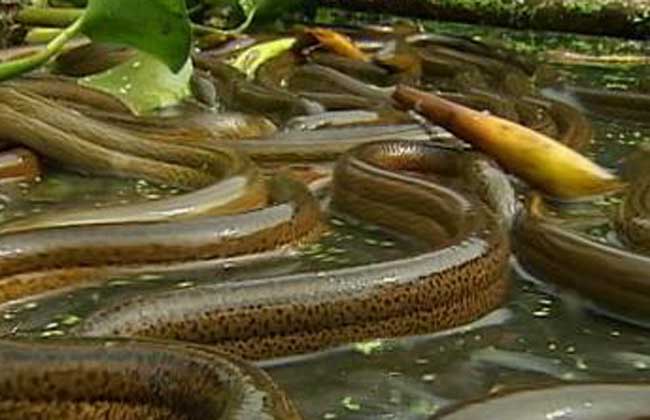
Construction of the Flowing Water Pond
The aquaculture pond can be built indoors or outdoors, with each pond having an area of 2-5 sq m and a depth of 24 cm, rectangular in shape, with the floor paved with bricks, single bricks standing upright and arranged in rows to form the walls, and smoothed with cement. An escape-prevention ledge is set around the walls. At both ends of the pond, 20 cm above the pond bottom, an inlet and an outlet are respectively installed, fitted with escape-prevention mesh or grates of appropriate mesh size, and the pond bottom is covered with medium sand. When building multiple ponds, they can be arranged in a single connected series. A reservoir needs to be built upstream, and a water regulating valve installed. After opening the valve, the pond water is required to flow freely through each pond in sequence and finally be discharged.
Selection of Fry and Seed Stock
The eel seed stock comes from artificial breeding or natural collection. The physique should be robust, the size uniform, the body color bright, and no external injuries. The size should be 25-30 g per fish, and 100-150 young eels can be stocked per sq m. Before entering the pond, they should be disinfected with 30-40 g/L salt water or potassium permanganate.
Feeding Management
1. Rice field eels can be fed earthworms, fresh fish and shrimp, etc., or artificial compound feed.
2. Three days after the eel fry enter the pond, bait feeding and domestication begin, with a domestication period of about 15 days. Initially, bait can be fed in the evening, then gradually advanced to 14:00-15:00 in the afternoon or around 10:00 in the morning. The daily feeding amount is 6%-7% of the total body weight of the eels, fed in 2 sessions in the morning and evening. The feeding of rice field eels should also follow the “four fixeds.”
3. In midsummer, it is best to plant some aquatic plants in the pond or artificially set up sheds for shade.
4. Residual bait, feces and other wastes should be made to float up and be discharged in sequence into one pond, until finally discharged from the aquaculture pond.
5. Patrol the pond frequently, observe the water quality and water temperature conditions, and pay attention to damage from cats, rats, etc.
Eel Disease Prevention
Rice field eel diseases are not easily detected, so prevention should be the main approach. In addition to disinfecting the eel seed stock before stocking, during the aquaculture period, quicklime is generally broadcast over the entire pond about every 15 days at a dosage of 5-10 g/m?2. During the disease season, low-concentration medicinal solutions such as 0.1 g/m3 bleaching powder or 0.2 g/m3 trichlorfon, or 0.7 g/m3 copper sulfate, etc., should be regularly applied in the eel pond.