What are the precautions for rice field eel cage culture?
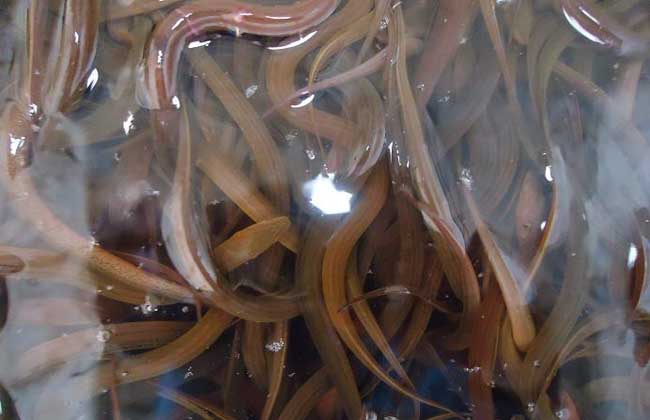
At present, the best method for artificially farming rice field eels is cage culture. Each mu of paddy field can hold 30 cages, and the cost of each cage is 50 yuan, while each cage can hold 10-15 jin of fry. By the time we sell them, the rice field eels in each cage are about 60 jin. If we choose fly maggots as the main feed for feeding rice field eels, every 1 jin of weight gain in rice field eels requires 4 jin of fly maggots. From placing the fry to our rice field eels maturing and being sold, about 200 jin of fly maggots are needed, and the cost of cultivating 1 jin of maggots is 3 jiao. Therefore, the cost of each rice field eel cage is about 260 yuan, while the income from selling the rice field eels raised in each cage at the end of the year is about 2,400 yuan. Therefore, the profit from rice field eel farming can reach 60,000 per mu. It can be seen that cage culture of rice field eels is our best choice.
Site selection
In order to maintain a good ecological environment for rice field eels, the selection of the rice field eel farming site is very important. A sunny, well-ventilated site should be chosen, with a good water source, and the water depth should be above 1 m (note: anything over 1 m is acceptable, with no upper limit).
Selection of cages
The mesh cloth used to make the cages should be about 20 mesh, and the mesh cloth material is best polyethylene, and the mesh cloth must be woven with interlocking threads to prevent the mesh openings from being stretched open by the rice field eels and allowing them to escape. There are two relatively good cage size specifications for rice field eel farming. One is 3 m long, 2 m wide, and 1.2 m high, and the other is 10 m long, 1 m wide, and 1.2 m high. This can be freely selected according to the farming site. There are mainly two ways to place cages in ponds. When the water depth is 1 m-1.5 m, fixed cages are used, and above 2 m, floating cages are used. At 1.5-2 m, it can be freely chosen. This should be determined according to the fluctuation of the pond water level. If the fluctuation is very large, it is best to use floating cages. The density of cages placed in the water is also affected by the water depth. When the water depth is 1-1.5 m, the area of cages placed should preferably not exceed 1/3 of the pond area. If the water depth is above 2 m, it can occupy 1/2 of the pond area. The underwater depth of the cages should not exceed 50 cm at most.
Aquatic plants
For aquatic plants in rice field eel cage culture, you can choose alligator weed or water hyacinth. Relatively speaking, water hyacinth is better. If the local temperature is too low to cultivate water hyacinth or if there is no water hyacinth for other reasons, alligator weed can also be used for farming. Wild "aquatic plants" (aquatic plants, namely alligator weed or water hyacinth) generally do not have well-developed root systems. We need to cultivate the wild "aquatic plants" ourselves for a period of time to make their root systems well developed so as to meet the needs of rice field eel farming. Phosphate fertilizer can make the "aquatic plants" root systems well developed, and urea can make their branches and leaves lush (those with well-developed "aquatic plant" root systems do not need the above process). When laying out the "aquatic plants" in the cage, try to cover the entire cage, and then kill insects and disinfect them. For insect killing, crystal trichlorfon can be used, and for disinfection, bleaching powder can be used.
Collecting fry
There are mainly two sources of rice field eel fry. One is to buy directly from eel catchers, and the other is to buy directly from experienced farmers. The selection of rice field eel fry is the most critical step, as it directly determines the success or failure of rice field eel farming. Rice field eel fry should be selected with no wounds on the surface and with vitality. Rice field eels whose whole bodies are limp and weak absolutely cannot survive being farmed. This kind of rice field eel is very easy to pick up, and generally you can pick up a big handful at once. If the mucus on the body surface of the rice field eels has fallen off, it indicates that this kind of rice field eel has contracted fever disease. You can judge by feeling the viscosity of the water with your hand (note: even if the rice field eels are very lively and not easy to catch, if the water is very viscous, this kind of rice field eel also cannot be purchased).
Disease prevention
Once rice field eels climb onto the grass, it is best to sell the rice field eels that have climbed onto the grass as soon as possible. This kind of rice field eel currently cannot be treated. Usually pay more attention to observation. If white fuzz is found growing on the body surface of the rice field eels, this is a symptom of saprolegniasis, and gallnut can be boiled in water and splashed over the whole pond. Usually, chlorine dioxide can be splashed over the whole pond to prevent the occurrence of diseases.
Selection of bait
The bait for rice field eels mainly includes earthworms, fly maggots, and trash fish. The choice of bait is generally freely selected according to the conditions of each place. Earthworms are the best bait for rice field eels, but their price is very high and resources are scarce, so artificial farming of rice field eels generally does not use earthworms as feed for rice field eels. Fly maggots are the best bait for artificially farming rice field eels. Their yield is high, the farming difficulty is low, and the raw materials for farming fly maggots come from a wide range of sources. Trash fish are generally used in areas rich in fish resources where the price is relatively low. Using trash fish as bait for rice field eels is relatively convenient. There is no need to farm them yourself. After the trash fish are ground into fish paste, they can be fed directly.
Selling rice field eels
Rice field eels should be sold at the time when the price is highest (around the Spring Festival), when the price is about 3 times that of ordinary times. When selling rice field eels, try to sell large and small rice field eels separately, as the price difference for rice field eels of different sizes is very large. Rice field eels of about 200 g can sell for about 40 per jin, while those below 25 g can only sell for a little over 20 (this price is for reference only). One cage (6 to 8 sq m) is stocked with about 20 jin of fry, and by the end of the year more than 60 jin of finished eels can be harvested in total (if this level cannot be reached, you should seriously review your technical experience), for a net increase of about 40 jin. In recent years, the transfer-out price at the end of each year has been above 30 yuan, therefore, after deducting costs, one cage can net more than 1,000 yuan. For a pond water surface of 3 to 4 mu, at least more than 100 cages can be placed, therefore more than 100,000 yuan can be netted in one year. The larger the scale, the more you earn.