What is the current state of eel farming? A detailed explanation in one article
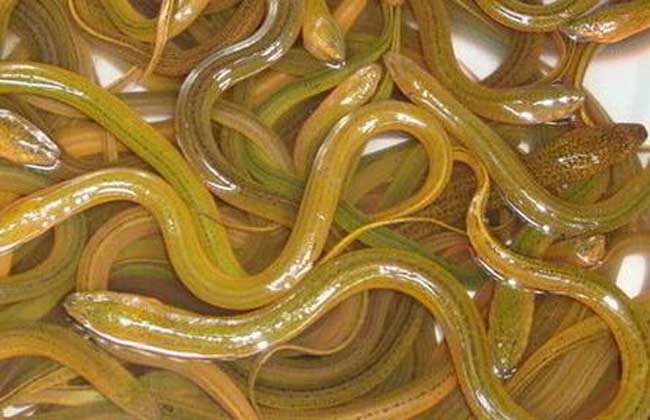
China's current eel industry is showing good momentum for development, the public's enthusiasm for farming eels is relatively high, and an eel farming boom has formed within a certain scope. However, due to constraints such as insufficient scientific and technological reserves and scientific research lagging behind production, there are still many problems that urgently need to be solved in eel production and operation.
The current state of eel farming
1. The situation in which scientific research lags behind production has improved somewhat. The history of artificial eel farming is relatively short, and comprehensive research on eels only began in recent years, but this has already changed the passive situation in which scientific research lagged behind production to some extent. In the past two years, the number of papers and summary reports introducing new achievements and new experience in eel farming in professional aquaculture journals has increased greatly compared with previous years, their scientific and technological content has increased greatly, and the speed of converting achievements into productivity has accelerated greatly.
2. Large-scale and intensive farming is showing good momentum. Changing the traditional scattered small-scale operation of individual ponds into contiguous intensive large-scale farming is a new farming form that has only appeared in recent years. Because it has good benefits, it gained public attention as soon as it appeared. For example, the factory-style eel farming of Wanlong Eel Industry Co., Ltd. in Huainan, Anhui, and the pond cage eel farming in Hubei and other places have attracted increasing attention and favor from all sides.
3. China's position in the international eel market is rising day by day. According to recent feedback from the United States, the current demand in the U.S. market for famous and high-quality aquatic products such as Chinese eels and loaches exceeds supply, and the market potential is still very large. However, the eels required for export must be large in size, generally 150 grams per fish or more. Producing large-sized commercial eels is very important for opening up the international market, and there are many lessons and experiences in this regard. For example, the trend toward smaller individual Chinese mitten crabs led to a sharp drop in market prices.
4. The processing industry has begun to receive attention from relevant parties. At present, in addition to the export of live and fresh eels, processing industries such as grilled eel skewers, canned eel, shredded eel, and eel sections have appeared. South Korea began exporting skinned eels to Japan very early, while China is still blank in the processing of skinned eels. Nevertheless, the eel processing industry has received attention from aquatic product processing enterprises and social financial groups.
5. Investment in the eel industry has shown a trend toward diversification. A few years ago, only the public used idle land in front of and behind their houses for scattered farming, but now some social forces are optimistic about the eel farming industry and have begun to inject capital to carry out batch production and operation.
6. Modern communication networks have begun to enter the eel industry. Modern large-scale production cannot be separated from the rapidly developing information superhighway. Relatively speaking, the entire aquaculture industry is relatively lagging in using modern communication networks to develop the industry. At present, aquatic science research departments are doing somewhat better than production management departments in this regard, but some eel industry operators have already begun to attach importance to this issue. For example, Sichuan Jianyang Dazhong Company took the lead in establishing websites related to eel production, supply, and sales and setting up special webpages, putting information such as the company's commercial eels and seedlings onto the Internet.
Problems existing in eel farming
1. The large-scale production of seedlings is still lagging. Seedlings are the foundation of production, and the contradiction between the rapid development of eel farming and the serious shortage of seedling supply has become more prominent.
2. Natural eel resources urgently need protection. In recent years, eel farming seedlings have mainly depended on wild capture, which has caused great damage to eel resources.
3. Eel diseases have become a major factor restricting production development. With the development of intensive eel farming, there are more and more eel diseases. According to statistics, there are currently as many as nearly 30 types of eel diseases of various kinds.
4. The development of compound feed is quite lagging. Due to the special feeding habits of eels, relying only on live biological bait cannot meet the needs of large-scale production. Feeding compound feed is the general trend; however, a complete formula feed for eels has not yet been developed.
5. The degree of intensive farming needs to be improved. China's current intensive eel farming yield is 10-20 kg per sq m, while the three-dimensional intensive eel farming developed by Japan, Singapore, and other countries not only has a high degree of intensification, but also reaches a yield of 50 kg per sq m per layer.