Analysis of the Cost and Profit of Rice Field Eel Farming: How Good Are the Returns?
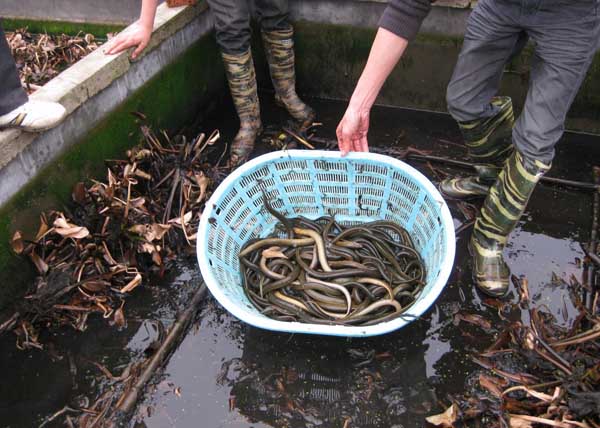
In recent years, rice field eel farming has become increasingly popular. Because prices are relatively stable, many farmers are planning to enter the rice field eel farming industry. For this reason, I have compiled some data from the internet and, combined with some of my own experience, would like to share the cost and profitability situation of rice field eel farming with everyone, aiming to offer a modest contribution and serve as reference only.
Case One
Let us take a 10 sq m breeding pond as an example to make a rough estimate of the economic returns of rice field eel farming.
1. Pond construction cost: 200 yuan.
2. Purchasing 15-20 kg of wild rice field eels, calculated at the summer medium size (30-50 g per fish) at 15-20 yuan per kg, costs about 300-400 yuan.
3. After 5-8 months of rearing, the body weight of rice field eels can increase by 3-5 times. Calculating at a 3-fold weight gain, 20 kg of rice field eels can gain 60 kg. At a feed cost of 8 yuan per 1 kg of weight gain (in practice, using large amounts of fly maggots and earthworms costs far less than this), the feed cost would be 480 yuan.
4. Medicine and other expenses: 100 yuan. The total of the above four costs is approximately 1080-1180 yuan.
What is obtained is 80 kg of large-size rice field eels (over 100 g per fish). Calculated at the medium price for large-size rice field eels purchased on the winter-spring market (40 yuan per kg), the income would be 3200 yuan, giving an input-output ratio of about 1:2.8.
To put it more specifically, one 10 sq m breeding pond can generate a profit of more than 2000 yuan over several months of rearing (200 yuan per sq m). An ordinary farmer, taking the construction of 50 breeding ponds as an example, could earn over 100,000 yuan.
People are accustomed to regarding rough estimates of certain farming projects as “padding with water,” but we can say truthfully that the above rough estimate is merely a very conservative estimate based on medium conditions. According to our farming practice, the returns are even higher than this level. But we need not say more here; we believe that the practice of authoritative experts is more credible. Click here to view the experimental reports of authoritative experts.
Case Two
Rice field eel farming is a hot farming project today. The supply-demand contradiction for rice field eels in the domestic market is prominent, and demand in Japan, South Korea, Thailand, and the Hong Kong, Macao, and Taiwan regions of China is also showing a growth trend. South Korea alone imports 200,000 tons annually.
As for wild rice field eel resources, apart from certain distributions remaining in Sichuan, Chongqing, Hunan, Hubei, Anhui and other areas, other regions have been heavily destroyed, and it is expected that they will gradually become extinct in a few years.
The growth in demand and the reduction of resources have made the market supply of rice field eels increasingly tight, with prices rising steadily.
In winter, the daily supply-demand gap in coastal cities reaches over 100 tons. The wholesale price of rice field eels over 100 g per fish reaches 60-70 yuan per kg, those over 50 g reach 40-50 yuan, and those under 50 g reach 20-30 yuan. The high market prices have brought enormous profit margins to rice field eel farming.
The ecological small-pond dense-culture technique for rice field eel farming has very high economic returns.
② Purchasing 20 kg of wild rice field eels, calculated at the summer medium size (30-50 g per fish) at 15 yuan per kg, costs 300 yuan.
③ After 5-8 months of rearing, the body weight of rice field eels can increase by 3-5 times. Calculating at a 3-fold weight gain, 20 kg of rice field eels can gain 60 kg. At a feed cost of 8 yuan per 1 kg of weight gain (if large amounts of fly maggots, earthworms, etc. are used, the cost can be greatly reduced), the feed cost would be 480 yuan.
④ Medicine and other expenses: 100 yuan. The total of the above four costs is 1080 yuan. What is obtained is 80 kg of large-size rice field eels (over 100 g per fish). Calculated at the medium price for large-size rice field eels purchased on the winter-spring market (40 yuan per kg), the income would be 3200 yuan, giving an input-output ratio of 1:2. That is, one 10 sq m breeding pond can generate a profit of 2000 yuan over several months of rearing.
Rice field eels have high nutritional value and also possess tonic and health-care effects. Rice field eels have strong survival ability, are easy to farm, and have advantages such as requiring little land, low investment, and high returns. In recent years, with the increase in international and domestic market demand, they have become one of the freshwater famous and superior species with good farming prospects, achieving good economic returns. The following is our analysis of the economic returns of rice field eel farming:
Taking the conversion of one mu of rice paddy for rice field eel farming as an example, the conversion cost for one mu of rice paddy is about 500 yuan. One mu of rice paddy requires about 600 jin of rice field eel fry (about 30,000 fish). Rice field eel fry at a market price of 6-12 yuan per jin, calculated at 10 yuan, comes to 6000 yuan for 600 jin. The rearing cost (including medicine) is about 7000 yuan, and the total investment is about 13,500 yuan.
After 6 to 8 months of rearing, the body weight of rice field eels can increase by 3-5 times. Calculating at 3 times, the annual output of one mu of rice paddy is about 600×3=1800 jin. At a rice field eel price of at least 30 yuan, the annual output value is 48,000 yuan, with an annual net profit of over 30,000 yuan. If lotus roots or wild rice stems are intercropped for three-dimensional cultivation, the annual net profit per mu of rice paddy would be even higher.
Summary
In recent years, wild rice field eels have been heavily harvested and are on the verge of extinction, while the increase in artificial farming output compared with the rapid decrease of wild rice field eels can be said to be a drop in the bucket, causing market supply to fall short of demand and providing opportunities for many farmer friends who want to return home to start businesses. From the above analysis, we can draw the conclusion: rice field eel farming is a profitable farming project.
China's current rice field eel industry has shown good development momentum, the enthusiasm of the masses for farming eels is relatively high, and a rice field eel farming boom has formed within a certain scope. However, due to constraints such as insufficient scientific and technological reserves and research lagging behind production, there are still many problems urgently needing solutions in rice field eel production and operation.
Main Characteristics of the Current State of Rice Field Eel Farming
1. The situation of scientific research lagging behind production has improved
The history of artificial rice field eel farming is relatively short, and more comprehensive research on rice field eels began only in recent years, but this has already improved the passive situation of scientific research lagging behind production. In the past two years, the number of papers and summary reports introducing new achievements and new experiences in eel farming in aquatic professional magazines has greatly increased compared with previous years, the scientific and technological content has greatly improved, and the speed of converting achievements into productivity has greatly accelerated.
2. Large-scale and intensive farming is showing good momentum
Changing the traditional scattered small-scale single-pond production and operation into contiguous intensive large-scale farming is a new farming form that has only appeared in recent years. Because of its good returns, it received the attention of the masses as soon as it appeared. For example, the factory-style eel farming of Wanlong Eel Industry Co., Ltd. in Huainan, Anhui, and the pond net-cage eel farming in Hubei and other places have attracted increasing attention and favor from various quarters.
3. China's position in the international market for rice field eels is increasingly improving
According to recent feedback from the United States, the current demand in the U.S. market for China's famous and superior aquatic products such as rice field eels and loaches is in short supply, and the market potential is still very large. However, the rice field eels required for export must be large in size, generally over 150 g per fish. Producing large-size commercial eels is very important for opening up the international market, and there are many experiences and lessons in this regard. For example, the trend toward miniaturization of individual river crabs led to a sharp drop in market prices.
4. The processing industry has begun to receive attention from relevant quarters
At present, in addition to exporting live and fresh eels, processed industries such as roasted eel skewers, rice field eel cans, shredded eel, and eel sections have appeared. South Korea began exporting skinned eels to Japan very early, while China is still blank in skinned eel processing. Nevertheless, the rice field eel processing industry has received attention from aquatic processing enterprises and social financial groups.
5. Investment in the rice field eel industry has shown a trend toward diversification
A few years ago, it was only the masses using idle land around their houses for scattered farming, but now some social forces are optimistic about the eel farming industry and have begun to inject capital for batch production and operation.
6. Modern communication networks have begun to enter the rice field eel industry
Modern large-scale production cannot be separated from the rapidly developing information superhighway. Relatively speaking, the entire aquatic industry is relatively lagging in using modern communication networks to develop the industry. At present, aquatic scientific research departments are somewhat better off than production management departments in this regard, but some rice field eel industry players have begun to attach importance to this issue. For example, Sichuan Jianyang Dazhong Company took the lead in establishing websites and setting up special web pages related to rice field eel production, supply, and sales, putting information such as the company's commercial eels and fry onto the international internet.
Main Problems Existing in Rice Field Eel Farming
1. Large-scale fry production is still lagging behind
Fry are the foundation of production, and the contradiction between the rapid development of rice field eel farming and the serious shortage of fry supply is becoming more prominent.
2. Natural rice field eel resources urgently need protection
In recent years, eel farming fry have mainly depended on wild capture, which has caused great damage to rice field eel resources.
3. Diseases of rice field eels have become a major factor restricting production development
With the development of intensive eel farming, eel diseases are increasing. According to statistics, there are currently as many as nearly 30 types of eel diseases.
4. The development of compound feed is quite lagging behind
Due to the special feeding habits of rice field eels, relying only on live biological bait cannot meet the needs of large-scale production. Feeding compound feed is the general trend; however, a complete-price compound feed for rice field eels has not yet been developed. 5? The degree of intensive farming needs to be improved. China's current intensive eel farming yield is 10-20 kg per sq m, while the three-dimensional intensive eel farming developed by Japan, Singapore and other countries not only has a high degree of intensification but also achieves a single-layer yield of 50 kg per sq m.
Development Trends of Rice Field Eel Farming
1. Fry production will achieve batch scale
Although the current production of rice field eel fry is not satisfactory, it has attracted great attention from relevant leading departments and scientific research units. According to the latest information, many provinces in the middle and lower reaches of the Yangtze River have made rice field eel fry production a key work content and target. For example, the Hubei Provincial Department of Science and Technology conducted project bidding across the province in the autumn of 2000 on the key problems of rice field eel fry and feed. According to expert predictions, the problem of batch production of rice field eel fry will at least be solved within a certain scope in the near future.
2. The entities investing in rice field eel operations will diversify
Modern large-scale production cannot be separated from the support of large and medium-sized enterprises and financial groups, and the same is true for rice field eel production. The relatively good returns of rice field eel farming have begun to attract the attention of businesses, and some businesses have already begun to invest in this industry. It is believed that in recent years, better enterprises, financial groups, and businesses will enter the rice field eel industry, ultimately solving the current problem of insufficient investment and achieving investment diversification.
3. Production forms will achieve scale and intensification
At present, factory-style intensive eel farming has formed a relatively good prototype. With the participation of social investment forces and the realization of investment diversification, scattered small-scale production forms will be replaced by factory-style and intensive production with batch and scale production. At present, the work of Sichuan Jianyang City's Dazhong Farming Company, which specializes in the rice field eel industry, and Anhui Huainan's Wanlong Eel Industry Co., Ltd. is quite effective.
4. Scientific research, production, and processing will achieve integration
Achieving the integration of scientific research, production, and processing is an inevitable trend of modern commodity production. Directly combining scientific and technological achievements and technical patents with production and processing and directly converting them into productivity is an inevitable requirement of development. Work in this area has just begun, and a flourishing development situation can be expected in the near future.
5. Circulation and marketing will achieve international trade orientation
With the acceleration of China's pace of joining the World Trade Organization (WTO), it is objectively required that rice field eels participate in international trade operations. In fact, from the 1970s to the early 1980s, China's rice field eel export trade was uniformly organized and operated by the state foreign trade department. Starting in the late 1980s, the foreign trade department liberalized the unified export operating rights for varieties such as pearls and rice field eels. Current exports are “each fighting alone” and “piecemeal.” With the participation of businesses and financial groups in the rice field eel industry, international trade orientation in circulation and marketing is just around the corner. This will also promote China's rice field eel farming industry into a brand-new stage of development.
Development Paths for Rice Field Eel Farming
1. Increase investment in rice field eel scientific research and strive to increase scientific and technological reserves
Investment in scientific research includes investment in research funds and investment in research manpower. The main content of research should include research on the physiological and ecological characteristics of rice field eels, research on the optimal environment for rice field eel production, and research on fry breeding and batch production.
2. Advocate healthy farming and ecological farming
As mentioned earlier, with the development of production, rice field eel diseases are showing a trend of diversification and complication. Solving this problem simply by administering drugs for prevention and treatment is not the best approach. Forms of farming such as healthy eel farming and ecological eel farming should be advocated to minimize the degree of drug residues in eel bodies. This is beneficial to people's health and, more importantly, beneficial to exporting for foreign exchange.
3. Use laws and regulations to protect natural rice field eel resources
First, strictly control the capture volume and market size; second, determine a reproduction protection period and prohibit catching rice field eels during the fry breeding period. At the beginning of the new century, the state appropriately amended the Fisheries Law to protect rice field eel resources in accordance with the law. Of course, an important aspect of protecting natural rice field eel resources is still to accelerate research progress on artificial fry breeding. Only when artificial fry supply reaches batch scale can the indiscriminate capture of natural rice field eel fry be better reduced.
4. Carry out factory-style farming and improve the degree of intensification
Learning advanced foreign eel farming experience and vigorously carrying out factory-style farming is one of the future directions of eel farming. The special habits of rice field eels, especially their habit of adapting to shallow water, make them more suitable for factory-style three-dimensional farming and even more suitable for intensive farming under conditions of artificial temperature regulation and control. Many things need to be addressed in this regard, such as water quality, water temperature, and dissolved oxygen in the environment, as well as the development of complete-price artificial compound feed.
5. Strengthen research on deep-processing products and increase export foreign exchange earning capacity
With the acceleration of China's pace of joining the World Trade Organization (WTO), broadening the sales volume of rice field eel products in the international market is very important. At present, China's export products are still mainly live rice field eels. In the future, research should be conducted on health foods, fast foods, and other aspects of rice field eels. In addition, strengthening trademark registration of products is also urgent. In short, the development of China's rice field eel industry requires the support of social forces, the redoubled efforts of scientific researchers to improve the scientific and technological content of the industry, and must also take the path of intensification, commercialization, and internationalization. Only in this way can China's rice field eel industry enter an era of rapid, sustainable, stable, and healthy development, injecting new vitality into China's aquatic industry.
Market Prospects for Rice Field Eel Farming
Rice field eels are a delicious delicacy and tonic health food deeply loved by consumers at home and abroad, and they sell very well in domestic and international markets. According to surveys, the current annual demand in the domestic market is nearly 3 million tons, Japan and South Korea need to import 200,000 tons annually, and demand in the Hong Kong and Macao regions of China is also showing a growth trend. At the same time, because eel bodies are rich in DHA, EPA, and other medicinal components, they have great development potential in deep processing and health product development. At present, the main sources supplying the rice field eel market come from wild capture and a certain amount of off-season stockpiling of wild eels. As for wild eel resources, apart from certain quantities still distributed in Sichuan, Hunan, and Hubei in China, other regions have been heavily destroyed, and it is expected that they will gradually die out in 4-5 years. The growth in demand and the reduction of resources have made the market supply of rice field eels increasingly tight, with prices rising steadily. At present, the price of rice field eels in the Japanese market is even higher than that of eels. In winter, the daily supply-demand gap in the Shanghai, Nanjing, and Hangzhou area reaches over 100 tons. The wholesale price of rice field eels over 100 g in size is 60-70 yuan per kg, those over 50 g are 40-50 yuan, and those under 50 g are 20-30 yuan. Many factors indicate that artificial rice field eel farming has broad profit margins.