Detailed Explanation of Key Points and Methods of Rice Field Eel Breeding Technology
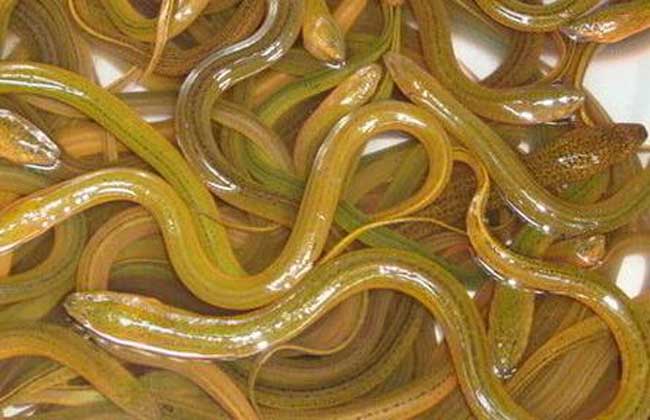
The rice field eel belongs to the order Synbranchiformes, family Synbranchidae, genus Monopterus. It is also known as rice field eel, shan fish, luo shan, snake fish, white eel, blood eel, chang fish, and long fish (in the northern Jiangsu area). The order Synbranchiformes is a collective term for about 15 species of slender eel-shaped fish. Two species are distributed in China: one is the common rice field eel, and the other is the mountain rice field eel, which is currently only found in Longchuan County, Yunnan, with no distribution in other areas of the country.
Construction of Eel Ponds
1. Cement pond area
An area of 30 sq m to 50 sq m is suitable. The pond surface and bottom must be polished smooth to prevent the eels from scratching their skin during activity, which could cause various bacterial and viral infections. The top of the pond should be about 30 cm above the water level, and a natural overflow outlet should be installed. The outlet should be fixed with mesh to prevent the eels from escaping. Cement pond eel farming is divided into two methods: with soil and without soil. Both methods require planting water peanut (Alternanthera philoxeroides) or water hyacinth (Eichhornia crassipes), which in hot seasons regulate water temperature and provide resting places for the eels. The entire pond can be planted, leaving only a small feeding opening. If farming with soil, it is suitable to spread 20 cm to 30 cm of mud, and the water level above the mud layer should be maintained at 20 cm to 25 cm. If the water is too deep, the eels will consume too much energy during activity; if too shallow, the water body is easily turbid and water temperature fluctuates greatly. If farming without soil, the water level should be maintained at 30 cm to 40 cm. The advantage of this farming mode is that the water disinfection effect is good. With soil farming, during disinfection the medicinal power is difficult to reach the mud and bottom, and various parasites and their intermediate hosts easily grow, such as leeches, flukes, and pond snails.
2. Rice field farming
First dig open the rice field mud, bury the net cage, then put the mud back into the net cage, fix the four corners of the net cage, and plant water peanut or water hyacinth. An area of 20 sq m to 30 sq m is suitable. In the net cage, it is not suitable to plant crops with rough and developed root systems such as rice, because the eels have the habit of burrowing into the soil and easily scratch their epidermis.
3. Net insertion farming in various ponds, lakes, and reservoirs
This is net cage farming without soil. An area of 15 sq m to 20 sq m is suitable, which facilitates disinfection and disease treatment. When disease occurs, the net cage and fish can be directly placed into a large disinfection container. Aquatic plants such as water peanut or water hyacinth should also be cultivated in the net cage to provide rest for the eels.
The area of the above farming modes should not be too large. If too large, it is easy to cause increased size differences among the eels during the farming process, which is unfavorable for growth.
Selection of Eel Fry
Yellow eel fry with large and dense black spots should be selected, as this type grows the fastest; yellow ones with small and irregular spots grow moderately; yellow-black ones grow more slowly; and pitch-black or blue-black ones grow the slowest, but this type of fry is relatively more aggressive.
When selecting fry, care should be taken not to select fry that are injured, electro-shocked, hooked, or trapped, but to select fry that are healthy, vigorous, strong at swimming against the current, and respond quickly when their tail end is gently touched. When selecting fry, fry of uniform size should be selected, because eels have the phenomenon of cannibalism, which is especially likely to occur when bait is insufficient.
Effects of Water Temperature and pH on Eels
Rice field eels are very sensitive to changes in water temperature. The suitable growth water temperature is 15°C to 30°C. At 28°C, activity is strongest, growth is fast, and feed utilization rate is high. During this period, attention should be paid to feeding the feed so that the eels eat their fill. When the water temperature is below 15°C, rice field eels do not feed and enter a hibernation state. Therefore, in the Jiangbei region, when the water temperature is unstable in April, do not add water to the pond or cast bait to lure the eels out of their holes, so as to avoid eel diseases caused by large water temperature changes. Eels can overwinter by the wet method, which is as follows: first drain the water, keep the soil layer moist, and in cold weather and snow, add a layer of straw or dry grass for insulation to prevent freezing. The deep water overwintering method can also be used, but it has a disadvantage: when the weather warms up the following year, the eels' activity increases and they come out of their holes to seek food, but because the weather and water temperature are still unstable at this time, the eels are prone to diseases such as colds.
pH value is also called acidity and alkalinity. During the rearing process, if dissolved oxygen is insufficient, the oxidation process is inhibited, and bait residues, organic matter, and excrement gradually accumulate and do not decompose fully, organic acids will accumulate and lower the pH value, affecting the growth of the eels. Therefore, during farming, attention should be paid to exchanging fresh, clean water, because eels like clean water quality. Normally, attention should be paid to frequently changing the water and measuring the pH value. Eels generally live suitably in neutral or weakly acidic water (pH between 6.5 and 7.2). When changing water, pay attention to the weather and water temperature. Each water change of 3 cm to 5 cm is suitable. It is best to slowly add fresh water first and then slowly discharge the old water. This should also be handled in this way during disease seasons. Because changing water too quickly easily causes large temperature differences, thereby causing the eels to catch cold.
Pond Management
1. Disinfect the pond before releasing fry
The disinfection time should be set about 10 days before releasing the fry, because too late may leave residual toxins in the pond, and too early may easily allow bacteria to grow again. During disinfection, keep the pond water at 5 cm to 6 cm high, and use 90 g/sq m to 120 g/sq m of quicklime for disinfection. On the second day after disinfection, it is best to use a rake to mix the mud and lime milk once so that it fully takes effect. During disinfection, add new water and discharge old water every 1 to 2 days.
2. Disinfection and release of fry
Before release, in order to determine whether residual toxins remain in the pond, 5 cm to 10 cm bighead carp or silver carp fry can be used as "test fish" at 2 fish/sq m to 3 fish/sq m. If the fish move normally, the toxicity has disappeared; otherwise, release should be postponed. Before release, disinfect the fry by soaking in 3% to 5% salt concentration for 10 minutes to 15 minutes, or 2 ppm to 5 ppm potassium permanganate, which can eliminate some pathogens and parasites and increase disease resistance. Disinfection is best carried out in a cool place, avoiding direct sunlight. The time can be appropriately increased or decreased according to the physique of the eel fry, judged by whether the fry show abnormal conditions. After disinfection, place them in clean water for temporary rearing in preparation for release. When releasing, they should be divided into ponds according to size to prevent mutual killing. Also note that the water temperature of the temporary rearing pond should be comparable to that of the large pond (that is, the release pond). The temperature difference between the two should be no greater than 3°C. If the difference is large, the water temperature should be appropriately adjusted.
3. Feeding management and growth
About one week after the eels are put into the pond, begin adding part of the new water. After that, add water once every 2 to 3 days, with 3 cm to 5 cm each time, so that the water level is maintained at about 25 cm. In hot summer weather, the number of water changes can be appropriately increased, with 3 cm to 5 cm released and added each time, so as to avoid excessive temperature differences.
Persist in patrolling the pond every day. When sick eels are found, promptly remove them and analyze the cause (sick fish generally do not enter holes and float on the water surface). Persist in intensive rearing, and achieve timed, fixed-point, fixed-quality, and fixed-quantity feeding. For routine disease prevention, 1 ppm bleaching powder or trichlorfon 0.2 ppm can be splashed over the whole pond (90% crystal type). It is advisable to prepare several varieties of disease-prevention drugs and change them frequently to prevent pathogens from developing drug resistance.
The growth speed of eels has a great relationship with the nutritional composition, type, and quality of the bait. Traditional farming uses small fish, small shrimp, earthworms, river clams, field snails, etc. Their freshness is difficult to guarantee, and they easily spoil and deteriorate, making eels prone to disease. The nutrients are relatively single, basically mainly protein, and the protein content of these wild trash fish is also not high. The digestive organs of eels are weak, not easy to digest and absorb, and not suitable for the growth requirements of eels. In particular, frozen fresh fish and clams are even harder to digest and absorb, and very easily cause enteritis. Feeding earthworms easily causes various parasitic diseases. Because earthworms live in moist, fertile soil, and various parasites also like to reproduce and lay eggs in this environment, earthworms become an intermediate infection source for eels.
In order to improve economic benefits, larger-sized eel fry should be selected to achieve the goal of going on the market the same year. Therefore, eels should be fed a complete compound feed with comprehensive nutrition and easy digestion and absorption. Currently there are three types of rice field eel compound feed on the market, namely powder feed, pellet feed, and extruded feed. Both powder feed and pellet feed inevitably have disadvantages such as easy loss, water quality pollution, and difficulty in observing feeding conditions. Extruded feed has good floating properties, high stability in water, light degree of water quality pollution, and easy observation of feeding conditions. Moreover, extruded feed undergoes high-temperature sterilization during the extrusion process, does not carry pathogens, and is the first choice among farming feeds. Farmers should choose good feed manufacturers and well-known brands to ensure product quality. Currently, the "Yinxiang" and "Fuxing" rice field eel extruded feeds on the market have been recognized by the majority of farmers.
Main Diseases and Their Treatment
1. Hemorrhagic disease: The cause is unknown. It is septicemic in nature. Eels fed earthworms are more prone to this disease, because parasitic diseases very easily lead to secondary hemorrhagic disease and enteritis.
[Symptoms] There is blood-like liquid in the mouth, which flows out when the fish is held upside down, and is more obvious after death. The body surface is covered with bleeding points of varying sizes, especially obvious on the abdomen. The anus is red and swollen, everted and bleeding. Sick fish often float to the surface to breathe deeply, called "standing post" by local farmers in Hubei. They continuously circle and turn. When the belly is cut open, the liver is seen to be bleeding and enlarged, the spleen is enlarged and purple, and the rectum is bleeding.
[Treatment] ① Splash furazolidone 0.2 ppm to 0.35 ppm over the whole pond (using furazolidone raw powder). ② Oral norfloxacin 5 g/100 kg fish, mixed into feed. ③ Tobacco leaves 30 cm/acre water depth, soaked in 250 g warm water for 5 hours to 8 hours, splashed over the whole pond. ④ Erythromycin 250,000 units for soaking sick eels. The above A and B can be used simultaneously, A and C used alternately every other day, for 3 days to 5 days continuously.
2. Red skin disease
[Symptoms] Sick fish move slowly and weakly, stick their heads out of the water all day, have local bleeding and inflammation, with red patches, mostly on the abdomen. In severe cases, the epidermis rots, and the intestines are congested and inflamed. The difference from hemorrhagic disease is that they do not circle.
[Treatment] ① Splash 1 ppm bleaching powder solution over the whole pond for 3 consecutive days. ② Soak sick eels in erythromycin.
3. Enteritis: Mainly caused by feeding spoiled and deteriorated frozen fish and clams or by insufficient feeding and excessive starvation.
[Symptoms] Slow activity, no feeding, blue-black body color, emaciation, intestinal congestion, yellow mucus flowing out, anus red and swollen and protruding, severely purple.
[Treatment] Normally use allicin or water pepper 5 kg per 100 kg fish for prevention. Add mint 3 kg to 4 kg per 100 kg rice field eel, boil in water and splash once every 7 days to 10 days.
4. Capillaria and acanthocephalan disease
[Cause] Most occur in those fed earthworms. They are white slender worms and easily cause enteritis.
[Treatment] ① Splash 90% crystal trichlorfon 0.5 ppm to 0.7 ppm solution over the whole pond. Sufficient water sources should be prepared when splashing, because eels are very sensitive to trichlorfon, and improper dosage can kill the whole pond. Trichlorfon is prohibited for oral use. ② Levamisole 5 g to 7.5 g per 50 kg eel × 6 days orally, or albendazole in the same amount. ③ Copper sulfate + ferrous sulfate (5:2) 0.7 ppm mixture splashed over the whole pond to kill parasites.
6. Tail rot disease: Mainly due to insufficient bait, cannibalism among the same species, or self-mutilation. Remove the fish and soak in erythromycin or splash 1 ppm bleaching powder.
7. Coma disease: Mainly caused by hot weather, high temperature, and shallow water. A small amount of clean water can be added, and fresh clam meat chopped and scattered into the pond, or fresh gourd chopped and scattered in.
8. Cold: Water temperature too high or too low, or sudden large water changes, causing fish body function disorders and death. Maintain water level and change water reasonably.
9. Fever: Mainly due to high density, hot weather, excessive fish secretions in the water, oxygen consumption, unclean water quality, and bait residues or small fish and clam meat not eaten and not removed, becoming foul. Prevention and control methods include A changing water; B splashing 0.7 ppm copper sulfate or 300,000 units penicillin in 25 kg water.
Feed for Rice Field Eels
Generally speaking, rice field eels are fish that mainly feed on animal-based feed, and require fresh and live feed, and do not eat rotten animal-based feed. For artificial farming, rice field eel feed should be mainly animal-based feed, supplemented by plant-based feed.
1. Animal-based fresh and live feed
This type of feed mainly includes earthworms, silkworm pupae, fly maggots, snails, clams, and small fish and shrimp, which rice field eels like to eat. Earthworms are the feed that rice field eels like most, with a dry body protein content of 61%, close to fish meal and silkworm pupae. The common point of these feeds is high protein content and rich nutrition, which is beneficial to the growth and development of rice field eels, and is the main body of feed for net cage eel farming.
2. Plant-based feed
Rice field eels mostly eat plant-based feed only when forced. Their digestive characteristics are that they can effectively digest animal protein, starch, and fat, but can hardly digest plant protein and cellulose. In large-scale farming, a certain amount of plant-based feed is needed. This is because eels in artificial farming environments obtain food more easily than individuals in natural environments, and eat more and better. Inputting a certain amount of cellulose-rich plant feed is beneficial to promoting the intestinal peristalsis of rice field eels and improving feeding intensity. Usually, a certain amount of wheat flour (which is also a binder), corn flour, bran, chaff, and bean dregs is added to compound feed.
3. Artificial compound feed
Feeding artificial compound feed is the trend of large-scale eel farming. In recent years, experiments have proved that compound feed is suitable for rice field eel farming. Generally speaking, compound feed is required to have a relatively high protein content, generally between 35% and 45%, or even higher. At the same time, a certain degree of palatability is required. Of course, the proportion of animal-based feed in compound feed is still required to be relatively large. For example, the rice field eel feed formula 1 by Yu Jisheng of the Famous and Special Aquatic Products Research Institute of Macheng City, Hubei Province is: fish meal 28%, soybean cake powder 10%, earthworms (dried equivalent) 20%, cooked soybean powder 30%, blood meal 2.5%, corn gluten 1.5%, monocalcium phosphate 3%, binder 5%.
4. Other feed
According to the habits of rice field eels, animal offal can be used as supplementary feed for artificial eel farming, such as pig and cow lungs and other internal organs, but they are required to be relatively fresh and must not be rotten and deteriorated internal organs. There are also insects. Some people use black light lamps above net cages to attract insects to feed eels and have achieved good results. A certain amount of loach and field snails are put into the net cage, and certain techniques are used to let them breed small loaches and small snails in the net cage to become live bait for the eels.