What are the main advantages of cage culture of Asian swamp eels (Monopterus albus)?
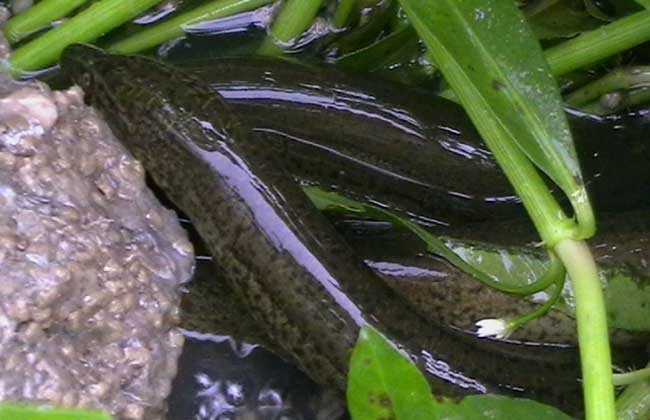
Cement pond culture of Asian swamp eels is also a farming method adopted by farmers; using cement ponds, the culture of Asian swamp eels can be carried out perfectly well. However, from a cost perspective, cement pond culture of Asian swamp eels is somewhat more expensive; generally, the construction cost of a cement pond is about 100 yuan per sq m, and the specific price varies slightly according to the local market. It is recommended that, if farmers can carry out cage culture of Asian swamp eels, they should choose cage culture; if cage culture truly cannot be carried out, they can choose cement ponds for culturing Asian swamp eels.
Small restriction on the farming area
It is suitable for all Asian swamp eel production areas nationwide. Cage culture requires conditions such as lakes, reservoirs, ponds and other water bodies with sufficient water volume and stable water levels, whereas cement pond culture can be built on sloping land or in courtyards, with low requirements for environmental conditions.
Accurate medication and small dosage
The water volume in a cement pond is very easy to calculate, allowing accurate medication, whereas the inside and outside of a cage are connected; because the bottom of water bodies such as ponds, river bends and lakes is not necessarily flat, and the depth at which cages are placed varies, the medication dosage is very difficult to determine accurately. To achieve the ideal medicinal effect, the usual approach is to increase the dosage, which on the one hand raises farming costs and on the other hand can easily cause phytotoxicity if not handled well.
Convenient observation and management
After the Asian swamp eels in a cement pond have completed feeding training, they all feed in the blank areas without water plants, making it very convenient to observe their feeding and activity. Routine general management is carried out on land, and operations are very easy. Cages are generally placed in areas with a water depth of more than 1 m, and the cages are full of water plants, making observation very inconvenient; routine management requires entering the water or using a small boat, making operations extremely inconvenient.
Thorough escape prevention
Ecological pond culture of Asian swamp eels has multiple barriers for escape prevention: the eel pond, the drainage ditch and the outlet of the whole site, so that almost no Asian swamp eel can escape from the site. In cage culture of Asian swamp eels, however, strong winds blowing down the cages, rats biting through the cages, and Asian swamp eels climbing out of the cages along the water plants can all cause the eels to escape.
Small water consumption
The water depth of an eel pond is generally only 30 cm. During the peak feeding and growth season for Asian swamp eels, we completely change the water once about every 10 days. A 10 sq m culture pond requires only 0.3 cubic meters of water per day, and a 1000 sq m culture farm requires only 30 cubic meters of water per day. In cage culture, however, during dry seasons, in areas where the water volume is not very sufficient, it is very easy for "hanging cages" to occur due to lower water levels; and for the vast majority of Asian swamp eel production areas, using pond culture to completely change the water once is not an easy task either.
Convenient breeding
As the supply of wild eel fry becomes increasingly tight, carrying out self-breeding of fry is something we will have to do sooner or later. Using cement ponds makes it very convenient to carry out the breeding of eel fry, whereas with other farming methods such as cages, carrying out the breeding of eel fry is very difficult.
Convenient harvesting
Harvesting Asian swamp eels from cages is quite difficult, especially in winter. A single cage requires several people to drag it to the shore, and there is a lot of mud in the cage; doing such work in the cold winter is hard beyond imagination. Once pond culture is used, however, harvesting the eels becomes convenient: just drain the water completely and scoop them up with a net.
Bacteria and viruses will not develop drug resistance
In ponds used for cage culture, after several years, due to long-term medication, the bacteria and viruses in the water will develop drug resistance, but the pond is very large with a lot of mud, so it is impossible to thoroughly clean it. At present, many farmers in Hubei have already encountered this situation, suffering heavy losses and incurring deficits. Pond culture does not have these problems; after selling the Asian swamp eels, one only needs to thoroughly clean and disinfect the pond. In this way it becomes a new pond again.
Heat preservation and temperature increase
In cage culture, heat preservation in winter is impossible, so there is no need to say more about this. In the severe weather at the beginning of 2008, for example, 600 tons of Asian swamp eels froze to death in one place in Hubei, causing the price of Asian swamp eels that spring to exceed the highest level in history. With pond culture methods, however, in winter one only needs to cover the pond with plastic film and the Asian swamp eels can safely overwinter; covering with plastic film in spring can raise the water temperature by 3~5°C, and the Asian swamp eels begin feeding 15~20 days earlier. In autumn, stopping feeding can be postponed by 15~20 days. In this way, the annual feeding time of the Asian swamp eels can be increased by one month, and the yield can be increased by 10%~20%, while cage culture simply cannot achieve this.
Improve the quality of commercial Asian swamp eels
In pond culture of Asian swamp eels, the water can be changed frequently to keep the water quality clear; the Asian swamp eels cultured this way have bright coloration and an appearance comparable to wild Asian swamp eels, with extremely excellent quality. However, because cage culture of Asian swamp eels cannot control water quality, the cultured eels can be recognized at a glance as cage-cultured, and their commercial value cannot compare with that of pond-cultured Asian swamp eels.