How to promote early feeding in rice field eel (Monopterus albus) farming in early spring?
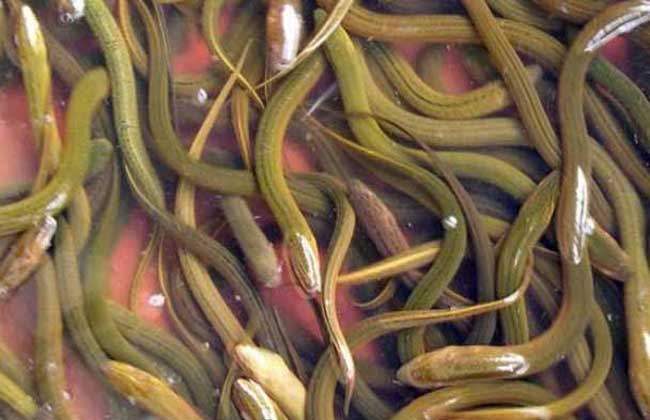
In spring, temperatures are relatively low, rice field eels do not eat and grow slowly. How to manage early spring feeding well so that rice field eels start feeding early is the key to raising farming yields and increasing income. Based on the characteristics of low temperature and little light in early spring, the following measures should be carried out to promote early feeding of rice field eels.
Pay attention to heat preservation
Temperatures in early spring are relatively low, and rice field eels rarely come out of their burrows to be active. In artificial farming, heat preservation work must be done well so that the micro-environmental temperature of the eel pond is raised, which is the only way to get rice field eels to come out of their burrows and seek food. If the eel pond is not large, miscellaneous wood and bamboo can be used to build a simple frame over the eel pond, and drip-free plastic film or ordinary agricultural film (drip-free film is best) can be laid over the frame. In windy or low-temperature weather, cover with film day and night; when there is no wind, the film can be slightly uncovered at noon for ventilation; when there is sun, the film can be uncovered at noon to sun the pond, allowing the eel pond to store heat and the aquatic plants in the pond to carry out photosynthesis fully.
Increase temperature appropriately
In early spring, water changes in eel ponds generally use deep well groundwater, because its water temperature is generally above 10°C; places with hot springs can draw on warm spring water; places near factories can draw on factory cooling water. Change 1/2 of the water each time, generally once every 5-7 days. But note that the water temperature must not be more than 3°C higher than the eel pond water temperature. If the water temperature is too high, it can first be introduced into a storage pond and left for a period of time, and changed in after reaching the required water temperature.
Feed bait
When rice field eels start feeding in early spring, the bait is required to be all fresh live bait. The best bait is live earthworms, followed by yellow mealworms, then field snails, mussel meat, and so on. Using fresh live bait can quickly adjust the appetite of rice field eels and restore their strength. Generally, after feeding live bait for about 1 week, the rice field eels will gradually come out in full force; after that, it is better to gradually switch to scattering it over the mud ridges, but the amount should not be too much. The next day, if leftover bait is found in the pond, the feeding amount should be reduced; if the bait has been eaten up, the feeding amount should be appropriately increased. When large numbers of rice field eels come out to eat, feeding should be changed to fixed-point feeding at feeding stations.