How to deal with leeches in a rice field eel breeding pond?
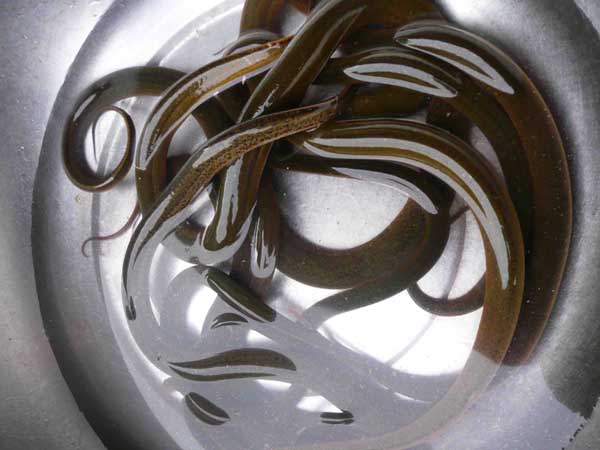
Leech is the common name for some species of the class Hirudinea in the phylum Annelida, also called bloodsucker. In many places, large numbers of leeches appear in rice field eel breeding, parasitizing the body surface of the eels and causing them to gradually die, and this is even more serious when eels are raised in shallow water such as rice fields. Generally, the greater the breeding density, the faster the infection spreads, and the death toll goes from few to many and finally to mass mortality. Because the rice field eel is a scaleless fish with a rich blood supply on its body surface, leeches can easily parasitize it. In my investigation, I found that leeches can parasitize everything from 5--7 cm long eel fry of the current year all the way to adult eels and brood eels. Therefore, eel farmers must have sufficient awareness of the harm caused by leeches. They should do a good job of leech prevention and control. The main points are as follows:
When choosing a water area for rice field eel breeding, you should investigate in advance whether leeches are present in that water area. If there are many leeches in the water, filtration and other measures should be taken when filling the water to prevent introducing leeches. Otherwise, it is not suitable as a rice field eel breeding site.
For eel-rearing water bodies, especially rice field eel-rearing water bodies, thorough cleaning and disinfection should be carried out before stocking the eel fry. Generally, about 100 kg of quicklime is used per 667 sq m (1 mu), and after turning over the surface mud, water is added to a depth of 10 cm and soaked for about 10 days. If conditions permit, the pH of the water body can be measured so that the pond water pH is maintained at 9 for more than 3 days.
Before the rice field eels are put into the pond, check them carefully, and if they are parasitized by leeches, treat them accordingly. There are many treatment methods. You can soak them in 2% salt water for 10 minutes to make the leeches completely fall off the eel body, but sick eels are prone to die; you can also use copper sulfate at a dose of 10 mg/L and soak the rice field eels for 5--10 minutes, which can make the leeches fall off and die, but it must be used reasonably and properly, otherwise eel deaths are likely to occur. In addition, you can soak them with Zhimin 2000. The usual concentration is 5 mL of the drug per ton of water (about 5 g), and soaking for 6--7 hours can make all the leeches fall off; at 10 mL of the drug per ton of water, generally soaking for 1--2 hours can make all the leeches fall off. According to my practice, Zhimin 2000 is the safest to use and has excellent effects, but its disadvantages are the longer soaking time and the higher drug price.
If leech parasitism occurs during rice field eel breeding, the best method is to use Zhimin 2000 and splash 5 mL of the drug per ton of water over the whole pond. The next option is to first catch the rice field eels and use the soaking treatment to deal with the leeches on the eel body surface, then disinfect the breeding pond by splashing copper sulfate at 10 mg/L over the whole pond to kill the remaining leeches in the pond. Another option is a semi-sacrificial treatment, directly splashing high-concentration copper sulfate over the whole pond. With this method, the pond should have relatively deep burrows or aquatic plants for the rice field eels to extend out of the water or hide in. This method will kill some of the rice field eels, so it should be used after weighing the pros and cons, and the water should be changed promptly.
For beginners in eel farming or those with poor technique, it is not advisable to blindly pursue high density. For example, in rice field eel farming, the yield per 667 sq m should be controlled below 400 kg, which can reduce mutual infection among the rice field eels. To be prudent, when using a new drug on rice field eels, a small preliminary trial should be done before application, to prevent unnecessary losses caused by drugs with the same name and fake drugs.