What are the winter feeding and management measures for rice field eels?
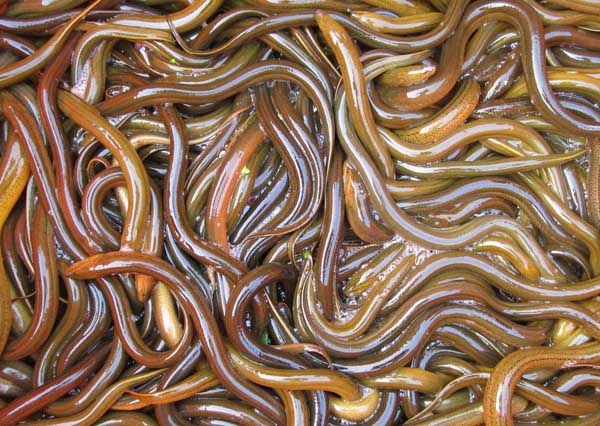
The rice field eel (Monopterus albus) is a semi-hibernating fish. When the temperature drops below 15°C, the eel basically stops eating and moving, and hibernates relying on minimal respiration. Therefore, after autumn arrives, as the temperature gradually drops, the eel's foraging and activity gradually weaken. At this time, by strengthening optimized management in autumn and winter, not only can it continue to gain fat and weight, but the overwintering survival rate can also be improved, which is beneficial for increasing the yield in the coming year. The main optimized feeding and management measures for rice field eels in autumn and winter are as follows:
Increase feeding of fat-rich feed
Feeding more feed with high fat content can allow the eel to accumulate more fat to supply the consumption needed during the stop-feeding hibernation and overwintering period. Feed with high fat content mainly includes silkworm pupae, earthworms, fly maggots, etc. When adding fat-rich feed for rice field eels, feed as early as possible, generally before November, because the autumn temperature is still relatively high, which is conducive to the eel's utilization, absorption and transformation of fat-rich feed, increasing the energy needed for overwintering and enhancing its ability to resist cold, disease and other aspects during overwintering.
Reasonably capture for market
Rice field eels have the characteristic of liking to burrow into the mud at the bottom of the pond, especially after the temperature drops significantly in late autumn, when they will burrow into deep mud to overwinter. Therefore, for adult eels that meet market specifications, they should be reasonably captured for market as early as possible before winter begins. When capturing, first drain the pond water, remove the surface mud, and then use both hands to turn over the mud at the bottom of the pond to capture them. Avoid using hard and sharp tools such as iron spades and shovels to dig them out, to prevent cutting or bruising the eel bodies. At the same time, capture the large ones and leave the small ones, so as to produce eggs and reproduce in the coming year.
Strengthen overwintering protection
For eels left in the pond to overwinter, two methods can be used for overwintering protection: First, for eel ponds with relatively good water source conditions, the deep-water overwintering method can be used. That is, maintain a water layer of 50-70 cm deep in the pond, and place some aquatic plants, duckweed, etc. on the water surface. When ice forms in winter, break the ice layer for ventilation. In this way, the temperature at the bottom of the pond can be maintained, and the oxygen content of the pond water can also be maintained, creating ideal overwintering conditions for the eels. Second, for eel ponds with insufficiently good water source conditions, the pond water can be drained for overwintering when the eels begin to hibernate. However, note that the pond soil must remain moist and must not be too dry; the pond soil should be covered with plastic netting to prevent cats, dogs, weasels, rats and other animals from preying on the eels; in severe cold and freezing conditions, the pond surface should use the covering insulation method for insulation and frost protection.