Detailed Explanation of Key Points for Spring Management in Rice Field Eel Farming
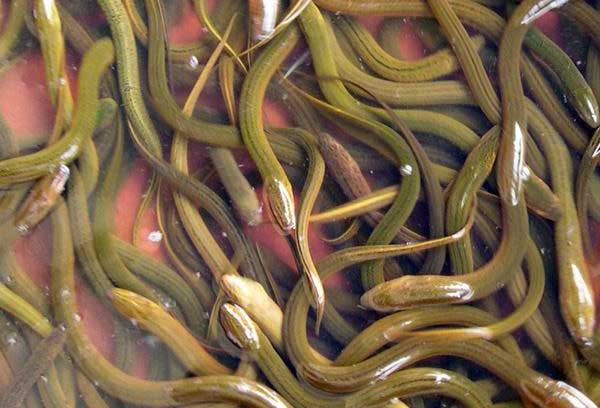
As the saying goes: "The whole year's work depends on a good start in spring." Doing a good job of spring management is one of the conditions for successful rice field eel farming. Below, the editor of Qiannong Network will introduce to you what the key points for spring management in rice field eel farming are!
Preparatory Work
Around Qingming (early April), when the water temperature generally stabilizes above 10°C, preparatory work can begin. First, clean the environment around the breeding pond, then carry out chemical disinfection. The method is to make a saturated lime solution of 50 g/L using quicklime, filter out the clear liquid, add 10 g/L of caustic soda and stir evenly to make a strong alkaline disinfectant, then spray this liquid around the breeding pond for disinfection. Finally, remove the overwintering covering from the surface of the eel pond, and immediately spray the disinfectant on the mud surface and the inner walls of the pond. After completing the above work, check the overwintering condition of the rice field eels and whether the facilities of the eel pond are intact. At the same time, the mud ridges in the pond should also be trimmed and planted with aquatic plants such as arrowhead, water chestnut, taro, etc.
Maintaining Water Temperature
In spring, the temperature is relatively low, and sometimes a "late spring cold" phenomenon occurs. Therefore, heat preservation work must be done well. Initially, the plastic film used for overwintering can be temporarily borrowed for covering. On windless, sunny noons, uncover the film to expose it to the sun for a few hours, and cover it again in the afternoon to keep warm. If conditions permit, electric lights or other heating facilities can be used. Using electric lights for heating can also enhance lighting and promote the reproduction and growth of algae, thereby achieving the purpose of inhibiting the reproduction of harmful bacteria. If there are grape vines around the eel pond, especially on top, branch thinning should be strengthened to make use of sunlight as much as possible.
Water Quality Management
The rice field eel is an animal that prefers shallow water and warm conditions, so in early spring, the water level should be controlled at around 6 cm to facilitate the rise of water temperature. At the same time, water changing work should be done well to maintain fresh water quality, increase the appetite of the rice field eel, and enhance feed conversion. Changing water is an effective way to remove pond filth, increase dissolved oxygen, and maintain fresh water quality. However, the rice field eel is relatively sensitive to water temperature differences. Once the temperature difference during water change exceeds 3°C, the rice field eel may catch a cold and gradually die. Therefore, when changing water, water of the same temperature should be used as much as possible. The general measure is to build an additional storage reservoir, and the water is exposed to the sun before being used for water change. The frequency of water changes should be flexibly controlled according to the stocking density of the rice field eel, feeding conditions, temperature, etc. The time is generally best at noon on sunny days. When the temperature is relatively low, do not change the water. When the temperature rises to 15°C, change the water once a week, each time replacing 1/4 of the total water volume; when the temperature rises to around 20°C, change the water once every 5 days, each time replacing 1/30 of the water.
Timely Feeding
Feeding in early spring is mainly to restore the physique of the rice field eel, encourage the rice field eel to come out and move about, increase its appetite, and adjust its feeding habits. According to experiments, the order of the rice field eel's olfactory sensitivity to various baits from high to low is: earthworms, clams, snails, mussels, frogs, chicken, duck, pig intestines, etc., and live bait is preferable. Usually, live earthworms are fed; for small-scale operations, yellow mealworms can be fed. Generally, after feeding live bait for about 1 week, the rice field eels will come out in full force, and thereafter they can be gradually trained to accept other types of feed. For the first feeding, the amount can be about 0.5% of the body weight of the rice field eels. The next day, observe whether there is leftover bait; if so, reduce the amount accordingly; otherwise, appropriately increase the feeding amount.
Disease Prevention and Control
Under the conditions of low temperature and insufficient light in spring, the rice field eel is prone to saprolegniasis. In addition to strengthening lighting and raising water temperature, prevention and control measures can also use a mixed solution of 0.5 g/L salt and 0.4 g/L baking soda to splash the entire pond. After the disease occurs, a 0.2 mg/L malachite green or 0.3 mg/L methylene blue solution can be used to splash the entire pond, once every 3 days, and 3 treatments can cure it.