Detailed Explanation of the Key Technical Points for Rice Field Eel Cage Aquaculture
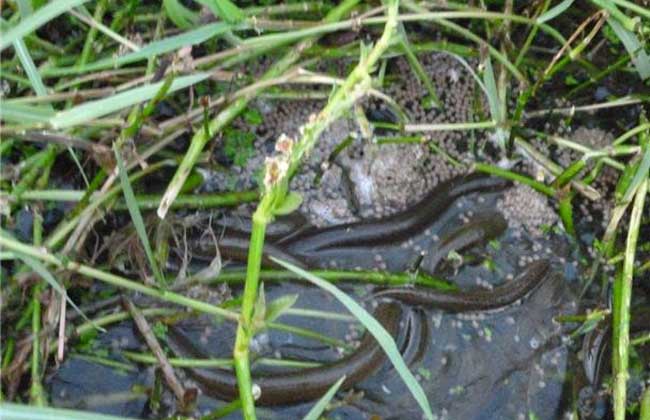
With the adjustment of the aquaculture structure, rice field eel farming is increasingly recognized by farmers. Yang Chunshui of Hougao, Fanji Town, renovated the abandoned river pond behind his house and set up cage farming for rice field eels. Without having to go out to work, he can earn at home double the income of working away while also tending his own farmland well. In 2009, he made 100 cages totaling nearly 900 sq m for farming rice field eels and combined this with purchasing rice field eels for temporary holding to profit from seasonal price differences, achieving very good returns and experience. By early November, all the rice field eels in the cages had been harvested and sold (about 500 g: 400 kg, about 250 g: 700 kg, about 200 g: 900 kg), creating an output value of 80,000 yuan and a net profit of 40,000 yuan. The key technical points are as follows:
Farming Preparation
For cage farming of rice field eels in a river, the cage surface is generally 20-100 sq m; too large is not easy to manage. About 10 days before stocking the rice field eel seedlings, thoroughly disinfect with quicklime or bleaching powder.
Seedling Selection
Choose good rice field eel seedling varieties. Whether rice field eel farming succeeds or not, the seedlings are key. It is best to use artificially bred and domesticated dark yellow large-spot rice field eels or golden yellow small-spot rice field eels. These varieties grow fast and have strong disease resistance. Do not use variegated rice field eel seedlings or those that have not been domesticated. The suitable size of rice field eel seedlings is 50-80 tails per kg; too small means poor feeding ability and low survival rate. At the same time, large and small ones must be raised separately to prevent cannibalism when feed is insufficient. The stocking density is generally 1-1.5 kg of rice field eel seedlings per sq m.
Feeding
After the rice field eel seedlings are put into the cages, do not feed them for the first 3 days to let them adapt to the environment. Start domestication and feeding from the 4th day. Feeding at around 7 pm each day is best. For cage farming of rice field eels, the feed is mainly rice field eel-specific compound feed, but to reduce costs, some crushed snails, earthworms and yellow mealworms can also be fed.
Farming Management
The growing season for rice field eels is April-October, with the peak season from May-September. During this period, management should be "diligent" and "meticulous": patrol frequently and carefully observe the rice field eels' feeding conditions and growth state, and whether there are holes in the cages, so as to take corresponding measures in time. The habit of rice field eels is to hide by day and come out at night. Keep the pond water fresh and the water level suitable. In the cages, place alligator weed or water hyacinth, which provides shade in summer and also helps them avoid enemies and rest and breed.
Disease Prevention and Control
Pay attention to the prevention and control of rice field eel diseases. Once rice field eels become ill, treatment results are generally not ideal. It is necessary to prevent disease before it occurs and treat it early when it occurs, and frequently use bleaching powder, copper sulfate and other drugs to prevent disease.