What factors affect the survival rate of wild swamp eels (Monopterus albus)?
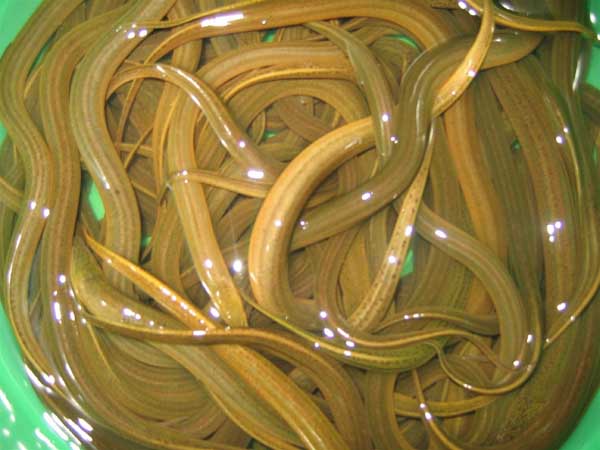
Complex sources
Many swamp eels already have fever or are infected with other diseases before farmers purchase them.
Many parasites
According to our dissection observations, among 200 swamp eels, the intestines of every eel were parasitized to varying degrees by thorny-headed worms (acanthocephalans), with a minimum of 3 and a maximum of 122. These parasites live in the swamp eel's intestine, on the one hand absorbing the eel's nutrients, and at the same time damaging the eel's intestinal wall. Especially during the swamp eel's feeding season, because the eels have been caught and stored by humans and cannot ingest food, the nutrient supply is severely insufficient, while the parasites suck at the intestinal wall even more aggressively, which very easily triggers enteritis in the swamp eels. Combined with unscientific human storage and transport, this can simultaneously cause complications such as fever disease. Near the head of the swamp eel, a very small leech (bloodworm) is prone to parasitize; this small leech is called the “pseudoclepsine leech.” These pseudoclepsine leeches on the one hand suck blood from the eel, and at the same time often cause serious damage to the swamp eel's body surface. When swamp eels are stored at ultra-high density, this causes “fever,” leading to a large amount of the mucus that plays an important protective role on their body surface to slough off. Combined with the many wounds on the body surface caused by leech parasitism, pathogens can very easily invade the eel's body and cause an outbreak of eel disease.
Poor physique
Because wild swamp eels are harmed by large numbers of parasites and their feed is not guaranteed, they usually go hungry one meal and are full the next, which is also the reason why wild swamp eels are generally very thin and weak while farmed swamp eels are all plump. Due to insufficient nutrition, wild swamp eels have a poor physique, and their resistance to disease is generally inferior to that of farmed swamp eels.