What are the ecological prevention and control methods for common diseases of rice field eels?
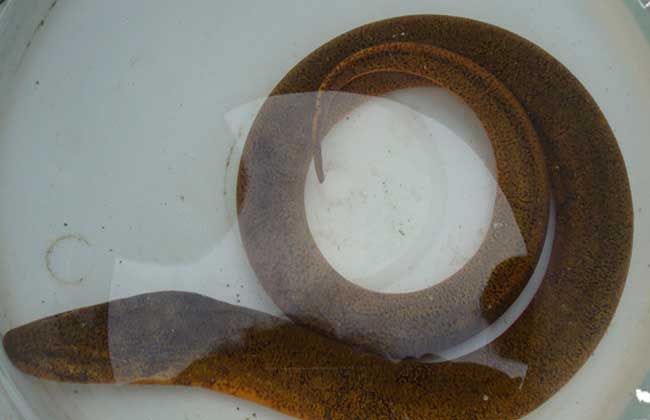
Cold
[Causes and symptoms] Because the water temperature changes suddenly by more than ±5℃, the normal physiological factors cannot keep up with the change in external temperature, causing an imbalance in the osmotic pressure of the rice field eel's skin layer and inhibition of body fluid metabolism, and blocking the thermoregulatory pathways. When the disease occurs, the rice field eel's skin loses its original luster, and in severe cases it enters a state of shock. This disease occurs mostly in summer.
[Prevention and control methods] 1. Strengthen the control of water temperature and water quality; when changing water, the temperature difference should not exceed ±5℃. 2. When changing water, the water should first be flushed into a buffer pit in the pond, and injected as a thin stream. 3. The new water added each time must not exceed 1/3 of the old water in the whole pond; when the overall condition is good or the water quality is extremely deteriorated, a somewhat larger water change may be made, but the water must not be added too quickly.
Fever disease
[Causes and symptoms] This disease is mainly caused by excessive artificial stocking density and failure to change the water in time, so that the mucus secreted by the rice field eels accumulates in large amounts, ferments, and releases a large amount of heat, causing the water temperature to rise sharply and the dissolved oxygen in the water to decrease, inhibiting and destroying the normal metabolism of the rice field eels and causing disease. Diseased eels show leaving their burrows, nervous darting and swimming, tangling and rolling around each other, shedding of body surface mucus, swelling of the head, and extreme restlessness.
[Prevention and control methods] 1. Replace the pond water and simultaneously increase dissolved oxygen in the water. 2. Reduce stocking density and change the water in time. 3. Splash the whole pond with a 0.07% copper sulfate aqueous solution at a rate of 5 milliliters per square meter of water. 4. Polyculture some loaches to increase the self-purification capacity of the water.
Atrophy disease
[Causes and symptoms] Due to excessive stocking density and insufficient bait, small rice field eels are suppressed by large ones and remain in a state of starvation for a long time, so the eel body atrophies. Diseased eels have a blackened body color, are emaciated, and have a large head and thin body. In severe cases, they lose their appetite and eventually die.
[Prevention and control methods] 1. Provide sufficient bait. 2. Strictly carry out graded rearing. 3. When feed is lacking for a long time, reduce stocking density. 4. In the early stage of the disease, promptly add fresh bait, such as earthworms and maggots.
Hypoxia
[Causes and symptoms] Because the water temperature in the eel pond is relatively high, various physicochemical reactions intensify without timely treatment, causing the dissolved oxygen in the water to decrease and resulting in hypoxia. At this time, the rice field eels cannot raise their heads to breathe air, causing respiratory dysfunction in the body and a sharp reduction in the blood's oxygen-carrying capacity, leading to brain hypoxia. Diseased eels frequently poke their heads out of their burrows and may even remain outside the burrows for a long time, with spasmodic trembling of the head and neck; they generally die one after another after 3 to 7 days.
[Prevention and control methods] 1. Strictly carry out water quality monitoring and control management to maintain the comprehensive buffering capacity of the water. 2. In high-temperature seasons, promptly take measures such as increasing oxygen and cooling to prevent disease occurrence. 3. After the disease occurs, change the water immediately and simultaneously increase dissolved oxygen in the water. 4. Promptly remove paralyzed and limp diseased eels to reduce the carrying load on the water body.