What are the main problems in the process of rice field eel farming?
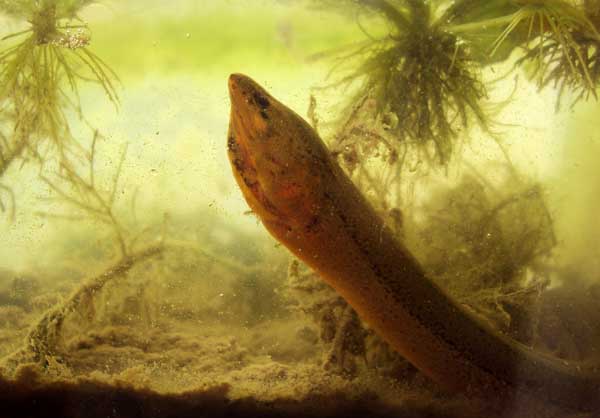
1. What farming methods are there for rice field eels?
At present, rice field eel farming in our province mainly includes soil ponds, cement ponds, net cages and rice field farming. Cement ponds and net cages are generally around a dozen sq m, and the rice field area is preferably 1 mu. The most ideal eel fry for stocking are large-sized eel fry of about 50 grams, and the eel fry are required to be robust, uniform in size, bright in body color, and free of external injuries. Generally, 20-40 eel fry are stocked per sq m, and before entering the pond they should be disinfected with 3%-4% salt water or potassium permanganate. Eel fry caught from the natural environment generally refuse to eat artificially supplied feed because they are not adapted to the artificial farming environment, and must go through a period of feeding training, otherwise the farming will fail.
2. How should the bottom of a rice field eel farming pond be treated?
According to the characteristics of rice field eels, the pond bottom should be made of lime-sand-clay mixture or cement, and then a 15-20 cm thick layer of mud should be added on top of the lime-sand-clay mixture or cement.
3. What medicine is used to disinfect rice field eel feed?
Before feeding, rice field eel feed can be soaked in boiling water for 3-5 minutes, or soaked in 20 mg/L potassium permanganate for 15-20 minutes, or soaked in 5% salt for 5-10 minutes, and then rinsed with fresh water before feeding.
4. Can loaches be put into a rice field eel pond?
Yes, 3-5 loaches over 5 cm long can be put in per sq m. In addition, earthworms, silkworm pupae, small fish and shrimp, fresh fish paste, and slaughterhouse offal can be used together with plant-based feed for raising them.
5. What aquatic plants are suitable for cultivation in a rice field eel pond?
The aquatic plant species suitable for cultivation in a rice field eel pond include arrowhead, wild rice stem, lotus, water hyacinth, alligator weed, water lettuce and duckweed, etc. The coverage area of aquatic plants can account for 1/3 or 1/2 of the eel pond.
6. Can a rain canopy be built over a rice field eel pond?
Yes, it should be built during the high-temperature period in summer, and should not be built in other seasons.
7. How can excessive water temperature fluctuations be avoided when changing water?
When changing water, the water temperature difference should be kept within 3°C. Change water at noon in spring and autumn, and in the morning and evening during the high-temperature period in summer.