A Detailed Guide to Making and Installing Cage Nets for Rice Field Eel Farming
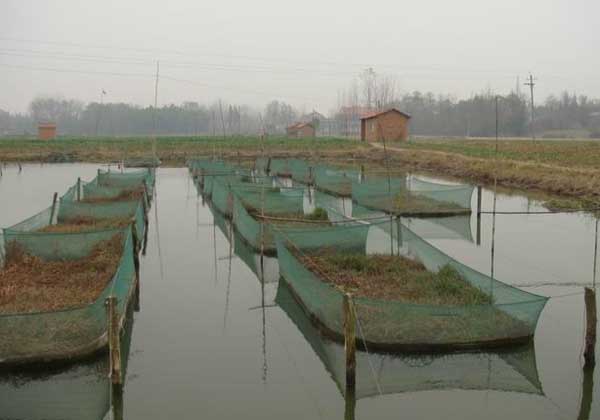
For cage nets used in farming rice field eels, high-quality polyethylene knotted netting is generally chosen, with a mesh size of about 7-8 mesh (0.3-0.5 cm); the cage net size is generally required to be 4 sq m, 6 sq m, or 8 sq m, as larger sizes are inconvenient to manage, with a height of 0.8-1.5 m. Depending on the wind and wave conditions and water level changes of the water body where the cage nets are installed, the height of the cage nets can be appropriately adjusted.
The eel pond should be located in a place with abundant water sources, no pollution, no flood or waterlogging disasters, and sun exposure in all four seasons. The density of installed cage nets generally accounts for 20%-30% of the water surface, with a spacing of about 1 m, a row spacing of about 1-2 m, and a distance of 10-15 m from the bank. The depth of the cage nets in the water is between 30-80 cm, and the height above the water is no less than 50 cm; the bottom should not touch the bottom mud. Drive large stakes on the bank and stretch wire taut, fix small stakes in the water every 3-4 cage nets, and the cage nets on the windward side need to have their bottoms fixed, preferably with stones hung in the water at the four corners.
The cage nets are best set up in mid-to-late May, which allows the cage nets to form a "biofilm" made of filamentous algae and prevents the eel fry from being injured by friction. At the same time, aquatic plants such as alligator weed, water hyacinth, and oil grass are placed in the cage nets to provide habitat for the rice field eels and purify the water quality. The aquatic plants should be laid out about 20 days before the eel fry are stocked; cut the above-water part of the alligator weed and place it in the cage net. The alligator weed should have its roots removed, be washed clean, and undergo disinfection and insecticide treatment to prevent the introduction of parasites and pathogens. Depending on the size of the cage net, lay about 1-2 sq m of aquatic plants at a thickness of 20 cm, striving for uniform thickness; either square or round shapes are acceptable. There must be no open water surface in the middle of the aquatic plants, and no "tails" may be left around the edges.