Detailed Explanation of Key Techniques for Loach Polyculture in Lotus Root Fields
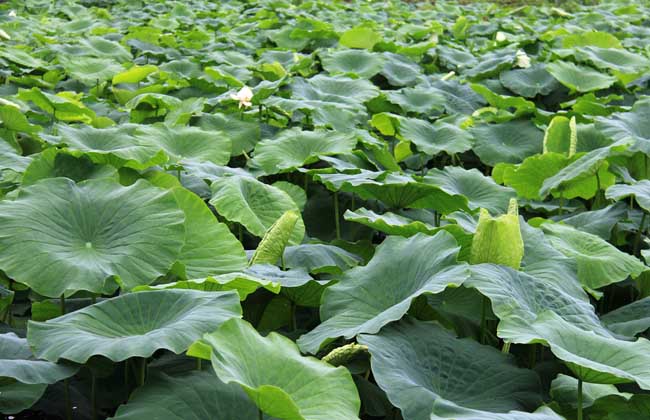
Polyculture of loach in lotus root fields is a production model that rapidly increases economic benefits. It can not only increase lotus root yield but also improve loach farming efficiency. It is an efficient method for increasing income and improving utilization rates, while also promoting the balance of the water ecological environment in lotus ponds. Let us take a look at loach polyculture techniques in lotus root fields below!
Lotus Root Field Construction Methods
The lotus root field should be selected in a location with ample sunlight, flat terrain, convenient drainage and irrigation, good water retention, and capable of flood and waterlogging prevention. The surroundings of the lotus root field need to be heightened and reinforced, with field depth controlled at 50-60 cm and water depth controlled at 20-30 cm, and anti-escape nets installed at the inlet and outlet to prevent loach from escaping. Cement boards should be erected on the ridge walls; if no cement boards are available, thicker plastic film can be used as a substitute, and the gaps between cement boards should be sealed with cement. According to the size of the lotus root field, before planting lotus roots, field trenches in a linear, cross, or well shape should first be dug in the field, with trench width and depth controlled at 30-40 cm. In addition, one or more water pits of 1.0-1.5 cubic meters should be dug around or on one side of the field ridges. The water pits should connect with the field trenches, mainly to avoid disturbing the loach when harvesting lotus roots and to facilitate operations when harvesting loach for market.
Lotus Root Field Disinfection Techniques
Control the water depth of the lotus root field at about 10 cm. Quicklime at 60 kg/mu should be slaked into slurry and stirred while hot, then splashed over the entire field. Alternatively, 15 kg of bleaching powder or 5 kg of strong chlorine powder can be dissolved in water and splashed over the entire field. Plastic containers must be used to dissolve the above disinfectants. After 5-7 days of disinfection, exchange the water. After exchanging water and adding new water, test fish can be released to detect whether the toxicity of the field water has disappeared. White silver carp or bighead carp can be selected as test fish. After the test fish live normally, loach fry can be released for farming.
Lotus Root Planting Techniques
For spring planting of lotus root seeds, planting generally requires the air temperature to rise above 15°C and the ground temperature at 10 cm depth in the lotus pond to reach above 12°C. 15-20 days before planting the seed lotus roots, apply 800-1000 kg of fertilizer per mu, spread the fertilizer evenly, and plow and rake the pond bottom mud flat. Then use 80-100 kg of quicklime per mu for routine disinfection. Select fresh, thick and strong, vigorous-budded, fine-noded, complete-rooted, disease-free and injury-free complete lotus root seeds with more than 3 nodes, using 250-300 kg of lotus root seeds per mu. After planting the lotus roots, store water to a depth of 10 cm in the lotus pond, and filter the inlet with 30-mesh sieve silk to prevent wild and miscellaneous fish from entering.
Loach Stocking Techniques
Wait until the lotus roots grow 2 standing leaves and the water temperature stabilizes above 20°C, then fish can be released. One week before stocking loach, apply fermented organic fertilizers such as chicken, pig, and cow manure at 150-200 kg per mu, and superphosphate at 15-20 kg, to fertilize the water quality, while adding new water to bring the water level to 30 cm. The release time is around Qingming Festival, with 20,000 loach per mu. For seedlings, select loach species that comply with the national pollution-free seed production technical operating procedures, with uniform specifications and robust physique. Before entering the pond, soak them in 3% salt water for 5-10 minutes to disinfect and prevent disease.
Loach Bait Management
1. Bait Selection
: Loach is an omnivorous fish. Small aquatic animals and plants, microorganisms, and organic debris in the water are all foods it likes to eat. In artificial farming, it can be directly fed with aquatic insects, yellow mealworms, earthworms, maggots, river mussels, snails, fish meal, wild miscellaneous fish meat, and livestock and poultry offal, etc. Artificial compound feed can also be fed. Loach likes to forage at night, so it should be fed once each in the morning and evening. In the early stage of farming, feed is usually given at 3-4% of fish body weight, in the middle stage at 4-6% of fish body weight, and in the later stage the amount of compound feed can be appropriately reduced.
2. Bait Feeding: Loach feeding should adhere to the four-fixed principle. In rainy and muggy weather, appropriately reduce the feeding amount. Persist in patrolling the field once a day. If problems are found, handle them promptly. For example, holes in field ridges, water leakage, and dead fish should all be dealt with quickly, and the pond water should be maintained in a tender green color. Every 15 days, disinfect once with disinfectant solutions such as quicklime or bleaching powder. Fertilization of lotus root fields should be mainly based on more base fertilizer, with less chemical fertilizer. Pesticides should be selected as high-efficiency and low-toxicity products that are harmless to loach. Exchange water regularly, with each water exchange of 20-30%.
Lotus Root Field Management Techniques
1. Water Quality Regulation: As summer temperatures continue to rise, without affecting lotus root growth, new water should be added as promptly as possible. In early June, the water level reaches a maximum of about 30-50 cm. From July to September, exchange water once a week, 10 cm each time, once a month. Use 4 kg of quicklime per mu to splash over the entire pond to regulate water quality and disinfect and prevent disease.
2. Harvesting: Begin harvesting loach from the lotus pond in early October. After continuous harvesting for multiple days, the catch rate of loach in the pond can reach over 90%. After the loach are fully caught, begin harvesting lotus roots, generally at the end of October. This ecological farming model achieves double increases in both lotus roots and loach, obtaining higher economic benefits and better social benefits. The average annual yield per mu is 3,200 kg of lotus roots and nearly 400 kg of loach, with an average loach size reaching 24 g/fish, a survival rate above 80%, an average annual output value of 17,000 yuan per mu, and a net income of up to 11,000 yuan.
Loach Disease Prevention and Control
1. Parasitic diseases: Loach infested by trichodina, epistylis, and gyrodactylus often float on the water surface, spinning restlessly. The control method is to dissolve 0.7 mg/kg of copper sulfate and ferrous sulfate (5:2) mixture in water and splash evenly over the entire field, or splash 0.15-0.22 mg/kg of Yuchongjing (deltamethrin solution) evenly over the entire field.
2. Print disease: Loach print disease is caused by infection with Aeromonas punctata. The lesions are generally oval or round swellings with red spots. The affected areas are mainly on both sides of the caudal peduncle, resembling a stamped seal. The control method is the same as for red fin disease.
3. Red fin disease: Loach red fin disease is caused by Brevibacterium infection. Part of the epidermis near the dorsal fin peels off, appearing grayish white. In severe cases, fin rays become exposed, the fish stops feeding, and eventually dies. Use 1 mg/kg of bleaching powder or 0.3 mg/kg of strong chlorine powder to splash over the entire field, repeat once after 24 hours, and then splash once every half month thereafter for prevention.
4. Gas bubble disease: Caused by insufficient dissolved oxygen, supersaturation of dissolved oxygen, or excessive content of other gases in the water. Loach float on the water surface with bellies bulging like bubbles. Strengthen daily management to prevent water quality deterioration. When the disease occurs, immediately add new water and use 4-6 kg of salt per mu dissolved in water and splashed over the entire pond.
5. Saprolegniasis: Saprolegniasis is not easily discovered in the early stage. When it can be seen with the naked eye, the hyphae have already invaded the loach's wounds and grown external hyphae outward, clustering into a cotton-like appearance. The mold can secrete large amounts of proteolytic enzymes, which can degrade the diseased loach's body tissues and secrete large amounts of mucus, worsening the condition, greatly reducing appetite, and causing weakness and death. It often reproduces in spring, autumn, or winter, and can infect fish as long as there is a wound on the skin.