Detailed Explanation of Key Points for Large-scale Loach (Paramisgurnus dabryanus) Aquaculture Techniques
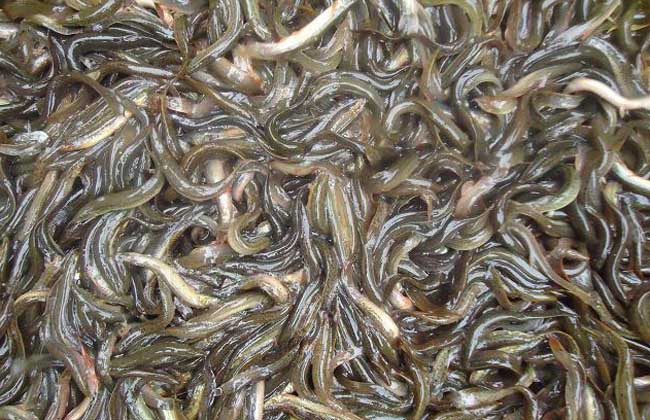
The large-scale loach (Paramisgurnus dabryanus) is a warm-water fish of the genus Paramisgurnus in the family Cobitidae, distributed in Sichuan, Zhejiang, Taiwan, China, Liaoning, Heilongjiang and other places. It is a variety of loach with a large individual size and fast growth. Its meat is tender, its flavor is delicious, and it has quite high nutritional value and aquaculture prospects. Let us take a look at the aquaculture techniques for the large-scale loach below!
Habitat Environment of the Large-scale Loach
The large-scale loach is found in shallow waters such as lakesides with deep bottom mud, ponds, rice paddies and ditches. Its living water temperature is 10-30°C, and the most suitable water temperature is 25-27°C, so it should belong to warm-water fish. When the water temperature rises to 30°C, the loach burrows into the mud to aestivate. When the water temperature drops below 5°C in winter, it burrows into the mud to a depth of 20-30 cm to overwinter. It has strong adaptability to low-oxygen environments; in addition to gill breathing, it can also perform skin breathing and intestinal breathing. Its vision is very weak, but its sense of touch and taste are extremely sensitive.
Food Habits of the Large-scale Loach
The large-scale loach is an omnivorous fish. At the juvenile stage, it feeds on animal bait, eating zooplankton, chironomid larvae, tubifex and so on. After growing up, its food range expands; besides eating many kinds of insects, it can also feed on filamentous algae, plant roots, stems, leaves and humus. Adult loaches mainly feed on plant food. They generally feed mostly at night, and stop feeding when the water temperature is below 10°C or above 30°C. They generally live in the mud, and burrow into the soil at the fastest speed whenever there is danger.
Aquaculture Techniques for the Large-scale Loach
1. Brood loach selection: The brood loaches used for breeding are mainly selected from the adult loach ponds of the previous year, and can also be purchased from nearby markets. Female loaches are generally required to weigh more than 25 grams and have a body length of 14-18 cm. There are no strict requirements for the body weight of male loaches; generally they weigh more than 12 grams and have a body length of more than 10 cm. They are required to have normal body surface color, be smooth without disease spots, have a well-proportioned body shape, be agile in movement, and be 2-3 years old. When inducing spawning, female loaches with relatively good development and obvious ovarian outlines in the abdomen should be selected and paired with healthy and lively male loaches, with a female-to-male ratio of 1:2.
2. Pond conditions: No matter where the brood loaches come from, they must undergo pre-spawning cultivation in ponds for no less than 2 months. The brood loach cultivation pond area is 1200-1500 sq m, can maintain a normal water level of 60-80 cm, has a transparency of 20 cm, and moderate fertility. Before stocking the brood loaches, first use quicklime or bleaching powder, tea seed meal, etc. to thoroughly clear the pond and disinfect it. After the drug effect disappears, apply base fertilizer to fertilize the water quality, and then stock the brood loaches. The stocking density is 325 kg of brood loaches per mu of water surface, with males and females mixed.
3. Loach pond management: Entering March, when the water temperature is higher than 10°C, artificial feed can be given. The feed is required to have a crude protein content of 30-35% and a fat content of 5%, with animal protein as the main component. When the pond water temperature is 15°C, the feeding amount is about 1% of body weight; when the water temperature is 20°C, the feeding amount is about 2% of body weight; when the water temperature is above 25°C, the feeding amount is about 3% of body weight. Feeding times are 8-9 a.m. and 16-17 p.m. Regularly flush the pond with water once a week for 2 hours each time, deepening the water level by 5 cm. Do not exchange large amounts of water; maintaining a certain fertility is beneficial to the gonadal development of the large-scale loach.
4. Spawning induction time: The suitable spawning induction time for the large-scale loach should be from mid-to-late April to early May, when the water temperature is 16°C-18°C. If too late, the gonads easily become overripe. The main tools for spawning induction include several medical syringes with a capacity of 1-2 ml and matching needles, spawning-inducing agents for injection of brood loaches, dissection trays, scissors, knives, tweezers, etc., several towels for extracting testes, several hard feathers, 1 narrow-mouth bottle of 1000 ml, Glucose Ringer's solution or medical saline, 2 pipettes of 20 ml or 50 ml, and several water basins or buckets.
5. Spawning induction drugs: Through experimental research, it was found that for spawning induction of the large-scale loach, mixed hormones of domperidone (DOM) + chorionic gonadotropin or domperidone + luteinizing hormone-releasing hormone analog have better effects. Using HCG alone is expensive and the effect is also not good. The injection dose is domperidone 0.5-1 mg per fish + chorionic gonadotropin 300-500 units per fish, or domperidone 0.5-1 mg per fish + luteinizing hormone-releasing hormone analog 2-3 micrograms per fish.
6. Spawning induction method: First use physiological saline to prepare the dosage for each fish into an injection solution. Generally, brood loaches of about 20 grams are injected with 0.5-0.7 ml. During injection, work in pairs: one person uses a loach control net to fix the loach, and the other person uses a medical syringe for injection. Use the dorsal intramuscular injection method, with the needle tip at a 45° angle to the loach body, injecting the drug toward the head, with a depth of 0.2 cm. In order to prevent the needle from going too deep and harming the loach, the needle can be wrapped with cotton thread or a small piece of rubber tubing can be placed over the needle. The needle tip should be exposed by 0.2 cm.
7. Spawning and hatching: After spawning induction is completed, use micro-flowing water to stimulate the brood loaches to spawn. At a water temperature of 22°C, after 12-15 hours, and at a water temperature of 25°C, after 8-10 hours, the large-scale loaches begin to become excited, chase, entwine and spawn, and the fertilized eggs fall from the mesh into the circular channel. After spawning is completed, remove the cage net and the loaches together. The fertilized eggs enter the hatching stage. At this time, increase the water flow to wash up the loach eggs sunk at the bottom of the circular channel. At the same time, use a water-stirring plate to stir up the loach eggs from below. Continue the operation for about 30 minutes. After the clumped loach eggs separate, the flow rate can be reduced, controlled at about 10 cm per second. At a water temperature of 22°C, after 41 hours, 90% of the fertilized eggs hatch into loach fry; at a water temperature of 25°C, it takes 30-32 hours for the juvenile loaches to hatch.
Rice Paddy Aquaculture Techniques for the Large-scale Loach
1. Rice paddy selection: The best rice paddies for loach aquaculture are those that are weakly acidic, have little mud and sand, have good water retention, and do not overflow during rainfall. The ridges around the rice paddy should be built high. The inlet and outlet should be equipped with two layers of netting to prevent the loaches from escaping. At the same time, dig some fish-collecting pits in the field or at the four corners to facilitate later harvesting.
2. Fry and fingerling stocking: Stock the fry and fingerlings after the early rice or middle rice has been transplanted and the seedlings have taken root, generally 40,000-50,000 per mu. Before stocking the loaches, organic fertilizer should also be applied to cultivate plankton and aquatic animals in the water. In order to obtain high loach yields, a certain amount of artificial bait should be fed every day or every other day. The bait types can mainly be agricultural and sideline products, supplemented with a small amount of fish meal and silkworm pupa powder. In the later stage, more bait can be fed in the fish-collecting pits to facilitate concentrated harvesting.
3. Feeding management: During the rearing period, frequently check the anti-escape facilities to prevent escape. In loach-rearing rice paddies, apply as little pesticide as possible or none at all. Even if it must be used, apply it in batches, with the nozzle pointing upward, and do not spray the liquid onto the water surface. In addition, do not use herbicides. When planting double-cropping late rice, it is best to use no-tillage methods to avoid mechanical damage to the loaches.
Pond Aquaculture Techniques for the Large-scale Loach
1. Loach fingerling stocking: Stock 280-300 kg per mu of loach fry and fingerlings with uniform specifications, smooth body surface, no disease and no deformities, at 300 fish per kilogram. Before stocking, soak and disinfect with 3-4% salt water at a water temperature of 10-15°C for 15-25 minutes.
2. Water quality management: The pond water color should preferably be yellow-green, with a transparency of 20-25 cm, a pH of neutral or weakly acidic, and dissolved oxygen above 2 mg per liter. Also timely use river snails and microbial preparations to improve the water body.
3. Feed feeding: The compound feed is required to have a protein content of about 30% and a particle size within 2.3 mm. When the water temperature is 15°C, the feeding amount is 2% of the total body weight of the loaches in the pond; when the water temperature is 20-28°C, the feeding amount is 3%-4% of the total body weight of the loaches in the pond. Feed 3 times a day, and follow the “four fixed” feeding principle when feeding.
4. Daily management: Inspect the pond 3 times a day in the morning, noon and evening, observe water quality changes and the feeding and activity of the loaches, and do a good job in preventing escape.
Courtyard Aquaculture Techniques for the Large-scale Loach
1. Loach pond selection: The loach pond should preferably be selected in a place with relatively flat terrain, ventilation and sunshine, convenient water intake and drainage, and easy management. The shape can be varied; generally, rectangular and east-west oriented is better. The area of the loach pond varies depending on the aquaculture method and level. Generally speaking, the loach pond area used for courtyard aquaculture is 50-80 sq m, with a pond depth of 1-1.5 m.
2. Loach pond construction: The loach pond can be built with bricks, stones and other materials, with a pressure mouth at the top of the wall, and the pressure mouth extends 5-6 cm into the pond. A drainage outlet is set in the center of the pond bottom, with a water pipe diameter of about 1.5 cm. At the same time, 1 overflow outlet is set at the side of the pond to control the water level. The water outlet and overflow outlet should be covered with wire mesh to prevent fry from escaping. Some aquatic plants such as water peanuts and water hyacinths can be planted in the loach pond to improve the water environment and lower the water temperature. In addition, some climbing plants such as grapes or loofah can be planted around the loach pond to provide shade and cooling places for the loaches in summer.
3. Fry and fingerling stocking: 7-10 days before stocking the loach fingerlings, use 0.2 kg per sq m of quicklime to thoroughly clear the pond. After 5-7 days, store water to 10-20 cm, and apply 10-15 kg per mu of a mixture of organic and inorganic fertilizers to cultivate the basic bait organisms in the water body. The stocked loach fingerlings are required to have uniform specifications, strong physique, plump muscles, no disease or injury, and bright body color. The stocking density should be determined according to pond conditions, feed sources and management level. Generally, for loach fingerlings with a body length of 5-7 cm, the stocking density is 80-100 per sq m. At the same time, 5-8 per sq m of crucian carp can be stocked in the loach pond as a complementary species.
4. Feed selection: Loach is a small omnivorous fish with a very wide feed source. Water fleas, earthworms and fly maggots are natural bait organisms for loach. Under artificial aquaculture conditions, rice bran, soybean cake, soybean dregs, blood meal, wheat bran, etc. can be fed. The food intake of loach is closely related to water temperature. In March, the daily feeding amount is 1% of the total body weight of the loach; from April to June, the daily feeding amount is 4% of the total body weight of the loach; from July to August, the daily feeding amount is 1% of the total body weight of the loach; from September to October, the daily feeding amount is 4% of the total body weight of the loach.
5. Feed feeding: The feed feeding method is to build a feed platform in the loach pond and place the feed on the feed platform. The feed is required to be fresh, pollution-free, non-rotting and non-deteriorated. The feeding time is generally around 9 a.m., and the feeding amount is based on the loaches finishing it within 3-4 hours. During the adult loach stage, the feed feeding amount should be appropriately adjusted according to weather conditions and the growth and feeding conditions of the loaches. Residual bait should be removed in time.
6. Water quality regulation: When the loach fingerlings have just entered the pond, keep the pond water depth at 10-20 cm. Later, as the loach fingerlings grow, gradually deepen the water level to the required depth. Keep it shallower at ordinary times, and deepen it during hot high temperatures, and frequently inject new water to maintain a good water environment. When the weather is muggy, the pond water is prone to oxygen deficiency. If the loaches are found swimming to the water surface to gulp air, timely add new water or take oxygenation measures.
7. Daily management: Achieve “two preventions, two diligences, three earlies, four observations”, namely prevent escape and prevent disease; diligently patrol the pond and diligently keep a diary; clear the pond early, start feeding early, and stock early (to extend the loach growth period); observe the loach activity and feeding conditions, weather changes, water quality changes, and seasonal changes to decide the feed feeding amount.
8. Disease prevention and control: Strive to achieve early prevention when there is no disease and early treatment when there is disease. Regularly splash quicklime and bleaching powder over the whole pond, which can improve water quality and prevent fish diseases. Timely remove harmful organisms such as water snakes and water rats from the loach pond.
9. Timely harvesting: In late autumn and early winter, when the water temperature drops to 10-15°C, the loach food intake decreases, and harvesting can be carried out. Generally, the method of draining the pond water and manually catching the loaches in the pond is mostly used.