What do loaches eat? An introduction to common bait types
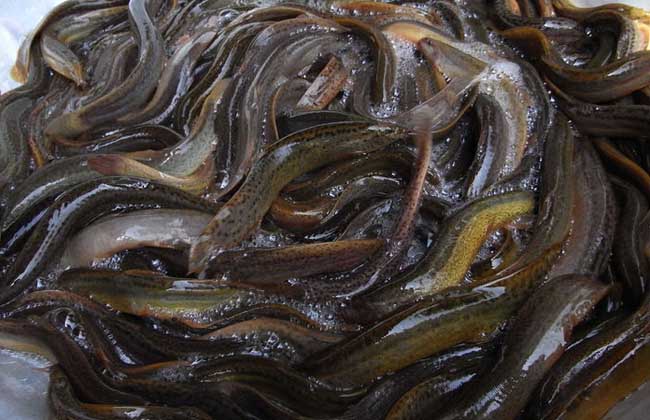
The loach is also known as yuqiu, loach fish, etc. It is a fish of the genus Misgurnus in the family Cobitidae, widely distributed along the coast of Asia in China, Japan, Korea, Russia and India, among other places. In China it is distributed in various places, more commonly in the south and less commonly in the north. It is different from other fish, whether in appearance, body shape or living habits. Let us take a look below at what loaches eat!
What do loaches eat?
Loaches mostly come out at night to prey on plankton, aquatic insects, crustaceans, fragments of higher aquatic plants and algae, etc. Sometimes they also take in bottom humus or mud dregs. In artificial breeding, the bait types fed include maggots, fish meal, pig blood meal, silkworm pupa meal, rice bran, wheat bran, rapeseed cake, etc.
The living habits of loaches
1. Habitat: Loaches like to inhabit the bottom layer of still water, often appearing in lakes, ponds, ditches and the bottom of paddy fields in the surface layer of silt rich in plant fragments. They have strong adaptability to the environment. The living water temperature is 10-30°C, and the most suitable water temperature is 25-27°C, so they should belong to warm-water fish. When the water temperature rises to 30°C, loaches dive into the mud to aestivate. When the water temperature drops below 5°C in winter, they burrow into the mud to a depth of 20-30 cm to overwinter.
2. Reproduction: Loaches mature at 2 winters of age. They begin to reproduce every year starting in April (water temperature 18°C). They lay eggs in shallow water clumps of grass less than 30 cm deep, and the laid eggs adhere to aquatic plants or to dry grass submerged by water. The hatched fry often live scattered and do not form groups.
3. Respiration: Loaches can not only breathe with gills and skin, but also have a special intestinal respiration function. When the weather is muggy or the silt and humus at the bottom of the pond rot, causing severe oxygen deficiency, loaches can also leap out of the water, or rise vertically to the water surface, directly swallowing air with their mouths, with the intestinal wall assisting respiration. When it turns its head and slowly dives, the waste gas is expelled through the anus. In winter when it is cold and the water body dries up, loaches burrow into the mud, relying on a small amount of moisture to keep the skin from drying out, and rely entirely on intestinal respiration to maintain life.
Variety classification of loaches
1. Green loach: The green loach is generally called the loach. Its body is long and cylindrical, with a laterally compressed tail, and the mouth is inferior and horseshoe-shaped. It has 5 pairs of barbels, 3 pairs on the upper jaw, which are larger, and 2 pairs on the lower jaw, one large and one small. The caudal fin is round, and the scales are small and buried under the skin. The back and dorsolateral sides of the body are grayish black with small black spots. The lower half of the sides of the body is white or light yellow, and there is a large black spot above the base of the caudal peduncle. The body surface has more mucus, the head is pointed, the snout protrudes forward, and the eyes and mouth are relatively small.
2. Large-scale loach: The large-scale loach is distributed in the middle and lower reaches of the Yangtze River and its affiliated water bodies. Its body shape closely resembles the loach. It has 5 pairs of barbels. The eyes are covered by a membrane. There is no suborbital spine. The scales are large and buried under the skin. The skin fold ridge at the caudal peduncle is well developed and connected to the caudal fin. The length and height of the caudal peduncle are approximately equal. The caudal fin is round. The anus is near the origin of the anal fin.
3. Chinese sand loach: The Chinese sand loach is distributed in the middle and upper reaches of the Yangtze River. It is also called the steel loach. The snout is long and pointed. It has 3 pairs of barbels. There is 1 pair of knob-like protrusions under the chin. The suborbital spine is forked, with the tip extending beyond the posterior edge of the eye. There are no scales on the cheek. The anus is close to the origin of the anal fin. The caudal peduncle is relatively low. It inhabits slow-water areas of river sections with sandy and gravel bottoms and often moves in the bottom layer.