How much does loach farming investment roughly cost?
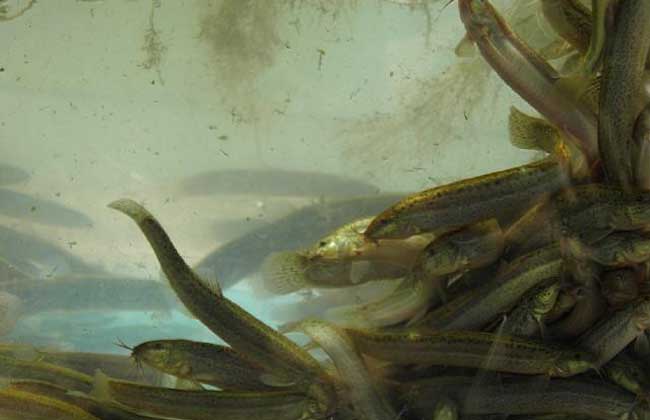
Loach is a small omnivorous freshwater fish. Its flesh is mild and tender, delicious in taste and rich in nutrients, and it is known as the “ginseng of the water”. The current farming market is still quite good, and many people are very keen on it, so loach farming still has a strong market. So how much is appropriate to invest in loach farming? Below, the loach farming model we use is net-enclosure farming, and we will calculate on the basis of one mu!
How much does it cost to invest in loach farming
1. Farming site rental fee: generally 400-600 yuan per year, and in some places it may be lower.
2. Feed: 6000-7000 yuan.
3. Fry: 100,000 tails per mu, 800 yuan per 10,000 tails, 10*800=8000 yuan.
4. Other expenses: netting 400 yuan, fishery drugs and disinfectants 100 yuan, water and electricity 200 yuan, reserve funds 1000 yuan.
Summary: Farming one mu of loach requires an investment of 16,000-17,000 yuan.
How much profit does loach farming bring
After 6 months of growth, 100,000 fry can reach a yield of about 2000 jin. Calculating the price of loach at a minimum of fifteen yuan per jin, 2000*15=30,000 yuan. After deducting costs, the net profit is 13,000-14,000 yuan, and the profit is 16,000-17,000 yuan.
Summary: Loach farming is profitable and has broad market prospects. Artificial loach farming can stock fry 2-3 batches per year, and the per-mu benefit is even more considerable.
There are multiple models for loach farming
1. High-yield intensive farming model: A high-yield intensive pond is devoted specifically to loach farming without polyculturing any fish. It is a standardized fish pond, generally 2-5 mu per pond, rectangular, with water depth maintained at 0.5-1.5 m, neat paths and consistent slope. One quarter of the water surface in the pond should be planted with aquatic plants, and it is a model of standardized management with fixed time, fixed amount and fixed points.
2. Loach-shrimp mixed farming model: In the loach-shrimp mixed farming model, loach can be polycultured in crayfish ponds, South American white shrimp ponds and river crab ponds. Stock 200 jin of 5-8 cm seedlings per mu, and the yield per mu can reach about 1500 jin. This model greatly improves the utilization rate of the water surface and increases economic efficiency. At the same time, loach can regulate and improve water quality in shrimp ponds and supplement oxygen. Shrimp manure is also a very good feed for loach and is fully utilized, truly achieving ecological agriculture farming and a comprehensive, efficient agricultural approach. This model is the development model for the farming industry in the future.
3. Loach-fish mixed farming model: In fish pond polyculture of loach, stock 200 jin of 6-8 cm seedlings per mu, and each mu can reach 1500 jin. Loach-fish mixed farming is selective about fish and can only choose the four major Chinese carps for polyculture; other fish cannot be polycultured, especially carnivorous fish such as snakehead and weever. In this model, the proportions when stocking fish fry and loach fry must be appropriate so as to complement each other and achieve the purpose of comprehensive utilization.
4. Rice field polyculture model: Choose fields with abundant water sources, convenient irrigation and drainage, fresh water quality, no pollution, soft soil and rich humus. The area can be large or small. Where conditions permit, contiguous field areas can be chosen for easy management. The rice variety planted should be a dwarf variety with strong tolerance to fertilizer and strong disease resistance. As a polyculture site, dig fish ditches along the field ridges on all sides or diagonally, with a ditch depth of 0.3-0.5 m and a ditch width of 1.0-1.3 m. Dig fish pits at the water inlet or the four corners of the rice field, 2.5 m wide and 5-6 m long. The area of the fish pits is generally about 10 sq m, and the area of the corner ditches and fish pits should preferably account for 8% of the rice field area. Stock 150-180 jin of 5-8 cm seedlings per mu, and the yield per mu alone can reach 900-1200 jin. Rice field polyculture mainly controls the water level. Generally, the water depth on the field surface should be kept at 10-20 cm. In the high-temperature summer season, the water level of the rice field should be deepened as soon as possible to prevent the water temperature from being too high and scalding the loach to death.