How can loaches safely overwinter? Key points for winter breeding management
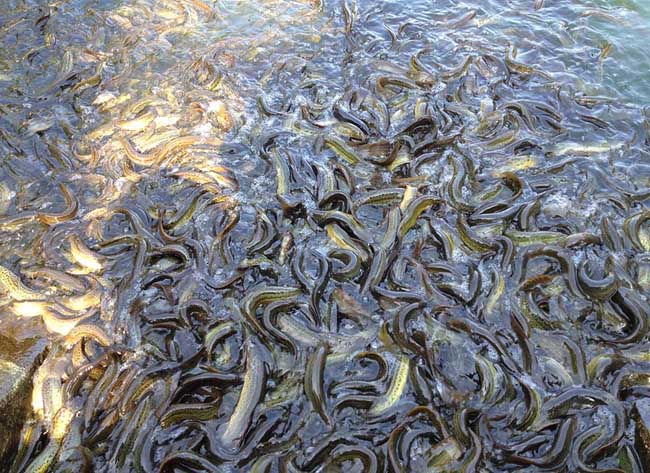
Loaches are quite sensitive to changes in water temperature. Except in areas of southern China where the water temperature never drops below 15°C year-round, allowing loaches to be raised all year without measures for overwintering at low temperatures, in other regions the loach rearing period varies from 7 to 10 months a year, with a low-temperature overwintering period of 2 to 5 months. When the water temperature drops to around 10°C, loaches enter hibernation. In most parts of China, loaches generally burrow 15 cm deep into the mud to overwinter in winter. Because their body surface can secrete mucus, keeping the body surface and its surroundings moist, they will not die even if it does not rain for 1 month.
Before overwintering, loaches, like many other aquatic animals that need to overwinter, must accumulate nutrients and energy in preparation for winter. Therefore, feed management before overwintering should be strengthened, and more nutrient-rich bait should be fed to let the loaches eat their fill and eat well, so as to facilitate overwintering. The bait ratio for fattening loaches for overwintering should be 50% animal-based bait and 50% plant-based bait. As the water temperature drops, the loach's food intake begins to decline, and at this point the amount of bait fed should be gradually reduced. When the water temperature drops to 15°C, only bait equal to 1% of the loaches' total body weight needs to be fed each day; when the water temperature drops below 13°C, bait feeding can be stopped; when the water temperature continues to drop to 5°C, the loaches burrow deep into the mud to overwinter. In addition to having sufficient nutrients, energy and a good physique, loaches also need a good overwintering environment to overwinter.
Choose a good overwintering breeding site
Choose a pond that is sheltered from the wind and faces the sun, has good water retention performance, and has a thick layer of mud at the bottom as the overwintering pond. To facilitate overwintering, the overwintering pond should hold deeper water than ordinary ponds, and it must be ensured that the overwintering pond has sufficient and good water source conditions. Before overwintering, the overwintering pond, feeding platforms, etc. should be cleaned and disinfected to prevent toxic and harmful substances from harming the loaches during overwintering.
Fertilize the overwintering pond appropriately
After the overwintering pond has been disinfected and cleaned, and before the loaches are put in, apply an appropriate amount of organic fertilizer first. Pig, cattle, poultry and other manure can be spread on the pond bottom to increase the thickness of the mud, ferment and raise the temperature, and provide a relatively ideal "hotbed" for the loaches to overwinter, which helps keep them warm through the winter.
Select good overwintering loach stock
Select loach stock that is large in size, robust in constitution, and free of disease and injury as parent stock for breeding the following year. Such loaches have stronger cold resistance and disease resistance, which helps increase the overwintering survival rate. The stocking density of overwintering loaches can generally be 2 to 3 times higher than that of conventional rearing.
Take good measures for heat preservation and cold protection
Strengthen the management of water intake and drainage during the overwintering period. The water temperature during the overwintering period should be kept at 2 to 10°C, and the pond water level should be slightly higher than usual, generally controlled at a water depth of 1.5 to 2 m. When adding new water, groundwater should be used as much as possible. Dig pits and channels more than 30 cm deep in the pond or paddy field so that the temperature of the bottom layer is guaranteed to a certain extent. If straw is also spread over the pits and channels, the heat preservation effect is even better. If a small channel in a farm courtyard is used to let loaches overwinter naturally, the overwintering loaches can be appropriately concentrated, and livestock and poultry manure can be spread on top for heat preservation, with even better results.
In addition, overwintering boxes can also be used for overwintering. The method is: make wooden overwintering boxes with dimensions of (90-100) cm × (25-35) cm × (20-25) cm, fill each box with 18-20 cm of fine, soft soil, and each box can hold 6-8 kg of loaches. The soil and loaches should be placed in the box in layers. When filling the box, first put in 3-4 cm of fine soil, then put in about 2 kg of loaches, fill 3-5 layers in this way, and finally fill it up with fine, soft soil and nail the box lid firmly. Six to eight small holes should be made in the box lid in advance for ventilation. After the box lid is nailed firmly, choose a wind-sheltered, sun-facing overwintering pond and sink the overwintering box below 1 m in it, so as to facilitate the safe overwintering of the loaches.