How to prevent and treat common diseases of loach? Detailed explanation of technical key points
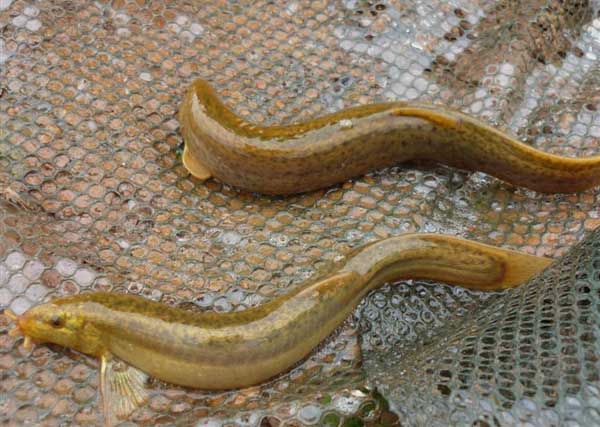
Although loach has strong vitality, the water area where loach is farmed is a very complex environment. Their growth and life are affected not only by the water environment but also by human factors. If any of the above factors changes beyond the loach's own adaptability, or if the loach's own resistance weakens, disease will occur.
The factors causing loach disease can be summarized into two major categories: first, external causes, including the physicochemical properties, biological properties of the farming water and human actions; second, internal causes, namely the decline of the loach's own immune function and the decrease of disease resistance, making it susceptible to pathogen invasion and disease. These two interact with and influence each other. What plays the decisive role is still the internal factors of the loach itself.
Prevention and treatment techniques for loach red fin disease
[Cause of disease] Caused by deterioration of pond water, improper nutrition and injury to the fish body. The symptoms are congestion on the fins, abdominal skin and around the anus of the diseased loach.
[Prevention and treatment methods] ① Avoid injury to the fish body; before the fry are released into the pond, soak them in a 5 mg/L malachite green solution for 15 minutes. ② Soak the diseased loach in a 3% salt water solution for 10 minutes. ③ Soak with 10 mg/L tetracycline for one day and night, or mix chloramphenicol into the feed for feeding.
Prevention and treatment techniques for loach enteritis
[Cause of disease] Loach enteritis is also called rotten intestine plague or black head plague. The symptoms are: slow movement, stopping feeding, the loach body turning dark and bluish, the head appearing peculiar, red spots appearing on the abdomen, intestinal congestion and inflammation, red and swollen anus; in mild cases blood and yellow mucus flow from the abdomen, and in severe cases it turns purple and the fish dies quickly.
[Treatment methods] ① For every 50 kg of loach, use 5 g of sulfaguanidine plus 0.5 g of ascorbate mixed into the feed for feeding, and feed continuously for 3 days. ② For every 50 kg of loach, use 15 g of garlic mixed into the feed for feeding. After 2-6 days, halve the amount and continue feeding. In addition, nitrofurazone can be used instead, with 2 g mixed into the feed for every 50 kg of loach.
Prevention and treatment techniques for loach saprolegniasis
[Cause of disease] This disease mostly occurs in periods of lower temperature, especially during the winter water storage period. The symptom is white cotton-wool-like saprolegniasis attached to the surface of the fish body.
[Prevention and treatment methods] ① Soak the diseased loach in a 10 ml/L malachite green solution for 20 minutes, or wash it in a 3% salt solution for 5-10 minutes. ② During the hatching process, fish eggs are prone to this disease and can be soaked in a 1 ml/L malachite green solution for 30 minutes.
Prevention and treatment techniques for loach fever disease
[Cause of disease] Due to excessive stocking density, the mucus secreted by the loach body accumulates and ferments in the pond, releasing heat that causes the water temperature to rise sharply and the dissolved oxygen content to decrease; the loach becomes restless and entangled with each other, causing mass death.
[Prevention and treatment methods] ① Reduce stocking density, and immediately replace or supplement with fresh cool water when disease is found. ② After the disease occurs, 0.5 mg/L copper sulfate can be dissolved in water and splashed over the whole pond.
Prevention and treatment techniques for loach gas bubble disease
Caused by excessive oxygen or other gases. The symptom is gas filling the intestine and floating on the water surface. 0.7 mg/L copper sulfate can be dissolved in water and splashed over the whole pond.
Prevention and treatment techniques for loach parasitic diseases
[Cause of disease] During the fry and fingerling cultivation stage, loach commonly dies from parasitism by Trichodina, Epistylis and Gyrodactylus. When loach suffers from parasitic disease, the body surface mucus increases, appetite decreases, it swims alone away from the group, and floats on the water surface.
[Prevention and treatment methods] ① For Trichodina and Epistylis, 0.7 mg/L copper sulfate can be dissolved in water and splashed over the whole pond for treatment. ② For Gyrodactylus, 0.5 mg/L trichlorfon can be dissolved in water and splashed over the whole pond.
Prevention and treatment techniques for loach white body red ring disease
[Cause of disease] This disease is caused by keeping the fish for a long time in flowing water after capture. The body of the diseased loach is grayish white, and red ring patterns appear at the same time.
[Prevention and treatment methods] ① Once this disease is found, immediately transfer the diseased loach to a pond for stocking. ② Before stocking, soak in a 5 ml/L malachite green solution for 15 minutes. ③ After stocking, splash 0.2-0.3 ml/L malachite green over the whole pond for disinfection.
Prevention and treatment techniques for loach natural enemies
During the fry and fingerling cultivation period of loach, the main enemy animal is the water centipede, which seriously affects the survival rate of loach. When eliminating enemies, the loach can be moved to another pond, and 0.02 ml/L yuchongling can be mixed with water and splashed over the whole pond.