What are the loach farming scams? Common tricks farmers need to watch out for
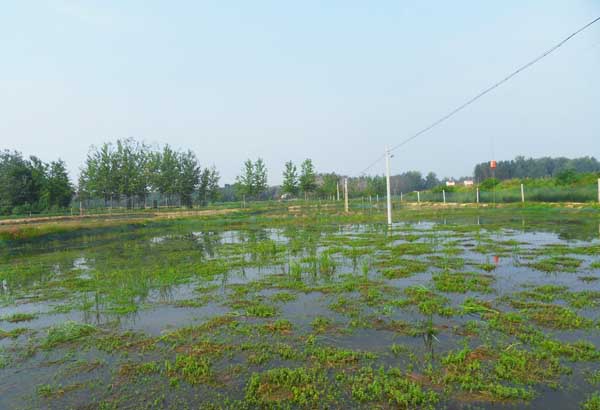
As an important species in specialty aquaculture, loach has seen its farming boom continue to heat up in recent years, and the scope of loach farming has kept expanding, but it has also become a money-making trick hyped by many companies or individuals. Today, follow the editor to take a look at these common loach farming scams!
Loach farming scam: the myth of profits
Some hype companies even claim that their variety of loach can increase profits by more than 10 times, but based on our company's practical experience, an annual return of 200% or 300% from loach farming is not surprising, because among aquaculture industries loach farming has the highest profits, but getting rich overnight is impossible. The earlier statement that buying wild loach at a price higher than that of commercial loach leaves no profit to speak of is because when buying wild loach, the mortality rate of the fry is relatively high, not as some units say, that over one farming cycle, when individual fry grow to the weight of individual commercial loach, the total weight can increase dozens of times.
But in reality this is not the case. For example, fry stocked at 300 fish per jin growing by the end of the year into commercial loach at 30 fish per jin would theoretically be a 10-fold increase, but in fact a 3-4 fold increase is already very good, because not every loach fry can grow healthily, and not every loach can grow into commercial loach without dying. Subtracting site, feed and labor costs from the above output value, the profit obtained is not as high as imagined. Of course, if farmers are capable of doing artificial breeding and fry rearing themselves, the profit will be much higher. In today's society there is only relatively high profit, not absolute high profit. Understanding this principle will keep you from falling into the profit trap of hype companies.
Loach farming scam: the myth of models
A certain company built an ecological chain: first plant grass - grass feeds pigs and cattle - pig manure and cattle manure feed earthworms, earthworms feed loach, earthworm manure fertilizes fruit trees, the orchard raises chickens..., packaging the whole model for trainees to study. How much is the tuition? After finishing the course, buy grass seed, buy earthworms, buy loach seed, and also buy pheasant breeds, and of course buy feed and medicine - how much more is that? Anyway, there is a complete and perfect package for you to spend money on.
Of course, one has to admit it is a perfect model, but who knows how many people can actually industrialize it. Just doing one part well is already not easy, and the possibility of achieving industrialization is slim. If trainees go to a place to inspect it, besides looking at its farming model, they should also look at the scale under that farming model. A good farming model may be nothing but empty talk on paper; only the scale under the farming model can reveal the company's development prospects. If every link in its industry chain can be large-scale, it shows the company has great development prospects; otherwise it is just putting on a show to cheat tuition fees.
Loach farming scam: the myth of fry
Some companies boast that their fish fry are some certain fish fry, how superior, how fast-growing, how high-yielding, which is actually not credible at all. People who know the market know that loach is currently in short supply in China and the price is very high. The fundamental reason is that loach breeding technology and fry rearing technology are not yet mature. At present, the more appropriate practice adopted by most farmers is to buy wild fry locally for domestication and rearing, because the latest loach farming technology's breeding techniques can only meet the needs of a farm's own commercial farming. So currently 90% of farmers in China use wild domestication and rearing. Wild loach fry domestication and rearing not only has a high fry purchase price, but the fry are also extremely prone to dying during transport, with a low survival rate, making it a less than ideal farming method. The so-called superior varieties on the market are even more nonsense.
Some farmers do not understand artificial breeding and buy locally, but it is very difficult to buy large quantities of wild fry. Some companies will then introduce their so-called “superior” variety to you (in fact, it is also wild loach they purchased, and at a price much higher than commercial loach). They describe how superior their variety is, how fast it grows and how little feed it needs, how high the survival rate is, and thus how large the profit margin is. After our company purchased wild loach for farming, we found that the purchase price must never be higher than the price of commercial loach, otherwise there is no profit to speak of (now with artificial breeding of fry, costs are greatly reduced and profits are considerable). When farmers buy wild fry, they should choose robust, sexually mature commercial loach to improve the rearing effect. But none of these are advisable. Loach fry currently cannot meet market demand, so where would superior varieties come from? The so-called “superior” varieties that can create great profits are just a profit-seeking deceptive practice of hype companies.
Loach farming scam: the myth of high-price buyback
This trap is generally carried out together with the variety myth trap: providing customers with superior varieties, then promising customers to buy back at a high price the commercial loach grown from such superior varieties. As introduced earlier, there are currently no artificially improved superior loach varieties, and moreover loach is now in short supply on the market, so farmers do not need to worry about sales at all. Of course, selling at a high price is also impossible; products can only follow the market. High-price buyback is a trap of hype companies. When you really have commercial loach and look for them to buy it back at a high price, they have probably long since vanished, and you are left full of regret.
Of course, apart from these, loach farming scams come in all shapes and sizes, but it must be said that loach farming is actually an industry with very good market prospects; it is just that farmers should be careful and cautious during the farming process. Pie will not just fall from the sky for nothing; if anything falls, it will be “garbage”. Haha, just kidding.