What are the main varieties of loach? Detailed introduction in this article
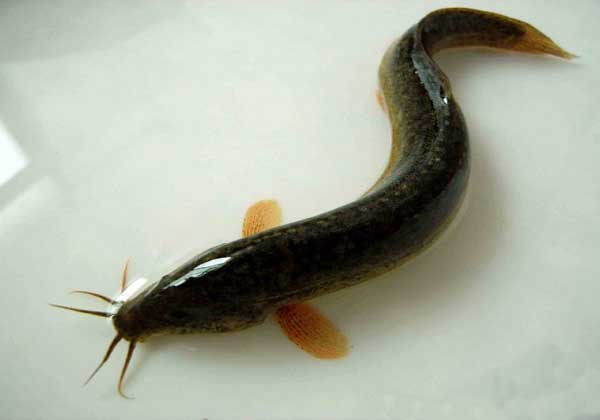
Loach belongs to the family Cobitidae. Loach is known as the "ginseng of the water." It is distributed throughout southern China and, though less common in the north, is also found in various places there. Loach lives in lakes and ponds and is the smallest in body form, only three or four cun long. Its body is round and short, with small scales beneath the skin, and its color is dark greenish-black. Its whole body is covered in its own mucus, making it slippery and impossible to grip. The main varieties are: the true loach, the large-scale loach (Paramisgurnus dabryanus), and the Chinese sand loach.
True loach
Generally called loach. The body is long and cylindrical, with the tail laterally compressed, and the mouth inferior and horseshoe-shaped. There are 5 pairs of barbels: 3 pairs on the upper jaw, which are larger, and 2 pairs on the lower jaw, one large and one small. The caudal fin is rounded, and the scales are tiny and embedded beneath the skin. The back and dorsolateral areas are grayish-black with small black spots. The lower half of the sides is white or pale yellow, and there is a large black patch above the base of the caudal peduncle. The body surface has abundant mucus, the head is pointed, the snout protrudes forward, and the eyes and mouth are relatively small.
Large-scale loach
Distributed in the middle and lower reaches of the Yangtze River and its affiliated waters. Its body shape closely resembles that of the loach. It has 5 pairs of barbels. The eyes are covered by a skin membrane. There is no suborbital spine. The scales are large and embedded beneath the skin. The skin-fold ridge at the caudal peduncle is well developed and connected to the caudal fin. The length and height of the caudal peduncle are approximately equal. The caudal fin is rounded. The anus is near the origin of the anal fin.
Chinese sand loach
Distributed in the middle and upper reaches of the Yangtze River. Also called the steel loach. The snout is long and pointed. It has 3 pairs of barbels. There is 1 pair of knob-like protuberances beneath the chin. The suborbital spine is forked, with the tip extending beyond the posterior margin of the eye. The cheek area has no scales. The anus is close to the origin of the anal fin. The caudal peduncle is relatively low. It inhabits slow-water areas of river sections with sandy and gravel bottoms and often moves along the bottom layer.
At present, there are also many ornamental loaches in China. Their body form is the same as that of ordinary loach, but their colors are more vivid, making them suitable for home keeping and viewing.