What are the rapid breeding methods for loach fry and fingerlings?
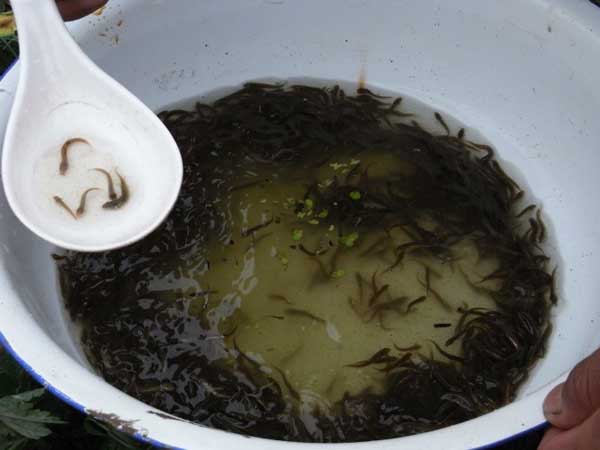
Loach has the characteristics of wide distribution, strong stress resistance, and easy farming, and also has high medicinal value, and is known as "ginseng in water". The rapid breeding technology for loach fry and fingerlings is introduced as follows.
Site selection
The farming site should have sufficient water sources, convenient drainage, the ability to irrigate and drain by itself, fresh and pollution-free water quality, neutral or slightly acidic soil, sufficient sunlight, a quiet environment, convenient transportation, and a normal power supply.
Pond construction
1. Pond specifications: area 50 sq m to 100 sq m, the pond surroundings 40 cm above the water surface, the pond bank slope 60°C to 70°C, pond depth 80 cm to 100 cm. After the pond is dug, the pond walls should be tamped solid, with 50 cm × 50 cm cement boards used for slope protection, about 20 cm of humus soil laid on the pond bottom, and the water depth kept at 30 cm to 50 cm.
2. Anti-escape facilities: use mesh, plastic boards, or porcelain boards around the breeding pond to make a wall, to prevent snakes, rats, and other enemies from entering the breeding area. The inlet and outlet should be wrapped with 120-mesh mesh cloth to prevent loaches from escaping and to prevent enemies, wild fish eggs, and fry from entering the pond.
3. Inlet and outlet facilities: the inlet and outlet are arranged diagonally, the inlet is 20 cm above the water surface, and the outlet is set at the bottom of the fish collection pit, connected with a PVC pipe extending 30 cm above the water surface. When draining, the water level can be adjusted freely by adjusting the height of the PVC pipe.
4. Fish collection pit (mud collection pit): to facilitate harvesting, a fish collection pit connected to the bottom drainage outlet should be set in the pond, with an area of about 5% of the pond bottom area, and 30 cm to 50 cm deeper than the pond bottom. The four walls of the fish collection pit are enclosed with wooden boards or built with cement bricks and stones.
Preparation before stocking
1. Pond clearing and preparation: 10 days before stocking loaches, clear and prepare the pond, inspect holes and plug leaks, dredge the inlet and drainage pipes, and plow the mud at the pond bottom. After adding water to a depth of 10 cm, use 1 kg of quicklime per 10 sq m, slake it into slurry, and splash it over the whole pond for disinfection.
2. Water storage and fertilization: 3 days after pond clearing, add water to a depth of 30 cm and apply base fertilizer, applying 3 kg of fermented chicken manure or 5 kg of pig, cattle, or human manure per 10 cubic meters of water, or applying 7 g of nitrogen fertilizer and 1 g of phosphorus fertilizer per cubic meter of water.
Fry and fingerling stocking
The time for loach fry to be put into the pond is May each year, and the stocking density is 1500 fish per sq m to 2000 fish per sq m. When the loaches are raised to a body length of 3 cm, they should be screened and divided into ponds, and the density of loach fry and fingerlings is 60 fish per sq m to 80 fish per sq m. During the process of stocking fry and fingerlings, note that before stocking, a test should be carried out first to check whether the toxicity of the water body has been eliminated. When releasing the fry, the temperature difference between the water in the container holding the fry and the pond water must not exceed 2°C. If the loach fry and fingerlings are transported in oxygen-filled nylon bags, then before releasing the fry into the pond, a "acclimation" treatment should be carried out by placing the oxygen-filled nylon bag in the pond for 20 minutes, so that the water temperature inside and outside the oxygen-filled nylon bag is consistent, and then slowly release the fry and fingerlings.
Feeding management
1. Early breeding stage (loach fry body length less than 2 cm): according to the water color, apply additional fertilizer in an appropriate amount. For additional fertilization, fermented farmyard manure such as pig, cattle, chicken, and human manure can be used, or chemical fertilizers such as superphosphate, urea, and ammonium bicarbonate can be used, adopting the method of small amounts applied multiple times. The water color is best when yellow-green, the water depth should be controlled within 0 cm, and the transparency should be controlled at about 20 cm. At the same time, for every 200,000 loach fry, use 1 kg of soybeans ground into 15 kg of soybean milk, and splash it once in the morning and once in the evening each day for feeding.
2. Later breeding stage: after the size of the loach fry and fingerlings reaches 2 cm, gradually deepen the water level to 50 cm. In addition to continuing to fertilize the water quality, compound feed should also be fed, once each in the morning and afternoon every day, with a daily feeding amount of 4% to 10% of the loach's body weight. The feeding amount should be flexibly controlled according to water quality, weather, and feeding conditions. When the water temperature is above 15°C, the appetite of loaches increases with rising water temperature; at 25°C to 27°C, the appetite is especially strong; above 28°C, the appetite gradually decreases; when it exceeds 30°C or is below 12°C, feed should be reduced or even stopped.
Daily management
1. Adjust water quality and add new water, change the water 1 time to 2 times per week, fertilize frequently, and keep the pond water color "fertile, lively, tender, and refreshing", with yellow-green being the best water color.
2. Pond patrol: patrol the pond once each in the morning, at noon, and in the evening, observe loach activity and changes in water color, and deal with problems promptly when found.
3. Regularly prevent diseases: frequently clean and wash the feeding platform, do a good job in disinfecting the feeding platform, tools, and so on, and regularly feed drugs to prevent fish diseases.
4. Prevent harm and escape: pay attention to preventing invasion by enemies and escape of loaches, and frequently check the inlet, outlet, and pond banks.
Disease control
1. Gas bubble disease is caused by insufficient dissolved oxygen in the water, supersaturation of dissolved oxygen, or excessive content of other gases. Symptoms: loaches float on the water surface, and the belly bulges like gas bubbles. Control method: strengthen daily management, prevent water quality deterioration; when the disease occurs, immediately add new water, and splash the whole pond with 4 kg to 6 kg of table salt per mu dissolved in water.
2. Trichodiniasis symptoms: diseased loaches are thin and weak, often float on the water surface, are restless, or spin on the water surface, with increased mucus on the body surface, and Trichodina is found under microscopic examination. Control method: splash the whole pond with a mixture of copper sulfate and ferrous sulfate (5:2) at a solution concentration of 0.7×10⁻⁶.
3. Red fin disease is caused by Brevibacterium infection. The fins, abdomen, skin, and around the anus of diseased loaches become congested and ulcerated, and the caudal fin and pectoral fin turn red and rot. Control method: splash the whole pond with bleaching powder at a solution concentration of 1×10⁻⁶. When loaches grow to a body length of 5 cm, the loach fry and fingerling breeding stage is completed, and they enter the adult loach farming stage.