Detailed Explanation of Key Points of Loach Box Farming Techniques
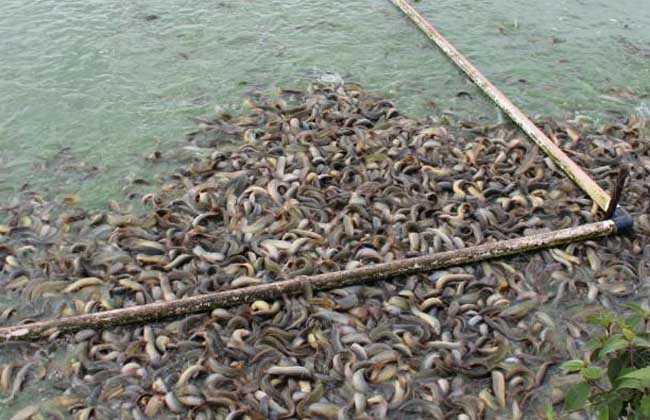
Where there is a water source but it is not suitable to build a pond, loach can be farmed in wooden boxes, and a harvest can be obtained after half a year of rearing, with each box producing 15-20 kg of loach. Below, the editor of Qiannong Network introduces the loach box farming techniques for everyone!
Making the Wooden Box
Specifications 1 m × 1 m × 1.5 m, with a space capacity of 1.5 m3. One or both sides are provided with water inlet and drainage ports with a diameter of 3-4 cm, and 2 mm metal mesh is installed. The bottom of the box is filled with manure and dredged soil (or a layer of straw and a layer of soil), with soil on the top layer, keeping the water depth in the box at about 30-50 cm. The wooden box can be placed in a sunny place with flowing water, so that water can flow in through one hole and drain out through the other. Several boxes can be connected together for combined-box production.
Stocking Density
Each box can stock 1-1.5 kg of loach fry longer than 3 cm.
Feeding Management
Loach is an omnivorous fish. In flowing-water loach farming in wooden boxes, artificial feeding is the main method. Feeds include fish meal, animal viscera, pig blood meal, soybean cake, wheat bran, sauce distiller's grains, rapeseed cake, and other plant-based feeds. The compound feed consists of 50% wheat flour, 20% soybean cake powder, 10% rice bran powder, 10% fish meal or silkworm pupa powder, 7% blood meal, and 3% yeast powder. The compound feed is mixed with water and kneaded into ball-shaped bait, and the feeding amount is 1%-2% of the body weight of the loach in the box. The appetite of loach is related to water temperature, so the proportion of animal and plant-based feeds and the feeding amount should be adjusted according to the season and temperature. When the water temperature is below 20°C, plant-based feed should account for 60%-70% of the total. When the water temperature is 23°C-28°C, plant-based feed should account for 30%-40%. Generally, feed twice a day, with 70% of the whole day's bait amount fed at 7-8 a.m. and 30% at 1-2 p.m. Feeding begins when the water temperature is 15°C, and as the temperature rises, the feeding amount gradually increases, generally 7%-8%. When the water temperature is above 30°C or below 10°C, feed less or stop feeding.
Loach Disease Prevention and Control
To prevent the occurrence of loach diseases, while ensuring the quantity and quality of feed, quicklime, bleaching powder, and the like should be used to regularly disinfect the box body. Once enteritis is found, 20 g of furazolidone can be added to 10 kg of feed, fed twice a day for 3-5 consecutive days. Red fin disease is extremely harmful to loach. After loach is infected with this disease, the fins, abdominal skin, and the area around the anus become congested and ulcerated, and the tail fin and pectoral fins turn white and rot off. Once this disease is found, the loach body should immediately be soaked and washed with a 0.1/10000 concentration tetracycline solution for 1-2 hours, or bathed with a 0.2/10000 concentration furazolidone solution for 24 hours. Alternatively, 0.04% (the proportion of the drug to fish body weight) furanace can be mixed into the feed and fed for 3 consecutive days. If saprolegniasis is found, the diseased loach can be soaked and washed with 4% salt water for 5-10 minutes, or soaked and washed with a 4×10⁻⁶ copper sulfate solution for 20-30 minutes. If parasitic disease is found, 0.7×10⁻⁶ copper sulfate and ferrous sulfate (the two in a 5:2 ratio) can be evenly splashed over the combined boxes, which can prevent and control trichodiniasis and epistylidiasis.
Precautions
When it rains, prevent the box water from overflowing and causing the loach to escape, and also prevent pesticides and chemical fertilizers from contaminating the water and entering the box.