What are the costs and profits of loach farming?
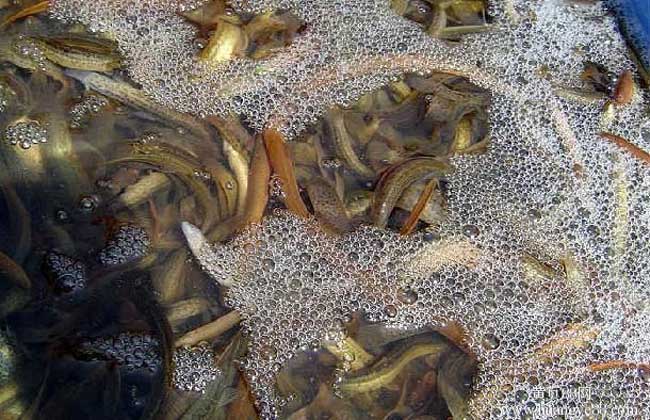
Loach from our country is very popular in domestic and international markets, with broad sales channels. From 1995 to now, loach has been in strong demand on the market for more than ten consecutive years, with annual demand of 10-15 tons, but the market can only supply 5-6 tons, a relatively large gap, driving prices up year after year to 26-32 yuan per kg. International market orders for our country's loach have increased year after year, especially from South Korea and Japan, where demand is relatively large.
At present, loach farming in Hubei, Jiangsu, Anhui, Henan, Sichuan, Hunan, Zhejiang and other places is in full swing. Loach has strong adaptability, simple farming methods, low investment, saves labor, and has high farming benefits. The farming benefits of loach are certainly the issue that every loach farmer cares about most.
Below, the editor takes farming loach in 1 mu of water surface with 400 jin of seedlings stocked as an example to analyze the costs and profits of loach farming for everyone!
1. Site rent: (varies by region, adjust the data yourself), for 1 mu of loach pond, the site rent cost is about 500 yuan
2. Site renovation: excavator work at 160 yuan per hour requires 4 hours of work, etc. (except for existing ponds), requiring 640 yuan.
3. Seedling purchase funds: for 1 mu of water surface, stocking 400 jin of loach seedlings calculated at 28 yuan/jin requires 11200 yuan
4. Feed cost: stocking 400 jin of loach seedlings, calculating output of 2800 jin of loach, farmed according to our company's feed formula. Such as: aquatic organisms, earthworms, rice bran, wheat bran, soybean dregs, soybean cake, wheat, corn, fish meal, etc. as bait, the feed cost is about 3200 yuan
5. Other expenses: fishery drugs, water and electricity, nets and other miscellaneous expenses 400 yuan
6. Farming cycle: loach generally reaches market size after 3-4 months of rearing, total farming cost 15940 yuan
7. Output: farming 1 mu of loach, stocking 400 jin of seedlings, can produce about 2800 jin of commercial loach. The market price of commercial loach calculated at the guaranteed base price of 12 yuan/jin, the income from 2800 jin of loach is 33600 yuan.
8. Profit: income 33600 yuan - investment 15940 yuan = 17660 yuan/mu (if seedlings are stocked in 2 batches per year, the benefit is higher).
To make money from farming, you can only consider it from two aspects: how to reduce feeding costs and increase the survival rate, and how to increase the growth rate. How to reduce the feeding cost of loach is a question that a professional farmer must think about, and it is also an important part of making money from loach farming. Let's continue to take a look below!
How to reduce loach farming costs?
1. If there are paddy fields or water pits suitable for loach farming, the resources can be fully utilized to save construction investment.
2. Loach fry are very selective in feeding. When they are first put into the pond, suitable feed should be given in time. The feed includes: rotifers, small phytoplankton and other palatable bait, and appropriately feed cooked egg yolk, fish meal, milk powder, soybean cake and other concentrated feed. When the loach grows to the point where it can feed itself on microorganisms and debris of animals and plants in the water, it can be fed some plant coarse grains such as rice bran, bran, corn flour, wheat flour, etc., mixed with chopped fish, shrimp, snails and mussels, earthworms, fly maggots, yellow mealworms and other carnivorous animals.
3. The water quality for raising loach should be fertilized in time, which can provide natural bait for the loach. Also note that the water quality should not be too fertile, so as to avoid causing oxygen deficiency in the loach.
4. Do not feed during rainstorm weather or when the loach's appetite is not strong, to reduce feed waste.
5. Disinfect frequently and do a good job in prevention and control, so that the loach grows healthily.
How to increase the survival rate of loach farming?
Farming loach fry often encounters the awkward situation of being easy to breed but difficult to cultivate. The survival rate of fry cultivation always stagnates at around 20% and does not move forward. The current situation makes it difficult to form a large-scale farming promotion pattern, which seriously restricts the industrialization development of loach. The following points can improve the survival rate of loach fry.
1. The loach hatching pond is best a cement pond larger than 20 sq m. Three days after hatching, do not rush to divide them into ponds for cultivation. Adopt cultivation in the original pond to strengthen the fry before putting them into the pond. During this period, feed an appropriate amount of egg yolk. After one week of cultivation, the loach fry grow to about 1 cm, their constitution is strengthened, and their ability to avoid enemies is enhanced, then divide them into ponds.
2. Before releasing the fry, use quicklime or bleaching powder to thoroughly clear the pond. Wait one week until the toxicity of the water body completely disappears, then the fry can be released. Before releasing the fry, first put in several loach fry to test the water. If there is no abnormal reaction within 4 hours to 8 hours, the loach fry can be officially put into the pond. The pond water depth is generally maintained at 30 cm to 50 cm.
3. Before releasing the fry, apply 300 kg of decomposed manure per mu to cultivate natural bait. After 3 days to 5 days, when the plankton in the pond multiplies to its peak, release the fry in time.
4. Release about 150000 loach fry per mu. After the loach fry are put into the pond, feed special powder for loach fry or self-made powder per mu every day. Feeding soybean milk is not advocated. Although soybean milk is palatable, it fertilizes the water quickly and makes water quality difficult to control.
5. In the early stage of cultivating loach fry, the requirement for dissolved oxygen in the water body is very high. Generally, the dissolved oxygen content of the water body should reach 4 mg to 5 mg/L. Using a nozzle to sprinkle water for oxygenation has a better effect. The water spray is small and dense, and will not harm the weak loach fry. The water transparency of the pond is controlled at more than 30 cm. After one week of cultivation, the loach fry can be divided into ponds for farming.