A detailed guide to loach farming techniques: master scientific breeding methods
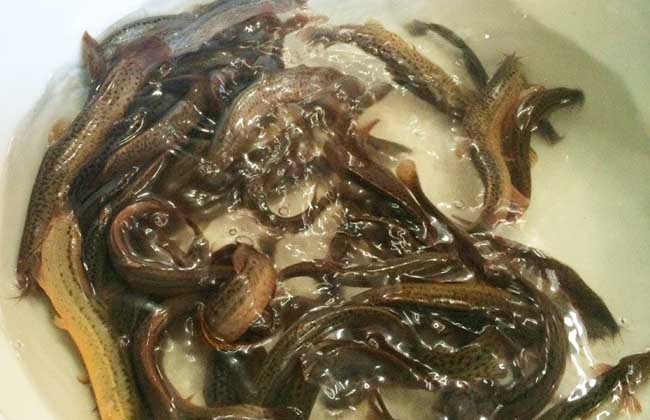
The loach is a small omnivorous freshwater fish, widely distributed in China, Japan, Korea and Southeast Asian countries and regions. Its flesh is light-flavoured and tender, delicious and nutritious, and it is known as the “ginseng of the water”. It is one of China's important aquatic products for export and has excellent economic value. However, because demand has increased, wild loach falls far short of what the market needs, so artificial farming has become the main channel of supply. Now let's go to the shores of Weishan Lake in Shandong Province to see how loach is farmed.
Construction of the loach farming site
1. Correct site selection for the farm
To raise loach well, choosing a suitable location is very important. First, choose a place with abundant water and good water quality. Because the loach is also a fish, and fish cannot live without water, so there must be a clean, pollution-free water source to farm loach. Second, choose a place with convenient transport, since the farming process requires transporting feed and transporting loach, so a place with convenient transport must be chosen. Choosing the site well is not enough on its own; when building the farm, everything must be considered thoroughly. Now let's look at the layout of the farm.
2. Overall layout of the farm
The loach farm is of course centred on ponds; the pond area can be large or small, but it is best for the ponds to be long east to west and short north to south, since such ponds receive sunlight for a long time, which benefits loach growth. On the two sides of the ponds are the inlet channel and the outlet channel respectively, so the ponds are arranged in sequence along the channels on both sides, forming a parallel structure. The purpose of the parallel structure is to allow separate management, so that if the water quality in one pond is poor, it will not affect the other ponds. Between each pond and between the ponds and the channels, walking paths are left as passageways for daily management. In the construction of a loach farm, space must also be left for a water-holding pond. In loach management, keeping the water temperature stable is very important, so it is best to use water at the same temperature as the pond water, which is also why a water-holding pond is needed. At this point, the main body of the farm is complete, but we also need a separate management area. The management area is generally set on one side of the ponds; the staff offices, the feed workshop and the feed warehouse are all placed here. In addition to the conventional facilities, the management area also needs an extra holding pond. Like many fish, loach must be held for 1-3 days before sale to remove the muddy taste from the flesh and to empty the faeces from the intestines. This both improves the eating quality of the loach and keeps the water quality good during transport, raising the survival rate. Once the farm is built, the necessary protective measures are also indispensable: along the perimeter of the site, it must be tightly enclosed with netting. The purpose of the netting is to prevent cats, dogs and other animals from entering the farm and causing contamination and harm.
By now you should understand the layout of the whole farm. Next, let's talk specifically about the construction requirements for the farming ponds. As we said earlier, the length and width of the ponds can be designed according to the terrain, but the length is best over 100 m and the width should not exceed 80 m, because too large an area is not conducive to management. Loach farming ponds have strict depth requirements; a pond depth of 1 to 1.2 m is most suitable.
The loach has one particular trait: its ability to escape. Because of its small size, it can squeeze out through even a tiny gap. If a pond has a hole, the loach can even escape completely within a single day. So when building a pond for loach, this point requires special attention.
① Treating the bottom of the pond: after the excavator has dug out the pond, the bottom of the pond must be tamped down firmly and solidly.
② Treating the edges of the pond: dig a ditch nearly 1 m deep along the edge of the pond, then lay thick plastic sheeting from the bottom of the ditch all the way up to ground level, and the joins in the plastic sheeting must also be connected tightly. After the plastic sheeting has been laid all along the edge of the pond, use the excavated soil to press the plastic sheeting down firmly, so that the plastic sheeting and the pond become one body. The upper end of the plastic sheeting is fixed with wooden stakes about every 1 m to ensure the sheeting is not blown open by strong wind.
③ Treating the pond's inlet and outlet: because PVC pipes are relatively cheap nowadays, the farm can consider using PVC pipes as the pond's inlet pipe, with one end coming from the water-lifting equipment beside the reservoir and the other end leading directly to one side of the pond.
The pond's outlet needs careful design. We want the water drawn out to be the bottom-layer water of the pond; the bottom-layer water is polluted by loach faeces and leftover feed, so its quality is relatively poor, and when changing the water, it is this poorer-quality layer that must be discharged. Let's look at a clever outlet design: this outlet consists of two sleeves, one inside the other. The outer large sleeve, that is, this white pipe, can extend above the water surface at the top; at the bottom, that is, at the position at the bottom of the pond, there is a ring of gaps used to discharge the bottom-layer water. These gaps are all very small, so the loach cannot escape through them. Inside the white sleeve is a slightly thinner plastic pipe; when draining water, pull it out and the water flows out through the gaps; when not draining, lower it to block the drainage gaps, acting as a switch. These two sleeves alone are not enough; to deal with the mischievous loach, another layer of screen mesh must be added. This square fine screen mesh is inserted deep into the pond, and if the loach wants to get through these several lines of blockade, it will not be so easy.
Artificial breeding of loach
1. Timing and method of artificial breeding of loach: when spring arrives and the water temperature reaches 18 °C-20 °C, sexually mature loach begin to reproduce naturally. In northern regions, spawning generally starts in mid-April, with the peak spawning period from mid-to-late May to late June, and the spawning period can continue until August. The artificial breeding of loach adopts a method of creating a natural environment and letting the fish fertilise naturally. There are three aspects to note in artificial breeding: first, selecting good brood loach; second, building a suitable breeding pond; third, scientific management during hatching.
2. Selecting robust brood loach: brood loach used for breeding can be caught from ditches and ponds, or purchased at farmers' markets. The brood loach should be robust, free of disease and injury, and be two-year-old loach with a body length of over 10 cm. Large female loach carry a large quantity of eggs, and male loach have plenty of milt, so the fry bred are of good quality and grow quickly. A female loach in oestrus has a large, round belly; the whole swollen abdomen turns whitish and glossy; when pressed lightly with the hand it feels soft, and the genital opening protrudes.
3. Preparation of the breeding pond: the breeding pond can be built according to local conditions, generally chosen in a place with convenient water inlet and drainage and close to the farm. A pond can be temporarily built with bricks and then lined with clean plastic sheeting, or a rectangular stainless steel box can be used as the breeding pond, with the area determined by the number to be hatched. The depth of the pond is about 1 m to 1.5 m, and it must not be too deep. Before use, the breeding pond must be cleaned, and both the walls and the bottom of the pond scrubbed clean with clear water. Three days before use, fill the breeding pond with new water to a depth of no more than 50 cm. To improve the hatching survival rate, the new water must be left to stand in the sun for three days before the brood fish are put in. Before putting in the fish, measure the water temperature; the suitable water temperature is 18 °C to 30 °C. Once the water temperature is stable, collect naturally growing aquatic plants from the pond edges, rinse the plants clean with clear water, carefully inspect the plants and remove any small insects and the like attached to them, then place the plants into the breeding pond; this creates a good environment for the loach to mate naturally. Generally, two male loach and one female loach are placed in one breeding pond. Loach generally spawn in the evening or early morning, so the farm staff must observe diligently. After the female loach releases her eggs, the fertilised eggs adhere to the aquatic plants; because the fertilised eggs have very poor adhesion, they easily fall off the plants and are swallowed by the loach, so once the fertilised eggs have formed, the brood loach must be removed from the breeding pond.
4. Hatching and rearing of loach fry: at a water temperature of 18 °C to 25 °C, the fry hatch in 3 days. Newly hatched fry are about 5 mm long, gradually changing from yellow to black, and begin actively feeding after 3 days. From day 3 to day 8, they can be fed with boiled egg yolk, once every 3 to 5 hours. The amount fed should not be too large, with the criterion being that it is eaten within 1 hour. The fry breeding period is April to May, when river or lake water gradually turns green and zooplankton multiply in large numbers, providing natural food for the fry's growth. Loach like animal-based food, so from day 5 onward, nutrient-rich food such as “hui water” must be added. “Hui water” refers to water bodies in nature, in lakes and ponds, that are rich in large numbers of paramecia. Because when paramecia multiply in large numbers they drift and swirl in groups in the water layer as grey-white cloud-like masses, they are called “hui water”. After scooping up the fish food organisms, filter them through a 200-mesh screen; after filtering, these extremely small plankton are the fry's favourite feed. About 10 days after hatching, the loach gradually grow larger and can eat somewhat larger fish food organisms, so the feed is gradually changed from 200-mesh-screened hui water to 100-mesh and 80-mesh screened fish food organisms. As the fry's food intake increases, adjust the feeding frequency at any time; by day 30, adjust it to feeding twice a day, once in the morning and once in the evening. Loach grow very fast; 30 days after hatching they can reach about 3 cm, and if it is large-scale farming, they can then be given crushed and soaked compound feed. Because the fry are reared using a still-water method, the water must be changed frequently during the rearing period, twice a day, using water that has been left to stand in the sun, with a temperature difference from the breeding pond of no more than 1-2 °C.
Farming of adult loach
About 60 days from hatching, the loach grow to 5 to 8 cm, and at this point the fry can be put into large ponds for farming. Before the fry are put into the pond, the pond needs careful treatment.
1. Sun-drying and disinfection of the pond
① Sun-drying the pond: for ponds that have been used for many years, sun-drying is very important. Generally, the pond should be sun-dried 30 days before the fry are put in, drying the bottom of the pond until it cracks in a turtle-back pattern; this is of great benefit in eliminating microorganisms in the pond.
② Digging out the bottom silt: because a great deal of faeces and leftover feed accumulates at the bottom of the pond, the silt at the pond bottom is a habitat for disease-causing microorganisms, and the loach has a habit of burrowing into mud and likes to move about at the bottom of the pond, so for a loach farming pond, the bottom silt must be removed before the fry are put in. Generally, use a shovel to dig up the bottom 40 cm of silt, gather it together, and then use a cart to push it far away from the pond for disposal.
③ Quicklime disinfection: in production, quicklime disinfection is used about one week in advance. Quicklime can eliminate many kinds of pathogenic bacteria and harmful organisms. After being dissolved in water, quicklime becomes a strongly alkaline solution that can kill stray fish, insects, leeches, blue-green algae, water net algae and some more delicate aquatic plants remaining in the pond, as well as killing parasites and pathogenic bacteria, so its sterilising effect is particularly good. The amount of quicklime used is 1000 kg per mu, sprinkled directly onto the pond bottom; after sprinkling, add new water, and only after one week can the fry be put into the pond.
2. Putting the fry into the pond
A pond can only hold loach of the same size. For 5 to 6 cm loach, 100-150 fish can be stocked per sq m; for 7 to 8 cm loach, 50-80 fish can be stocked per sq m. If the pond conditions are relatively good, the stocking density can be appropriately increased; otherwise it should be appropriately reduced. During loach stocking, if the density is too low, it wastes water resources; if the density is too high, the dissolved oxygen level drops, which is harmful to loach growth. Next, let's look at what aspects of daily loach management need attention.
3. Daily management of adult loach
① Preparation and feeding of feed: for artificial loach farming it is best to use compound feed, first because compound feed is comprehensive in nutrition, and second because compound feed is convenient to use and causes little pollution to water quality. Loach compound feed comes in three specifications: 5 to 8 cm fry use one specification, 8 to 12 cm medium loach use one specification, and 12 cm to 20 cm adult loach use one specification. The three specifications of feed differ not only in pellet size but also in protein content: fry require a higher protein content, while adult loach require a lower protein content. Now let's look at the formulas of these three feeds respectively:
Feed No. 1: wheat bran 42%, soybean meal 20%, cottonseed meal 10%, fish meal 15%, blood meal 10%, yeast powder 3%.
Feed No. 2: wheat bran 48%, soybean meal 20%, cottonseed meal 10%, fish meal 12%, blood meal 7%, yeast powder 3%.
Feed No. 3: wheat bran 50%, soybean meal 20%, cottonseed meal 10%, fish meal 10%, blood meal 7%, yeast powder 3%.
When feeding compound feed, sprinkle it along the edges of the pond, and sprinkle it very evenly, avoiding excessive concentration in any one place, which would cause competition for food. Feed twice a day, with the amount fed judged by the loach finishing it within 1 hour. So, once the feed is scattered in the pond, how do you judge whether it has been finished? This can be judged with a simply made observation platform. The observation platform has a lever structure, with one end fixed on the bank and the other end a round or square screen mesh. One hour after feeding, the keeper raises the screen mesh to see whether the feed that was given has been finished. This observation platform also serves to check the loach's growth: through it you can easily see how big the loach have grown, how their growth condition is, and so on.
② Water temperature management in loach farming: the most suitable temperature for loach growth is 22 °C to 30 °C. When the water temperature exceeds 30 °C, the loach's feeding decreases, and they may even stop feeding and burrow into the soil. So the keeper must measure the water temperature frequently, especially in summer, measuring it once around 2 pm every day; if the water temperature is too high, add new water in good time.
③ Water quality management in loach farming: the quality of the pond water is crucial to the growth and development of loach. Pond water is best yellow-green, with a transparency of 20 to 25 cm as suitable. The loach is a very hardy organism and basically has no diseases, but in high-density farming, because of the high loach density, the large amount of feed given, the large amount of faeces produced and other reasons, changes occur in the pond's pH, dissolved oxygen and ammonia nitrogen content. These figures affect the growth and development of the loach, and relying on the keeper's eyes alone is not enough; a simple method is to use test strips to judge these figures correctly. Fish keepers are all familiar with pH test strips; pH means the acidity or alkalinity of the water. Using them is very simple: operate according to the instructions, then compare with the colours on the pH test strip, and you can easily know whether the pH of the water meets the requirement. The most suitable pH for loach growth is 7 to 7.5. Because of the growth of algae in the pond, a high pH often occurs in loach farming, and this can be adjusted by sprinkling quicklime. The dissolved oxygen content of the pond is also very important; dissolved oxygen means the content of oxygen in the water. When testing dissolved oxygen, add 5 drops of dissolved oxygen reagent to the water sample and compare with the colour card to obtain the dissolved oxygen content of the sampled water. When the temperature is too high and there is too much plankton in the water, the dissolved oxygen content will drop. When the dissolved oxygen content in the water is below 2 mg per litre, measures must be taken in good time: inject more new water; as new water is added and old water is replaced, the water in the whole pond forms convection, so that fresh water can bring in enough dissolved oxygen to increase the oxygen in the water; otherwise, insufficient dissolved oxygen in the water will affect the normal growth of the loach. Excessive ammonia nitrogen content in the water body is strongly toxic to loach, gradually reducing the number of red blood cells and the amount of haemoglobin in the loach, causing chronic poisoning and inhibiting growth. Excessive ammonia nitrogen content is caused by the decomposition of loach excreta, leftover bait and plankton remains. The method for measuring ammonia nitrogen content is similar to that for measuring dissolved oxygen. The ammonia nitrogen content in a loach farming pond must not exceed 0.03; if the ammonia nitrogen content is on the high side, microbial preparations such as photosynthetic bacteria can be used at the dosage given in the instructions, which can significantly reduce the organic matter content of the substrate and water, thereby reducing the release of ammonia nitrogen from the decomposition products of organic matter.
④ Checking escape-prevention measures: the loach's body is very small, and even if the holes in the pond walls and embankments are very small, it can still burrow out and escape, so when the keeper patrols the pond every day, they must check whether the plastic sheeting around the pond is sound and whether the escape-prevention netting is sturdy, and be careful to plug up holes to prevent escape.
⑤ Cleaning up every day: the keeper must clean up around the pond every day, especially pulling up weeds on the pond embankments to prevent the weeds from growing too long and falling into the water, becoming a path for the loach to escape. Besides cleaning up, they must also scoop out harmful insects from the pond, remove dead loach, and if abnormal phenomena are found in the loach, analyse and deal with them in good time.
Catching loach
Loach put into the pond in May or June can grow to 15 to 20 cm by November, and at this point they can be caught and sold. Loach are generally caught with ground cages; a ground cage is a round cage made with bamboo strips as a frame and fishing net as the body. The loach swims in through a small hole at one end and stays in the cage, unable to get out again. Catching loach with ground cages does not damage the mucus membrane on the surface of the loach's body and can raise the survival rate during transport. To catch loach, set the cages in the morning and collect them in the afternoon, placing one ground cage every 3 m along the pond. After the pond has been thoroughly cleared, there will still be scattered loach left at the bottom of the pond; at this point, they can be caught once more with a hand net. The loach caught must be held for 1-3 days before sale to remove the muddy taste from the flesh and to empty the faeces from the intestines, raising the survival rate during transport. Through our explanation of loach farming above, we do not know whether you have gained a certain understanding of loach farming. Wild loach live in shallow water such as rivers and ditches and are a highly adaptable organism, so in artificial farming there is almost no disease; as long as water quality is well controlled and escape prevention is done well, loach farming is very simple. Today, loach have a broad market internationally, and our country's loach are listed by South Korea and Japan as one of their imported goods; therefore, developing loach farming is a farming industry with broad prospects for development in rural areas today.