Detailed Explanation of Key Points of Loach Soilless Aquaculture Technology
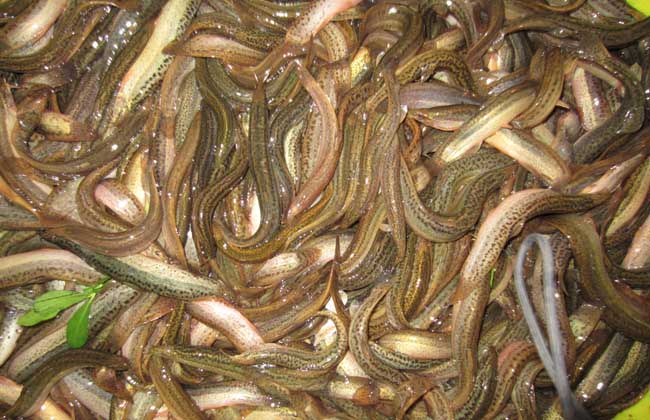
The advantage of soilless loach aquaculture is that since the loach lives in fine sand, the harvesting efficiency at sale time is high, the taste is better than loach raised in mud, and the stocking density is four times higher than that of loach raised in mud. Loach hatched in spring in a concrete pond can grow to 15-16 cm for the larger individuals by the end of the year. Let us take a look at soilless loach aquaculture technology below!
Loach Aquaculture Conditions
Loach pond aquaculture requires sufficient water sources, fresh and pollution-free water quality, and convenient water filling and drainage. For the soil quality, neutral or slightly alkaline loam should be chosen, with convenient transportation and guaranteed electricity supply. The pond is rectangular with an east-west orientation, a length-to-width ratio of 2:1, and an area of 5 mu. The pond depth is 0.8-1 m, and the water depth is 0.4-0.6 m. The pond wall soil should be tamped firm, and mesh sheets should be used to enclose the pond around its perimeter, with the lower end buried 10 cm into the soil and the upper end 20 cm above the water surface, to prevent loach escape and entry of harmful organisms.
Loach Stocking Models
1. Stocking preparation: 20 days before stocking the loach fry, clean, renovate and disinfect the pond. Use wire mesh at the water inlet and outlet to prevent escape. At the drainage outlet, dig a fish pit covering about 1/3-1/5 of the total pond area and 30-50 cm deep, and spread a layer of clay rich in humus on the pond bottom. Seven days before stocking, use quicklime to clear the pond. For each mu of pond with a water depth of 10 cm, use 75 kg of quicklime, slake it into slurry and splash it evenly over the whole pond. Five days after pond clearing, fill with 25 cm of water, and apply 150-250 kg of organic fertilizer per mu to fertilize the water quality.
2. Fry and fingerling stocking: For loach fry and fingerlings, choose artificially bred fry or wild fry, but all must be uniform in size, free of disease and injury, and agile in movement, and should be stocked fully in one batch. The stocking time is generally April each year, when the average water temperature is above 15°C. Stock 1100 kg per mu of fry and fingerlings with a size of 80 fish/kg, preferably on a sunny afternoon. Before stocking, soak and disinfect the fry and fingerlings in an 8-10 mg/L bleaching powder solution for 20-30 minutes.
Loach Feeding and Management
1. Feed selection: Loach is an omnivorous fish. Small aquatic animals and plants, microorganisms, and organic debris in the water are all foods it likes to eat. In artificial aquaculture, it can be directly fed aquatic insects, yellow mealworms, earthworms, maggots, river mussels, spiral shells, fish meal, wild trash fish meat, and livestock and poultry offal, etc., or artificial compound feed can be fed. Loach likes to forage at night, so it should be fed once in the morning and once in the evening. In the early stage of aquaculture, feed is usually given at 3-4% of fish body weight, in the middle stage at 4-6% of fish body weight, and in the later stage the amount of compound feed can be appropriately reduced.
2. Feed feeding: Loach feeding should adhere to the four-fixed principle. On rainy and stuffy days, appropriately reduce the feeding amount. Every day, persist in patrolling the field once a week; if problems are found, deal with them promptly. For example, holes in the field ridge, water leakage, and dead fish should all be handled quickly, and the pond water should be kept tender green. Every 15 days, disinfect once with disinfectant solutions such as quicklime or bleaching powder. For fertilization of lotus root fields, base fertilizer should be emphasized, chemical fertilizers should be used less, and pesticides should be selected as high-efficiency, low-toxicity products that are harmless to loach. Change water regularly, with each water change of 20-30% being sufficient.
3. Water quality regulation: Water quality should be "fertile, lively, tender and refreshing", the water color is best yellow-green, and the transparency is preferably 20-30 cm. When the transparency is greater than 30 cm, apply 20 kg of organic fertilizer per mu each time to increase natural food organisms for loach such as copepods and cladocerans in the pond. When the transparency is less than 20 cm, stop or reduce topdressing. In high-temperature seasons, often inject new water, replace part of the old water, and regularly turn on the aerator.
4. Daily management: Persist in patrolling the pond morning, noon and evening every day, keep abreast of the water level, water quality and loach feeding conditions, and deal with problems promptly. Usually diligently remove weeds around the pond. In high-temperature seasons, use chlorine dioxide once every 15 days, splash quicklime over the whole pond once every 7 days, and apply microbial preparations 1-2 times per month in the middle and late stages of aquaculture. Often check the anti-escape facilities, repair leaks promptly, treat fish diseases promptly when found, and keep an aquaculture diary.
Loach Disease and Pest Control
1. Parasitic diseases: Loach infested by trichodina, epistylis, and gyrodactylus often floats on the water surface and swims in circles restlessly. The control method is to dissolve 0.7 mg/kg of a mixture of copper sulfate and ferrous sulfate (5:2) in water and splash it evenly over the whole field, or splash fish worm net (deltamethrin solution) at 0.15-0.22 mg/kg evenly over the whole field.
2. Print disease: Loach print disease is caused by infection with Aeromonas punctata. The lesions are generally oval or round swellings and have red spots. The affected areas are mainly on both sides of the caudal peduncle, resembling a stamped seal. The control method is the same as for red fin disease.
3. Red fin disease: Loach red fin disease is caused by infection with short bacilli. Part of the epidermis near the dorsal fin falls off and appears grayish white. In severe cases, fin rays are exposed, the fish does not feed, and eventually dies. You can splash 1 mg/kg of bleaching powder or 0.3 mg/kg of strong chlorine essence over the whole field, repeat once after 24 hours, and thereafter splash once every half month for prevention.
4. Gas bubble disease: Caused by insufficient dissolved oxygen in the water, supersaturation of dissolved oxygen, or excessive content of other gases. The loach floats on the water surface, and its belly bulges like a bubble. Strengthen daily management to prevent water quality deterioration. When the disease occurs, immediately add new water, and dissolve 4-6 kg of salt per mu in water and splash it over the whole pond.
5. Saprolegniasis: Saprolegniasis is not easy to detect in the early stage. When it can be seen with the naked eye, the hyphae have already invaded the wounds of the loach and grown external hyphae outward, clustering into a cotton-like appearance. The mold can secrete large amounts of proteolytic enzymes, which can degrade the body tissues of diseased loach and secrete large amounts of mucus, worsening the condition, greatly reducing appetite, and causing weakness and death. It often reproduces in spring, autumn or winter, and can infect fish as long as there is a wound on the skin.