What are the common mistakes in raising loach in cement ponds?
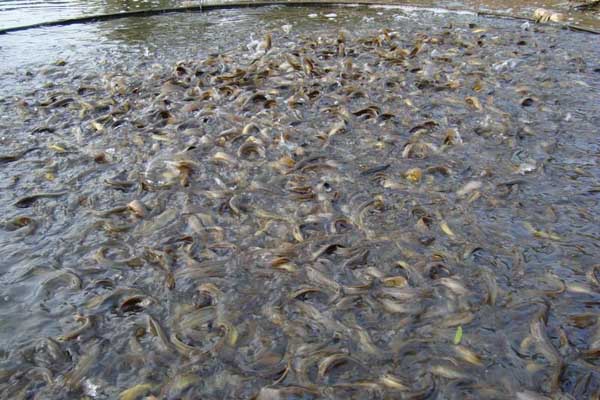
Do you know the common mistakes and solutions in raising loach in cement ponds? In recent years, loach prices have been rising steadily, and the amount of wild loach has decreased year by year. Many people have failed at farming them. Here are several common farming mistakes and their solutions.
Buying fry indiscriminately
Many farmers go elsewhere to buy so-called imported high-quality fry at high prices. Because of long-term temporary holding and long-distance transport, the mortality rate can reach 70-90%, causing the farming to fail.
Solution: At present there is no variety bred specifically for farming. What is farmed is local loach and large-scale loach (Paramisgurnus dabryanus), the former having strong disease resistance and the latter growing fast. You can choose loach fry according to your own situation.
Improper stocking
Loach of 10 cm or more have eggs in their bodies. If transport and handling are even slightly improper, the mortality rate can reach 80-100%, so they must not be stocked.
Solution: In February-March, when the day-night temperature difference of the pond water varies greatly, it is suitable to stock large fry of 8-10 cm; in April-May, it is suitable to stock small fry of 5-7 cm.
Cement pond construction does not match the loach's ecological habits
Loach often suffer from mouth rot disease. In mild cases the body becomes thin and weak, in severe cases they die, and in some cases the mortality rate reaches more than 40%. Even after medication the effect is still not ideal. In fact, this disease is caused by cement pond construction not matching the loach's ecological habits. Loach are very sensitive to vibrations of the ground surface. When the ground surface vibrates, the startled loach can dart out 5-6 m. Loach have poor eyesight, so if the pond is too small, their mouths easily hit the pond wall and get injured, triggering this disease.
Solution: The area of the cement pond should be no less than 200-300 sq m, and the pond corners should be rounded. One month before stocking fry in a new pond, soak it in water for 20-30 days to remove alkali, then wrap fully rotted chicken manure in burlap pieces, 5 kg per bag, placing 10-20 bags per mu. When the pond walls turn green, take out the burlap bags, then put in the loach fry. This can effectively prevent loach mouth rot disease.
Abusing manure fertilizer
The water body of a loach pond is small. Applying too much manure fertilizer very easily spoils the water quality and induces disease. Be sure to pay attention to the timing of fertilization.
Solution: When the water transparency is greater than 35 cm, wrap fully rotted chicken manure in burlap pieces, 5 kg per bag, placing 10-20 bags per mu; when the water transparency reaches 20-25 cm, take out the burlap bags in time.
Neglecting the role of aquatic plants
To raise fish, first raise the water; only with grass are fish plump. According to statistics, with aquatic plants the survival rate of loach is 1.07 times that in mud and 1.46 times that with no hiding places. Therefore, using the method of raising conventional fish in a bare pond to raise loach will not work.
Solution: Plant aquatic plants such as water hyacinth and alligator weed in the loach pond. These aquatic plants have well-developed root systems, which not only provide loach with a safe habitat environment, but also play a role in preventing heat and cooling down and purifying water quality.