What are the methods for temporarily keeping loaches? Four practical tips shared
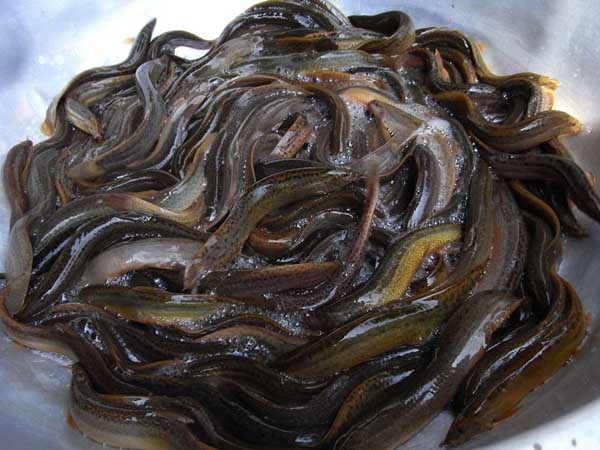
In summer and autumn, loaches flood the market and prices are low. At this time, buy some robust, disease-free and injury-free loaches, and use ponds with cages or build pools, or use buckets and basins to temporarily keep the loaches, then sell them on the market during the New Year's Day and Spring Festival when prices are high. The price difference is generally around 5 yuan per kilogram, and the profit is quite considerable. The temporary keeping methods are as follows.
Temporary keeping in fish baskets
A fish basket with a mouth diameter of 25 cm, a bottom diameter of 65 cm and a height of 24 cm can be placed in still water, with 7-8 kg of loaches per basket. If kept in slightly flowing water, 10-15 kg can be stocked. When the fish basket is placed in the water, 1/3 of it should be exposed above the surface so that the loaches can breathe normally.
Temporary keeping in cages
The length, width and height of the cage can be made in a ratio of 2:1:1.5, and the cage should be placed in a river or pond with open water and good water quality. The temporary keeping density depends on the water temperature and the mesh size; generally 30-40 kg can be kept per square meter.
Temporary keeping in wooden barrels
Various wooden or plastic barrels can be used to temporarily keep loaches. For example, a 35-liter wooden barrel can hold 5-7 kg of loaches. During the first 1-2 days of temporary keeping, change the water 4-5 times a day, and from the 3rd day on, change the water 2-3 times a day. Each water change only replaces about 1/3 of the water in the barrel.
Temporary keeping in cement pools
This method is suitable for large-scale transfer bases. The site should be chosen in an area sheltered from the wind and facing the sun, with sufficient water sources, fresh water quality and no pollution. The cement pool should have facilities for sewage discharge and oxygenation, and convenient water inlet and drainage. Cement pools vary in size, generally 8 m × 4 m × 1 m, with a water storage capacity of about 20 tons. Using the flowing water form, the temporary keeping density is 40-50 kg per square meter. If a trough-type cement pool is built, each cubic meter of water in the flowing water trough can temporarily keep 100 kg of loaches. Before the loaches enter the cement pool, they should be strictly selected, requiring robust physique, no disease or injury, and lively swimming. The loaches in the pool should be of uniform size, and they can be stocked all at once or stocked as they are collected, but before stocking they must be soaked in 3% salt water for 3-5 minutes. In addition, note that in summer a shade shed must be set up above the pool for sun protection, and the water should be changed twice a day; in autumn, change the water once a day; in winter, change the water once every two days. Each water change replaces 1/2 of the water body. During the temporary keeping period, feed should also be properly supplied. Loaches have an omnivorous diet; natural feeds include small crustaceans, aquatic insects, snails, earthworms, animal viscera, soybeans, rice bran, etc.
Note: When using fish baskets and cages to temporarily keep loaches, check frequently. Once the holes of the fish baskets and cages are found to be blocked, brush and wash them in time to prevent the water quality inside the fish baskets and cages from becoming unclear; if dead or injured loaches are found, they should be quickly scooped out.