How to Assess the Quality of Loach Fry
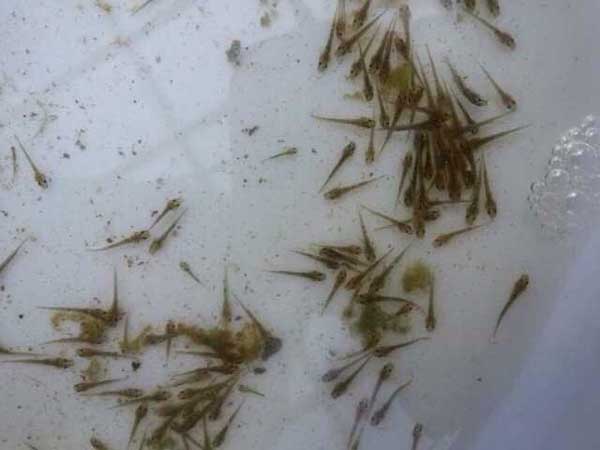
How do you assess the quality of loach fry? The quality of loach fry directly affects the economic returns of loach farming. In fact, the quality of loach fry can generally be assessed from the following aspects:
Understand the fertilization rate and hatching rate of that batch of fry during breeding. Generally, batches with high fertilization and hatching rates produce fry with better constitutions. Loach fry hatched by directly inducing spawning in wild loach have a very low hatching rate, and the fry quality is therefore poor. So when buying loach water-fry, check whether the supplier keeps enough brood loach for breeding. For hatcheries that have relatively few brood loach or that simply use wild loach for temporary induced spawning, it is best not to buy from them.
Fry with fresh, tender body color, a well-proportioned and plump body shape, uniform size, and lively, energetic swimming are good fry.
Put a small amount of loach fry in a white porcelain basin and blow gently on the water surface with your mouth. The strong ones swim against the wind and upstream; the weak ones are pushed by the ripples to the edge of the basin. If the strong ones are the majority, the batch of loach fry can be used for farming.
Put the fry in a white porcelain basin and drain off the water. High-quality fry struggle violently at the bottom of the basin, bending their heads and tails sharply; fry that cling to the sides and bottom of the basin, struggle weakly, or only twist their heads and tails slightly are weak.
If loach water-fry are held too long in a net cage, they will become thin and their constitution will decline, making them unsuitable for long-distance transport. Water-fry suitable for transport are those 3-5 days after hatching; any later will reduce the survival rate during transport.