Key Management Techniques for Winter Pond Farming of Loach
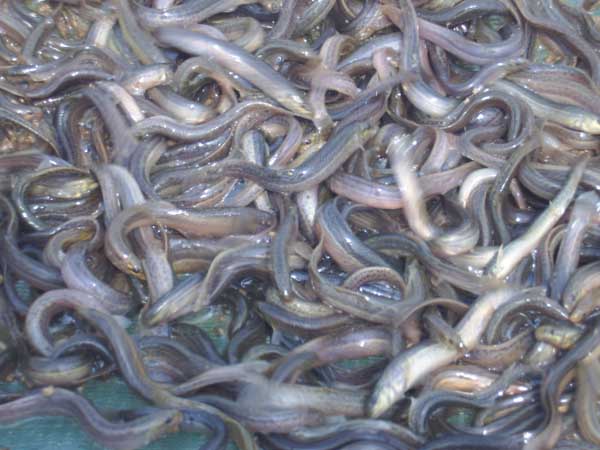
Winter Pond Loach Farming Techniques. The loach is known as the "ginseng of the water," with a delicious taste, tender flesh, and rich nutrition. It also has high value in medicine and is one of China's important aquatic products for foreign trade export. Because of its strong adaptability, few diseases, high survival rate, strong reproductive capacity, convenient transport, and easily available feed, the loach has become an important aquaculture species.
Fry and Fingerling Rearing
1. Pond conditions: For fry and fingerling rearing, earthen ponds are preferable, with an area of 30-100 sq m being suitable, a pond depth of 40-60 cm, and fish pits dug in the pond to facilitate habitation and to provide shelter from heat and cold. The pond embankments and bottom should be tamped solid, fish-blocking nets should be installed at the inlet and outlet, a 15-20 cm layer of silt should be spread on the pond bottom, and duckweed should be placed in the pond, covering about 1/4 of the total area.
2. Pond clearing and water fertilizing: 10 days before the loach fry are stocked into the pond, use 20-30 kg of quicklime for pond clearing and disinfection with water present. After disinfection, apply 300-400 kg of decomposed human and livestock manure per mu as a base fertilizer to fertilize the water, and add water to the pond up to 30 cm. Wait until the water color turns green and the transparency is 15-20 cm, then the loach fry can be stocked.
3. Fry and fingerling stocking: Loach fry begin feeding on the 2nd day after hatching. After 3-5 days of rearing, when the body length is about 7 mm, the yolk sac has disappeared, they are feeding exogenously, and can swim freely and horizontally, they can be put into the pond to enter the fry and fingerling rearing stage. The stocking density of loach fry is suitably 800-1000 per mu, and can be appropriately increased where there is a slight water flow. Note that loach fry from the same batch of hatching and of uniform size should be stocked in the same pond to ensure balanced growth of the fingerlings and increase the survival rate.
4. Feeding management: Newly stocked loach fry have strong selectivity for feed, so it is necessary to cultivate suitable feed such as rotifers and small phytoplankton, filter them through a 50-mesh standard sieve, and feed them along the pond edge, while appropriately feeding concentrated feeds such as cooked egg yolk, fish meal, milk powder, and soybean cake. When the loach fry reach a body length of 1 cm, they can already consume aquatic insects, insect larvae, and organic debris, and can be fed plant-based feeds such as cooked bran, wheat bran, cornmeal, and wheat flour mixed with chopped animal-based feeds such as fish, shrimp, and snail and mussel meat, 3-4 times daily. At the same time, gradually increase the proportion of compound feed in the feed so that they gradually adapt to artificial compound feed. The feed should be placed on feeding platforms about 5 cm above the pond bottom, and broadcasting must be avoided. In the early stage, the daily feeding amount is 2%-5% of the total body weight of the loach fry, and in the later stage 8%-10%. Loach like fertilized water, so fertilizer should be applied in a timely manner; organic fertilizers such as chicken and duck manure can be applied, placed in woven bags and soaked in the water; chemical fertilizers can also be applied, with ammonium nitrate used when the water temperature is lower and urea used when the water temperature is higher. In normal times, water quality management should be done well, and new water should be added in a timely manner to regulate water quality. After more than 1 month of rearing, when the loach fry reach a body length of 3-4 cm and begin to have the habit of burrowing into mud, they can be transferred to adult loach farming.
Adult Loach Farming
1. Pond construction: Choose a place sheltered from wind and facing the sun, with convenient water diversion, weakly alkaline bottom soil, and no pesticide pollution to build the pond. The pond can be a cement pond or an earthen pond. The walls of an earthen pond need to be built with bricks or stones, or tamped tight with lime-sand-clay mixture, and the pond bottom needs to be tamped tight so that it is sturdy, durable, and free of leaks, with 20-30 cm of fertile mud spread on the pond bottom. The inlet and outlet should be blocked with iron wire or plastic netting, and the pond bottom should slope toward the drainage outlet to facilitate drainage and harvesting.
2. Water fertilizing and stocking: Clear and disinfect the pond according to the fry and fingerling rearing method, keep the pond water depth at 30-50 cm, and apply organic fertilizers such as pig manure to fertilize the water quality, with an amount of 20-30 kg per 100 sq m. After the drug effect has dissipated and the pond water has become fertile, loach fingerlings can be stocked, and the amount can be appropriately increased where there is flowing water.
3. Feeding management: On the basis of fertilizing the water quality and providing natural feed, it is necessary to increase the feeding of animal-based feeds such as maggots, earthworms, mussel meat, fish meal, minced trash fish, and livestock and poultry offal, as well as plant-based feeds such as wheat bran, rice bran, soybean residue, and cakes, or artificial compound feed. Generally feed once each in the morning and afternoon, with a daily feeding amount of 5%-10% of the loach's body weight. Feeding should be flexibly controlled according to water quality, weather, and feeding conditions. When the water temperature is above 15°C, the loach's appetite gradually increases; 20-30°C is the suitable temperature range for feeding; 25-27°C is when the appetite is especially strong; and when it exceeds 30°C or is below 15°C, as well as on thunderstorm days, feeding may be omitted. In addition, reasonable fertilization should be carried out according to the fertility of the water quality, and the pond water transparency should be controlled at 15-20 cm, with a yellow-green water color being preferable. When the water temperature reaches 30°C, the pond water should be changed frequently and the water depth increased; when the loach often swims to the water surface to gasp for air, it indicates oxygen deficiency in the water, so fertilization should be stopped and new water injected. In winter, the pond water depth should be increased, and barnyard manure such as cow dung and pig manure can be applied at the pond corners to raise the water temperature and ensure that the loach overwinters safely.
Harvesting and Transport
Harvesting loach is usually carried out by methods such as flushing with water, trapping, and draining the pond.
1. Flushing method: Place the harvesting tool at the water inlet, then release water into the pond. Stimulated by the flowing water, the loach swims upstream against the current and gathers near the water inlet. At this time, pull up the netting set in advance, and the loach can be caught.
2. Trapping method: Place bait such as cooked cow or sheep bones or roasted rice bran and wheat bran in netting gear or fish cages, using their aroma to attract the loach.
3. Draining method: In winter, when the water temperature drops to 15°C-12°C, the loach will burrow into the pond bottom mud, and can only be caught by draining the pond. First drain the water, divide the pond and rice field into several blocks, dig drainage ditches in the middle, and the loach will concentrate in the drainage ditches, making them easier to catch.
Loach is mostly sold live and fresh. If transported improperly, it is prone to death, causing losses. Bamboo baskets can be used for transport, with each bamboo basket holding 25 kg of loach. When loading for transport, spread plastic film at the bottom of the bamboo basket, add 2-2.5 kg of water, and then put in the live loach; during transport, add water once every 1.5 hours to ensure the loach remains live and fresh.
Disease Prevention and Control
In the process of loach farming, attention should be paid to doing disease prevention and control work well. Common diseases include red fin disease, saprolegniasis, gas bubble disease, bent bone disease, trichodiniasis, epistylis disease, pesticide poisoning, and other biological enemies. The main prevention and control methods are as follows:
1. Fin rot disease: Symptoms include congestion and ulceration of the fins, abdominal skin, and around the anus of diseased loach, whitening and ulceration of the caudal fin and pectoral fins, swelling on both sides of the fish body from the head to the tail, and red spots. The prevention and control method is to splash 1 g of bleaching powder per cubic meter over the whole pond, or splash 0.1 g of furazolidone over the whole pond.
2. Red fin disease: This disease is highly harmful to loach and has a high incidence rate, and is caused by bacilli. Symptoms are that first the fish fins or parts of the body surface shed their epidermis and appear grayish white, the muscles begin to rot, the anal area turns red, then blood spots appear in these areas and gradually turn dark red, and in severe cases fin rays fall off, the fish stops feeding, and eventually dies. It mainly occurs in summer. The prevention and control method is to avoid injury to the fish body, and to bathe and disinfect with a 4% salt water solution before stocking fry and fingerlings.
3. Saprolegniasis: For prevention and control in loach eggs, use a solution of 400 g of table salt plus 400 g of baking soda per cubic meter of water and bathe for 1 hour. The prevention and control method is to avoid mechanical injury as much as possible when catching and transporting loach; soak diseased loach in 4% salt water for 5-10 minutes.
4. Print disease: The lesions are generally oval or round, swollen, with red spots. The affected areas are mainly at the base of the caudal peduncle. It is prevalent in July-August. For treatment, 1 g/cubic meter of bleaching powder or 2-4 g/cubic meter of Chinese gallnut can be splashed over the whole pond.
5. Trichodiniasis: It parasitizes the gills and body surface. After infection, food intake decreases, and the fish swims alone away from the group; in severe cases, the worm bodies are densely distributed, and if not treated in time, it will cause death. It is prevalent in May-August. The preventive measure is to clear the pond with quicklime; the treatment method is to splash 0.7 g of crystallized trichlorfon per cubic meter of pond water over the whole pond.
6. Epistylis disease: It parasitizes the skin or gills of loach, and normally absorbs food from the surrounding water for nutrition, having little effect on the loach. But if a large number parasitize loach fry, it will cause breathing difficulty and, in severe cases, lead to the death of the fry. It can occur in all four seasons, and is more common from May to August. Prevention is mainly to soak and wash with an 8 g/cubic meter water copper sulfate solution for 15-20 minutes before stocking loach fingerlings; after onset, treatment is to splash a mixture of 0.7 g/cubic meter water copper sulfate and ferrous sulfate (5:2) over the whole pond.
7. Parasitic disease: Diseased loach are thin and weak, often floating on the water surface, restless, or spinning at the water surface, with increased mucus on the body surface. It is mostly caused by parasites such as trichodina, epistylis, and gyrodactylus. The prevention and control method is to splash a mixture of 0.7 g of copper sulfate and ferrous sulfate (5:2) per cubic meter over the whole pond, which can prevent and control trichodiniasis and epistylis disease.
8. White body red ring disease: The body of the diseased loach is grayish white and shows red ring patterns. This disease is caused by long-term holding after the loach is caught. The prevention and control method is to move the diseased loach into a still-water pond for temporary holding for a period of time.
9. Gas bubble disease: Diseased loach fry float on the water surface. It is caused by excessive oxygen or other gases in the water, and mainly harms fry. The prevention and control method is to splash 4-6 kg of table salt per mu over the whole pond; immediately flush in clear water or yellow mud slurry water; promptly remove decaying matter in the pond, and do not apply unfermented fertilizer. At the same time, manage the feeding amount and fertilization amount well to prevent water quality deterioration.
10. Prevention and control of other enemies: For ponds used to farm loach, quicklime should be used to thoroughly clear the pond. The inlet and outlet should be fitted with fine netting for blocking and filtration, strictly preventing harmful fish, aquatic insects, snakes, frogs, and others from entering the pond and harming loach fry, fingerlings, or adult loach. If water centipedes are found in the pond, 90% crystallized trichlorfon should be splashed over the whole pond at a concentration of 5 g/cubic meter to kill them.