Detailed Explanation of Key Points for Chinese Loach Aquaculture Technology
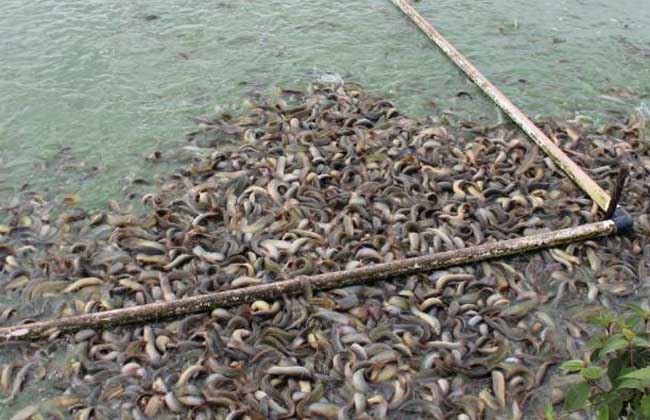
The Chinese loach (Botia superciliaris) belongs to the order Cypriniformes, family Cobitidae, subfamily Botiinae, genus Botia, commonly known as "dragon needle" or "steel loach." The Chinese loach is a fish endemic to the upper reaches of the Yangtze River, with tender flesh and a delicious taste, possessing both nutritional and medicinal value; its body is slender, its coloration brilliant, and its body surface bears beautiful markings, giving it high ornamental value and high food value, with a market price reaching 400-500 yuan/kg. It is a valuable, rare, and high-quality cobitid fish native to the middle and upper reaches of the Yangtze River. In recent years, wild resources of the Chinese loach have declined sharply. In order to restore Chinese loach resources in the upper reaches of the Yangtze River, the Fisheries Research Institute of the Sichuan Academy of Agricultural Sciences conducted artificial translocation, domestication, and acclimation of wild Chinese loach from the upper reaches of the Yangtze River, successfully achieving a breakthrough in artificial breeding technology.
Biological Characteristics of the Chinese Loach
1. Morphological Characteristics
The total length of the Chinese loach is 90-180 mm. The body is elongated, laterally compressed, with a rounded abdomen. The head is small and conical; the snout is relatively long and laterally compressed, its length greater than the combined postorbital head length; the eyes are small and the interorbital space is relatively narrow, which is also the main difference between the Chinese loach and the wide-bodied loach (Botia reevesae) of the same subfamily.
2. Living Habits
The Chinese loach is a bottom-dwelling fish, mainly distributed in the middle and upper reaches of the Yangtze River, inhabiting flowing water environments, active in the middle and lower layers of the water body, and also commonly found in backwater areas along riffles or places with slower flow among large rocks, being a small benthic fish of the open water zone. The main food items of juveniles are cladocerans, copepods, rotifers, aquatic oligochaetes, etc., while adults feed mainly on aquatic insects, benthic invertebrates, and decaying carcasses in rivers. The Chinese loach lives in flowing water environments and is relatively sensitive to light, dissolved oxygen, and temperature. Therefore, as long as bait suitable for its feeding habits and a suitable living environment are provided, it can be domesticated and acclimated in a different location.
3. Growth and Reproduction Characteristics
The climate in the middle and upper reaches of the Yangtze River is humid, bait resources are abundant, and water temperature is suitable for fish growth, but the Chinese loach is a small fish with a relatively slow growth rate. The breeding season of the Chinese loach is from April to July each year, with a spawning type of once per year, and the peak breeding period is from May to June each year. It spawns pelagic eggs, which are non-adhesive. Through artificial breeding of the Chinese loach, adverse factors under natural conditions can be avoided, improving its survival rate and growth rate while shortening the breeding cycle.
Artificial Domestication and Acclimation Technology for the Chinese Loach
1. Domestication Conditions
The area of the Chinese loach domestication pond should not be too large, generally 20-200 sq m, but a certain depth must be maintained, generally 1.0-2.0 m. Before stocking, all water in the pond should be drained completely, and sludge and debris at the bottom of the pond should be removed. 7-10 days before stocking, quicklime at 120 kg/mu should be used for disinfection. In addition to thorough disinfection of the pond bottom, the pond walls must also be thoroughly disinfected. The specific disinfection method is to slake quicklime in water and splash it over the entire pond; after disinfection, expose it to the sun for 3-5 days. Water can only be added after disinfection is completed. At the same time, the inlet gate and outlet gate of the domestication pond should be checked, and damaged gate boards and fish screens should be repaired. During the domestication period, pay attention to changes in water quality: dissolved oxygen should be maintained above 5.0 mg/L, pH at 7.0-8.5, ammonia nitrogen at around 0.03 mg/L, and nitrite below 0.01 mg/L. Generally, surface water from reservoirs, streams, rivers, and lakes is preferable; if tap water or deep well water is used, it must be thoroughly aerated before use.
2. Collection and Transportation
Wild Chinese loach should be transported immediately after collection. Considering the difference in tolerance between wild river fish and pond-cultured fish, and because the Chinese loach has abundant mucus on its body surface, which easily forms floccules in water after stimulation, clogging the gills and causing death, repeated handling should be avoided during collection and transportation. The Chinese loach has two suborbital spines, which are relatively sharp and easily puncture plastic bags, so plastic buckets are best used during transportation. If the transportation time is within 1 hour, the water need not be changed during transport; if the transportation time exceeds 1 hour, an oxygenation device must be provided or the water must be changed midway. During transportation, constantly pay attention to the oxygenation status, avoiding insufficient oxygenation caused by the detachment of the oxygen tube and oxygen head, and at the same time observe whether there is oxygen deficiency during transportation and handle it promptly. When the weather is hot and the temperature exceeds 25°C, ice packs should be added to the water to keep the water temperature below 20°C, which can effectively improve the transportation survival rate and reduce stress responses, with the transportation survival rate reaching over 98%. After arriving at the destination, take care to adjust the water temperature before releasing the fish. During operations, handle the fish with water and with care, avoiding mechanical damage to the fish body.
3. Feed and Feeding
After wild Chinese loach are placed in the pond, start feeding bait, mainly the animal-based feed aquatic oligochaetes. Feeding should follow the "four fixeds": first, fixed time, that is, feed twice a day, at 8:30 and 17:00 each day; second, fixed quality, feed fresh bait, keep the fresh composition of the feed relatively stable, and ensure balanced nutrition; third, fixed quantity, that is, the daily feeding amount is 4%-8% of the total body weight of the Chinese loach, with the evening feeding being the main one, accounting for about 65% of the total feeding amount. The specific daily feeding amount should be flexibly controlled according to water temperature, weather, feeding conditions, etc. When the water temperature is 20-25°C, the loach's appetite is particularly strong, and the daily feeding amount is about 5%-8% of the total body weight; when the water temperature is above 30°C, the Chinese loach's appetite decreases, and at this time it should be fed less or not fed at all; fourth, fixed location, during the domestication period use bamboo strips to make feeding platforms and feed at fixed locations, so that the Chinese loach develops the habit of feeding at fixed points, facilitating observation of feeding conditions and cleaning of leftover bait to prevent water quality deterioration.
4. Domestication Management
Persist in patrolling the pond every day, pay attention to changes in water quality, and regularly change the water and add fresh river water according to water quality conditions, transparency, and water level changes. The Chinese loach has an extremely strong stress response, so minimize disturbance during the breeding process. Do not change the water too rapidly. Check growth and fish disease conditions once every 30 days. The Chinese loach does not like strong light, so foam boards can be placed on the pond water surface or cement boards can be placed obliquely at the bottom of the pond near the pond walls as shelters for it to hide.