Detailed Explanation of Key Technical Points for Loach Farming in Courtyards
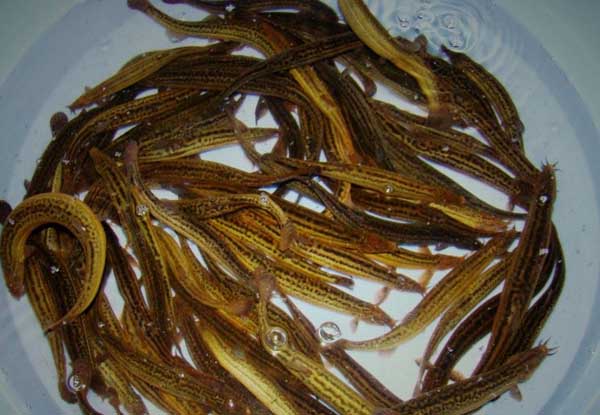
Using the idle land in front of and behind the house to farm loach has the advantages of taking up little space, being easy to farm, and yielding high returns, and is a new way for farmers to make their fortunes. Generally, using 100 sq m to 200 sq m of water surface, 200 kg to 400 kg of loach can be produced annually, with income reaching 800 yuan to 2000 yuan. The benefits are encouraging. So how do you farm loach?
Site Selection and Pond Construction
Choose a spot sheltered from the wind and facing the sun, with a reliable water source, a clean environment, and convenient management to build the pond. The size of the pond can be adapted to local conditions. The pond depth is about 1 m, and the water depth in the pond is about 0.5 m. The pond bottom should be covered with 0.2 m to 0.3 m of fertile mud for the loach to burrow into and rest. The pond walls should be built with stone blocks or bricks and faced with cement. The loach pond should also have a dedicated water inlet, and wire mesh should be installed at the water inlet and outlet to prevent them from escaping, which also serves to keep wild trash fish from entering.
Pond Clearing and Disinfection
Dry pond method: Drain or pump out the pond water, and disinfect with 0.11 kg of quicklime per sq m of pond bottom. After disinfection, fill with water one day later.
Wet method: Use 0.22 kg of quicklime per cubic meter of pond water. The method of applying quicklime is: slake the quicklime into a slurry and splash it evenly over the whole pond while it is still hot. After the toxicity of the quicklime has dissipated, put in the loach.
Stocking Loach Fry
Both artificially bred and wild loach fry can be raised. The fry should be uninjured, disease-free, robust, and lively. Before stocking, soak them in a 3% to 4% salt solution for about 8 minutes. Stocking is best done on a sunny spring day. Stock 40 to 50 fry of 3 cm to 4 cm per sq m. After 140 to 150 days of rearing, when the loach have grown to 10 cm to 15 cm in length, they can be sold as market loach.
Rational Feeding
Loach is an omnivorous fish. During the rearing process, appropriate amounts of palatable animal feed such as snails, earthworms, silkworm pupa powder, and animal viscera can be fed, as well as appropriate amounts of plant-based feed such as soybean cake, distillers' grains, and the stems, leaves, and seeds of tender plants. The daily feeding amount as a proportion of the total loach body weight is: 1% in March, 4% from April to June, 10% from July to August, and 4% from September to October. Feeding must adhere to the "four fixeds": fixed location, by setting up a feeding platform in the pond and placing the feed on the platform; fixed time, feeding at around 9 a.m. every day; fixed quality, the feed should be fresh, hygienic, palatable, and free of rot and mold; fixed quantity, it is best if the feed is finished within 2 to 3 hours after feeding. If there is still leftover feed after 3 hours, the loach may overeat and die. Every year in autumn and winter, when the water temperature drops to 8°C, the loach enters hibernation. During this period, the pond water depth should be maintained at 80 cm to 90 cm, and appropriate amounts of organic fertilizer such as pig and cattle manure should be applied around the pond. This both fertilizes the water and generates heat through fermentation, which helps the loach overwinter safely.
Timely Water Changes
During the rearing process, constantly observe changes in the pond water quality. Generally, water that is yellow or tea-brown is suitable. If loach are seen darting out of the water surface, it indicates the pond water is too fertile and the water is lacking oxygen. The old water should be drained promptly and new water added. Especially in muggy or thunderstorm weather, pay even more attention to frequently adding new water to aerate in time. If conditions permit, an aerator can also be installed to increase oxygen and prevent loach deaths.
Disease Prevention and Control
Common diseases include water mold and fin rot. Diseased loach can be soaked in a 10 micrograms to 15 micrograms per milliliter antibiotic solution for 10 minutes, or the whole pond can be splashed with 1 mg/L bleaching powder (containing 25% to 30% available chlorine). Common parasites of loach include Trichodina, Epistylis, and Gyrodactylus. These parasites attached to loach fry can cause loach death. Diseased fish will show symptoms such as increased mucus on the body surface, swimming alone away from the group, floating on the water surface, and reduced appetite. At this time, the body surface mucus of the diseased fish should be promptly examined under a microscope. If about 50 Trichodina or Epistylis are observed in a low-power field of view, the whole pond can be splashed with 0.7 mg/L copper sulfate; if there are only 3 to 5 Gyrodactylus, the whole pond can be splashed with 0.5 mg/L of crystalline trichlorfon.