Detailed Explanation of Basic Knowledge on Loach Induced Spawning Techniques
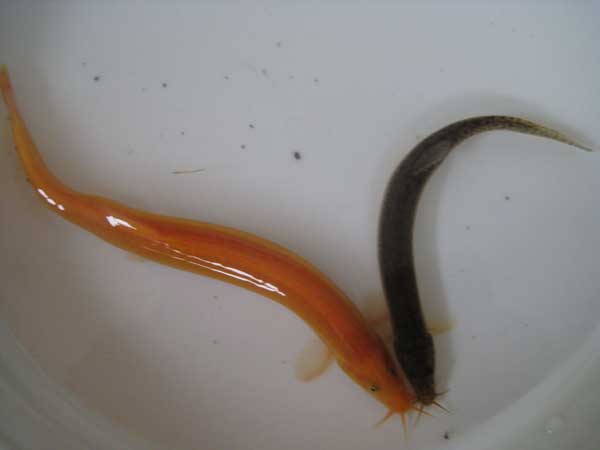
In areas south of the Yangtze River basin, the breeding period is from April to August (in some hotter areas, breeding can continue until September, with the peak spawning period in May-June; in northern areas, the breeding period is somewhat delayed. If farmers find it difficult to judge, they can determine when local loaches can begin breeding based on when the local water temperature remains constant above 18°C. The breeding water temperature is 18°C-30°C, and the optimal breeding water temperature is 22°C-25°C. In places north of the Yangtze River or where temperatures rise relatively slowly, the induced spawning time can be reasonably arranged according to local water temperature and weather.
Selection of Parent Loaches
Currently, there are mainly two types of brood loaches used for breeding. One is to select mature loaches directly from wild loaches as parent loaches, and the other is to use parent loaches that have been self-cultivated or introduced after cultivation. For both types of loaches, healthy male and female loaches with strong constitutions, well-proportioned body shapes, normal body color, and no injuries or diseases should be selected as parent loaches. For female loaches, individuals with a body weight of 20-40 g and a body length of 15-20 cm are preferable; for male loaches, individuals with a body weight of 10-15 g and a body length of 1-15 cm are best. Although larger individual loaches produce more eggs, their fertilization rate under natural conditions is generally not ideal.
Identification of Male and Female
For induced spawning in breeding, the required ratio of females to males is 1:1.5-2. Identification method: among the same batch of loaches, male loaches are smaller in size, generally about the average size of female loaches. Generally, for individuals with a body length of 6 cm or more, we can determine their sex by the pectoral fins. Male loaches have relatively long pectoral fins with pointed and upward-curving tips; at the base of the second pectoral fin ray there is a thin bony plate, and there are pearl organs on the fin rays; when the fish is motionless, the fin is sickle-shaped. Female loaches have relatively short pectoral fins with rounded, blunt tips in a fan shape; the second and third pectoral fin rays are basically equal in length, and there is no bony plate or pearl organ at the base. Male loaches have fleshy protrusions on both sides of the posterior end of the dorsal fin; female loaches have no such abnormality. During the reproductive season, the abdomen of female loaches is swollen and soft, slightly translucent pink or yellow, and the genital pore is large; the abdomen of male loaches is flat, and when squeezed, milky white semen flows out.