How much can you earn farming 20 mu of crayfish? Profit analysis
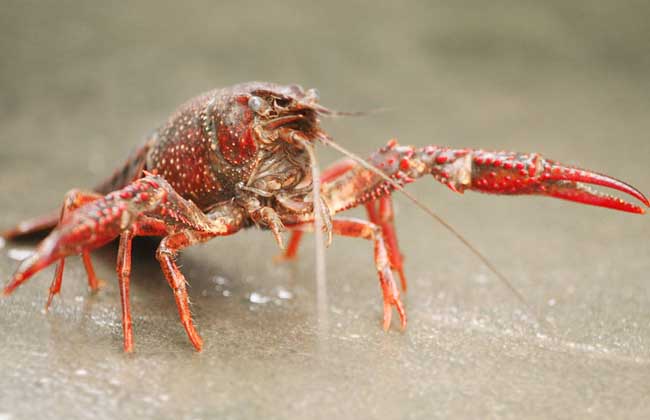
Crayfish are a delicious food, and the farming profit is very considerable. About 120 jin of broodstock crayfish are stocked per mu, and with a rolling circular breeding and rearing method, the annual yield per mu can reach about 3000 jin. The crayfish seed is stocked once, and no further seed needs to be purchased or stocked for 3 to 5 years, and the offspring do not degenerate or mutate, with the yield per mu remaining unchanged over the long term. Now let us take a look at how much you can earn farming 20 mu of crayfish!
Can you make money farming crayfish?
Judging from the market patterns of the past few years, crayfish prices are relatively high when they first come on the market, then decline relatively when they are concentrated on the market in May and June, and after August and September, when the volume coming out of the ponds is low, prices rise again. Moreover, in recent years domestic demand for crayfish has been very strong. In large and medium-sized cities such as Wuhan, Wuxi, Nanjing, Changzhou, Suzhou, Huai'an, Shanghai and Hefei, the annual consumption of crayfish is above ten thousand tons. This strong consumer demand has provided broad room for development and development potential for the crayfish farming industry, so the prospects for crayfish farming are broad.
How much can you earn farming 20 mu of crayfish?
Now, taking a stocking rate of 120 jin of broodstock crayfish per mu as the base for a rough estimate, the number of female crayfish producing young per mu per year is: stocking amount 120 jin/mu × 20 crayfish/jin = 2400 crayfish/mu; 1140 crayfish/mu × 200 crayfish/time × 2 times/year = 456000 crayfish/mu·year. The survival rate from egg-laying to growing into juvenile crayfish is 8% to 30%. Calculated at the lowest 8%, the total annual output of adult crayfish is 456000 crayfish/year × 8% = 36480 crayfish/mu·year. They can be sold 2 to 3 months after egg-laying. Each adult crayfish grows to a body weight of 50 g (about 10 crayfish/jin). The total annual output per mu is 36480 crayfish/mu·year ÷ 12 crayfish/jin = 3040 jin/mu·year, so the annual gross profit per mu is 3040 jin × 8 yuan/jin = 24320 yuan/mu. Net profit = gross profit 24320 yuan - seed purchase cost (120 jin × 48 yuan) 5760 yuan = 18560 yuan/mu. Farming 20 mu of crayfish can earn 18560 yuan/mu × 20 mu = 371200 yuan per year.
What problems should be paid attention to when farming crayfish?
1. Seedstock: There is no such thing as a "hybrid variety" of crayfish. At present, natural seedlings are abundant and cheap, while artificial seedlings are still at the laboratory stage. In addition, do not mistakenly believe that it is a new variety that has been domesticated and shows less cannibalism, and therefore buy crayfish seed from other places at a high price. Quite a few people also think that as long as broodstock crayfish are stocked in the first year, they can then reproduce on their own and obtain good returns year after year. In fact, crayfish farming has the highest yield in the first year after stocking seed, and then it declines year by year. Because the crayfish life cycle is 16 to 18 months, and combined with inbreeding, functional degeneration and reduced disease resistance, after 3 years the yield will drop sharply or even result in total crop failure.
2. Water quality: Some people think crayfish can grow very well even in foul ditches, but in fact it is not true that they can be farmed in either good or bad water. Fresh, clean water quality is the key to high-yield crayfish farming. The coverage of aquatic plants in the pond is required to be 30% to 60%, the water transparency at about 30 cm, and the dissolved oxygen level > 5 mg/L. Water should be changed regularly, one third each time, and in high-temperature seasons the water level should be kept above 80 cm.
3. Feed: Crayfish are omnivorous organisms that lean toward animal-based bait. Whether they grow well depends on their protein intake. Fresh small trash fish and river snails can be used as the main feed, supplemented with plant-based bait, and compound feed with a protein content of no less than 32% can also be fed. Rotten and spoiled animal and plant feed should not be fed, because its utilization rate is low and it easily deteriorates the water quality.
4. Diseases: Some people think that "crayfish do not get sick", but this is not the case. After high-density farming, various environmental factors can easily cause disease in crayfish. The solution is mainly prevention, with regular use of medication. During the farming process, the water body should be disinfected regularly. If the pH value of the water body is < 7, every 15 to 20 days, quicklime should be slaked into a slurry at a concentration of 20 g/cubic meter and evenly splashed. Generally, ponds should be disinfected once every 15 to 20 days with chloride and the like, and about every half month molting growth promoter should be added to the feed and fed continuously for 3 days.
5. Polyculture: Many people, in order to make reasonable use of space and improve farming efficiency, think that crayfish can be polycultured with fish. In fact, crayfish absolutely must not be polycultured with carnivorous or omnivorous aquatic products. This is because crayfish are most easily preyed upon when molting, and when crayfish are spawning, silver carp and bighead carp are all their natural enemies, so polyculture is not advocated.
6. Management: Some farmers think that because crayfish are omnivorous, they can simply be fed casually. Therefore, some people do not put bait in intensive crayfish ponds either, causing crayfish to prey on each other, or they feed excessive animal offal, causing organic matter to ferment, the water body to stink, and toxic gases and hypoxia to occur, leading to farming failure.
7. Yield: The yield of crayfish per mu is closely related to stocking density, farming environment, feeding amount, disease control and so on. Crayfish grow quickly, and generally can be sold after 50 to 70 days of farming. May and June are the peak sales season. After the end of June they begin to mate, lay eggs and live in burrows, and the catch drops sharply. Therefore, those rumors that crayfish farming yields exceed a thousand jin and profits reach tens of thousands are really not credible. Generally speaking, the crayfish farming yield per mu is about 250 to 450 jin, with an output value of 1500 to 2500 yuan.