How to prevent and treat crayfish gill rot disease? Introduction to practical methods
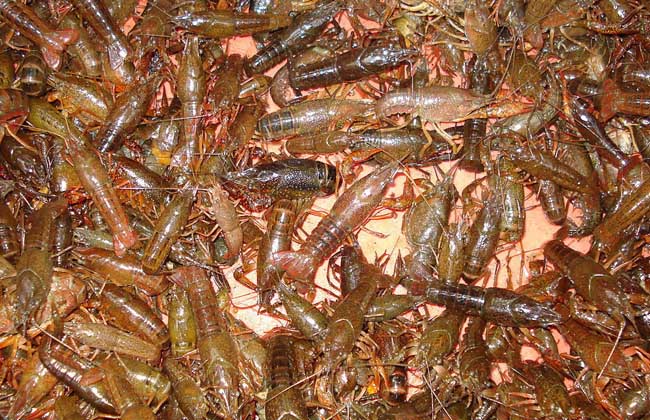
Crayfish gill rot disease is a common crayfish disease with rapid transmission and a long course, and once it breaks out, it is difficult to control its spread. There are mainly two types: parasitic gill rot disease and bacterial gill rot disease. In the early stage of farming, prevention was relatively good and no shrimp disease appeared; in the later stage, due to neglect of prevention, the shrimp became sick, causing unnecessary losses. Therefore, in the farming process, prevention should be the main focus, with prevention being more important than treatment, and taking preventive measures before trouble arises.
Symptoms of crayfish gill rot disease
The crayfish body color turns black, especially the head; it reacts slowly, has difficulty breathing, and its appetite decreases. In affected shrimp, the gill filaments are eroded and breathing is obstructed; they often swim to shallow water and lie there motionless. It often occurs together with liver disease, enteritis disease, and others, with an incidence rate of about 50% and a mortality rate of 30-40%.
Treatment of crayfish gill rot disease
Add 0.5-1 kg of Gill Disease Spirit per 100 kg of feed, and feed continuously for 3-5 days. For external use, choose refined iodine (0.5 mg/L) or dibromohydantoin (0.2 mg/L), applying once a week.
Prevention of crayfish gill rot disease
1. The feces of herbivorous animals are a breeding source of myxobacteria, so shrimp ponds must use fermented manure.
2. Taking advantage of the weakness that myxobacteria cannot survive in 0.7% saline water, when fish fingerlings are transferred between ponds for separate rearing, use a 2-2.5% saline solution to soak the fingerlings for 10-20 minutes, which can effectively prevent this disease.
3. For each mu of water surface per meter of water depth, use 200 g of dibromohydantoin or chlorine dioxide dissolved in water and splash it over the entire pond; splash Fish and Shrimp Bacteria Purifier over the entire pond, using 200-300 g per mu of water surface per meter of water depth. Use once a day for 2 consecutive days.