Detailed Explanation of Aquatic Plant Planting Techniques in Crayfish Ponds
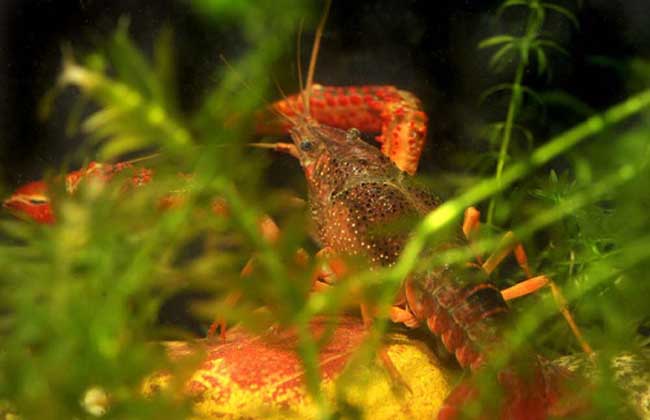
Planting aquatic plants in crayfish aquaculture ponds should adhere to the principles of “even distribution, variety combination, and appropriate density” to meet the needs of crayfish for habitat, feeding, growth, and reproduction. Plant in a grid pattern (well-shaped) in the center of the pond, and plant in a square pattern (mouth-shaped) along the water level line 1 meter from the pond edge around the perimeter. Planting points should not be too dense, to ensure normal living and swimming channels for the crayfish. In the center of the pond, it is advisable to plant Hydrilla verticillata and Alternanthera philoxeroides; around the pond perimeter, it is best to plant Elodea nuttallii and Vallisneria. Aquatic plant coverage density should be controlled at about 60% of the total pond area. When excessive, manually remove them; when insufficient, replenish them promptly.
Selection of Aquatic Plant Species
The aquatic plants planted in crayfish aquaculture ponds mainly fall into three categories: submerged plants, floating plants, and emergent plants. Generally, submerged plants and floating plants are the primary choices, with emergent plants as a supplement. The main species of submerged plants include Elodea nuttallii, Vallisneria, Potamogeton crispus, Potamogeton malaianus, and Ceratophyllum demersum. The main species of floating plants include Alternanthera philoxeroides, water hyacinth, water lettuce, and duckweed. The main species of emergent plants include: reed, wild rice stem, arrowhead, and cattail.
The Role of Aquatic Plant Planting
1. Aquatic plants are a nutritional source for crayfish. Aquatic plants have the characteristics of being fresh, tender, crisp, and smooth, which matches the natural feeding habits of crayfish. They are a plant-based bait that crayfish enjoy eating and constitute an important component of the crayfish diet. The protein, fat, cellulose, vitamins, calcium, phosphorus, and other nutrients contained in aquatic plants ensure a balanced nutritional supply of bait. Regular consumption of aquatic plants by crayfish can promote digestion, reduce disease incidence, and is extremely beneficial to their healthy growth. At the same time, areas with dense aquatic plants can attract snails, small fish, and many other bait organisms for crayfish to feed on.
2. Aquatic plants serve as habitat, feeding, and hiding places for crayfish. Crayfish have weak swimming ability and can only swim briefly in water. At night, they climb onto floating leaves of aquatic plants to rest and play; during the day, they climb onto aquatic plants to feed, and their bodies are exposed to sunlight, which promotes calcium absorption and benefits shell development and growth, while also reducing the harm of external parasites. The periodic molting of crayfish often relies on the stems and leaves of aquatic plants, and after molting, the soft-shelled crayfish can hide among the aquatic plants, making it difficult for hard-shelled crayfish and other fish or predators to find them, thereby avoiding the possibility of being preyed upon and increasing the survival rate of soft-shelled crayfish. During high-temperature seasons, crayfish can use aquatic plants for concealment to achieve shade and cooling, reducing the number of burrows dug and increasing the recapture rate.
3. Aquatic plants can purify water quality and improve bottom substrate. Through plant photosynthesis, aquatic plants release large amounts of oxygen, absorb continuously produced ammonia nitrogen, carbon dioxide, residual bait, and some organic decomposition products in the water, keeping the pH value in a neutral to slightly alkaline range, increasing water transparency, and serving to purify and stabilize water quality. Residual bait deposits on the pond bottom, making the water prone to becoming fertile, which is extremely harmful to crayfish growth and more likely to lead to shrimp disease outbreaks. The self-metabolic function of aquatic plants can absorb ammonia nitrogen and inorganic salts from the sludge, serving to improve the pond bottom substrate.
Planting Methods for Aquatic Plants
1. Cutting method: Stemmed aquatic plants such as Hydrilla verticillata and Elodea nuttallii are suitable for the cutting method, generally planted in winter and spring. The method is to cut the aquatic plants into small segments 15-20 cm in length, and like transplanting rice seedlings, insert bundles of cut stem segments evenly into the sludge at the pond bottom, with plant spacing and row spacing each controlled at about 20 cm. After planting, fill the pond with water to a depth of 20-30 cm, and gradually increase the water level after the aquatic plants have covered the entire pond.
2. Broadcasting method: Floating-leaf plants such as water chestnut and water lily can be wrapped tightly in soft mud and directly broadcast into the pond, so that their roots and stems grow in the bottom mud while the leaves float on the water surface.
3. Transplanting method: Emergent plants such as wild rice stem and arrowhead should be transplanted with roots. When transplanting, remove damaged leaves and thin, inferior seedlings. The transplanting location can be in shallow areas along the pond edge, with the seedling roots required to be 10-20 cm underwater, and density controlled at 30-50 plants per 667 sq m.
4. Cultivation method: For floating plants such as Alternanthera philoxeroides, water hyacinth, and duckweed, a corner of the pond can be partitioned off with bamboo poles, grass ropes, etc., as a cultivation “special zone” for intensive cultivation, allowing these aquatic plants to grow and reproduce in the “special zone” environment, to serve as a supplement when aquatic plants in the crayfish pond are insufficient.
5. Seeding method: The most commonly used aquatic plant is Vallisneria. Vallisneria uses the seeding method and is suitable for crayfish ponds with less sludge. First soak the Vallisneria seeds in water for 1 day, then rub the softened fruits to extract the tiny seeds from inside, add fine sandy soil about 10 times the amount of seeds, mix well with the seeds, and then sow. When sowing, control the water level at 10-20 cm, with a seeding rate of about 50 grams per 667 sq m. After sowing, strengthen management to improve the survival rate of Vallisneria and enable it to form a dominant population as quickly as possible.