What Do Freshwater Shrimp Eat? A Full Breakdown of Common Food Types
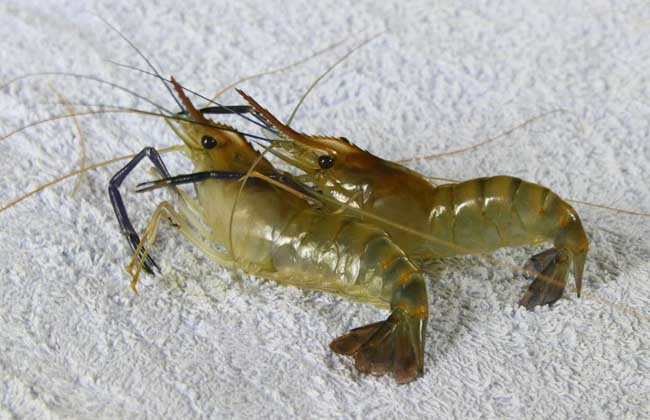
Freshwater shrimp, also known as the oriental river prawn, are widely distributed in China's rivers, lakes, reservoirs and ponds. Their flesh is tender, their flavor is delicious and they are rich in nutrients. They are a high-protein, low-fat aquatic food product that is much favored by consumers, and they offer farming advantages such as high fecundity, strong adaptability, a broad diet, delicious meat and year-round market availability. Let's take a look below at what freshwater shrimp eat!
What do freshwater shrimp eat
Freshwater shrimp are omnivorous animals. At the juvenile stage they feed on plankton, while adult shrimp in natural waters mainly eat various small benthic invertebrates, carcasses of aquatic animals, attached algae, many kinds of filamentous algae, organic debris and plant fragments. Farmed freshwater shrimp can consume various commercial feeds, such as distillers' grains, tofu residue, soybean cake, silkworm pupae, mussel meat, wheat flour, fish meal, cooked rice and river snails, and they are especially fond of maggots. When feed is in short supply, they will even cannibalize one another. They are negatively phototactic toward light, mostly hiding in dark places during the day and coming out at night to feed and move about. Therefore, feed is mostly given after nightfall.
The living habits of freshwater shrimp
1. Macrobrachium shrimp are omnivorous aquatic animals that favor animal-based feed, and under artificial farming they are mainly fed commercial feed. Their optimum growth water temperature is 18-30°C. When the water temperature drops to 4°C they enter the overwintering period, and when the water temperature rises above 10°C their vitality increases and feeding gradually picks up.
2. They live a benthic life and like to inhabit slow-flowing spots where aquatic plants grow densely, with dwelling depths ranging from 1-2 m to 6-7 m. In summer and autumn, freshwater shrimp search for food and breed in the shallow water near the banks, while in winter they move to deeper water areas to overwinter, feeding and moving very little.
3. At a water temperature of around 18°C, sexually mature freshwater shrimp begin to mate and spawn, and mating usually takes place only just before spawning.
4. Freshwater shrimp are photophobic, hiding in dark places during the day and coming out at night. In the breeding season, however, they behave unusually and will also come out during the day to mate, and when feed is being given they will also come out during the day to compete for food.
Farming management of freshwater shrimp
1. The water used for freshwater shrimp farming must meet fishery water quality standards and must be clean with sufficient oxygen. There should be no large harmful organisms in the farming pond. The pond water depth should be 1.2-1.5 m, with little mud at the bottom and preferably hard substrate. Freshwater shrimp are not good swimmers and are negatively phototactic, mostly hiding during the day among dark gravel or aquatic plants, that is, hiding by day and emerging at night, coming out at night to forage. They spend most of their time resting on the bottom or on aquatic plants and other clinging objects, and they like to rest in slow-flowing shallow shoals where aquatic plants grow along the banks. Therefore, freshwater shrimp farming requires a sufficient number of attachment objects, and aquatic plants can be planted along the pond edges or netting sheets hung up. However, under artificial farming conditions freshwater shrimp can also feed during the day.
2. From the larval stage to the adult stage, freshwater shrimp consume zooplankton, algae, cladocerans, copepods, small aquatic insects, organic debris, filamentous and attached algae, and invertebrates, but they prefer animal-based feed. Under artificial farming conditions, compound feed can be used, and they are especially fond of animal-based feeds such as snail and mussel meat, earthworms, small trash fish, fly maggots and silkworm pupae, so it is best to appropriately add some animal-based feed during the farming process.
3. Based on observation and surveys, the lifespan of freshwater shrimp is generally just over a year, with the longest being only a little over 2 years (male shrimp 16-17 months, female shrimp 26-27 months). Most people now believe that freshwater shrimp hatched in May-June die one after another after completing reproduction in July-August of the following year. This is why many farmers stock several dozen kilograms of berried (egg-bearing) shrimp in May but cannot catch large shrimp by the end of the year, only small ones. Therefore, when stocking berried shrimp for farming, the large shrimp should be caught and sent to market promptly after the shrimp finish spawning.
4. Freshwater shrimp spawning has two peaks. Late spring and early summer is one spawning peak, formed by the spawning of older shrimp after overwintering, while the autumn breeding peak is formed by the spawning of part of the first-generation juvenile shrimp of that year. Therefore, whether to carry out autumn breeding should be decided according to your own farming conditions and environment, but from the standpoint of balanced market supply and raising yield and profitability, it should be arranged overall so as to make the most of the freshwater shrimp's ability to overwinter naturally.
5. If farming starts from the larval stage, then early water quality cultivation is the key. Organic fertilizer needs to be used to cultivate large amounts of zooplankton for the larvae or juvenile shrimp to feed on, so as to raise the survival rate of rearing and farming. Once they reach the small shrimp stage, artificial feed or compound feed can be given. After 50-60 days of farming, the hatched larvae generally reach a body length of 2.5-3 cm, and some females become mature. By October-November, males can reach 4-5 cm. Therefore, during farming, harvesting for market should be arranged promptly according to the shrimp's growth. Marketing large-sized shrimp is beneficial to the growth of the small shrimp left in the pond.
6. To increase the growth rate and harvest size of farmed freshwater shrimp, it is best to farm in two stages, that is, from larvae to 1-2 cm small shrimp stock, and then from small shrimp to adult shrimp. Where conditions permit, three-stage farming can be used, that is, larvae —— small shrimp stock about 1-2 cm in body length —— large shrimp stock over 3 cm in body length —— adult shrimp. Staged farming can also increase the survival rate of farming.
7. For freshwater shrimp monoculture, shrimp fry are usually stocked from mid-June to mid-July each year, at 60,000-80,000 per mu; if small shrimp are stocked, the number can be appropriately reduced. For polyculture of fish and shrimp, stock about 15,000 shrimp of around 2 cm per mu from mid-July to mid-August each year. If berried shrimp are stocked for farming, stock 25-30 jin of berried shrimp per mu. In the second year you might also consider two-crop (two-cycle) pond farming. In addition, silver carp and bighead carp summer fingerlings or fingerlings should be stocked as a supplementary species in the shrimp pond (by the middle of the rearing period, stock 1,000-1,500 larger fingerlings of that year in the adult shrimp pond).
8. The main fishing methods for freshwater shrimp include ground cages, shrimp lift nets, dip nets, or driving them out and catching them at the pond-side aquatic plants. Generally, from September onward, rotational harvesting should begin, catching the large and leaving the small, with commercial shrimp of 4.5 cm and above being caught and sent to market successively.
Summary: If freshwater shrimp are kept as pets, they can be fed many things, such as fish feed, boiled spinach, frozen bloodworms, dead fish lice and sinking fish food. They eat everything and are not picky, and in nature they mainly eat algae.