The fruit of the water chestnut aquatic plant. The water chestnut has crisp skin and delicious flesh; it is eaten after steaming or boiling and shelling, and can also be cooked into congee.
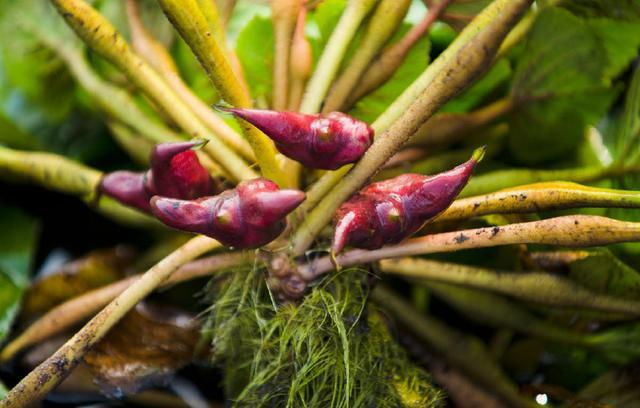
Water chestnut (aquatic plant)
The water chestnut belongs to the family Trapaceae, genus Trapa. Also known as waist water chestnut, water chestnut, and water caltrop fruit, it is sweet in taste, cool in nature, and non-toxic. It is the fruit of the annual herbaceous aquatic plant water chestnut. The water chestnut has crisp skin and delicious flesh; it is eaten after steaming or boiling and shelling, and can also be cooked into congee. The water chestnut is rich in protein, unsaturated fatty acids, and various vitamins and trace elements. It has the effects of promoting urination and lactation, quenching thirst, and relieving alcohol toxicity.
The water chestnut, also known as ji, wind water chestnut, black water chestnut, water caltrop, water chestnut, water caltrop fruit, and ji fruit, belongs to the family Trapaceae, genus Trapa, and is an annual aquatic herbaceous plant. It originated in Europe and southern China, and is cultivated most extensively in the Taihu Lake region of the lower Yangtze River and the Pearl River Delta. Water chestnut flesh contains 24% starch, 3.6% protein, and 0.5% fat. When young and tender, it can be eaten raw as a fruit; when mature, the fruit can be eaten cooked or processed into water chestnut flour; air-dried to make wind water chestnut, it can be stored to extend the supply period. Water chestnut leaves can be used as green feed or green manure. It helps strengthen the stomach and stop diarrhea, and has anti-cancer properties. It helps treat gastric ulcers, dysentery, esophageal cancer, breast cancer, and cervical cancer. The water chestnut stem is applied externally to treat multiple skin warts; the water chestnut shell burned to ash and applied externally treats impetigo and hemorrhoids.
Morphological characteristics
The water chestnut, also called ling. Two-horned ones are ling, shaped like ox horns. Three-horned and four-horned ones are ji. They grow in lakes. When water chestnuts fall into mud, they grow most easily. There are wild water chestnuts and cultivated water chestnuts, both of which sprout and send out runners in March. The leaves float on the water, flat with pointed tips, very smooth, with stems beneath the leaves. In May and June, small white flowers bloom, opening at night and closing during the day, shifting with the waxing and waning of the moon. Its fruits come in several types: no horns, two horns, three horns, and four horns. The horns bear spines, pointed, fine, and crisp, growing at the horn tips. It is an aquatic plant. An annual floating or semi-emergent herb. Roots are of two types: mud-anchoring roots, wire-like, growing in the mud at the bottom of the water; assimilating roots, pinnately finely divided, with filamentous segments, light green or dark reddish-brown. The stem is cylindrical, slender or thick and short. Leaves are of two types: floating leaves alternate, clustered at the stem tip, forming a rosette-shaped water chestnut pad on the water surface.
Leaves
The leaf blade is broadly rhombic, 3-4.5 cm long and 4-6 cm wide, with a dark bright green surface, hairless, and the underside green or purplish-red, densely covered with pale yellow-brown short hairs (young leaves) or gray-brown short hairs (old leaves); the middle and upper margins have concave shallow teeth, the lower margins are entire, and the base is broadly wedge-shaped; the petiole is 2-10.5 cm long; the middle and upper part swells into a spongy air sac, covered with short hairs; submerged leaves are small and fall early.
Flowers
Flowers are small, solitary in leaf axils, with pedicels 1-1.5 cm long; the calyx tube is 4-lobed, with only one pair of calyx lobes hairy, of which 2 lobes develop into horns; petals 4, white, borne on the margin of the superior disc; stamens 4, filaments slender, anthers T-shaped, dorsifixed, introrse; pistil with 2 carpels, 2 locules, ovary semi-inferior, style subulate, stigma capitate.
Fruit
The fruit has 2 horizontally spreading shoulder horns, without or with recurved spines, the tips curving downward, the span between the two horns 7-8 cm wide, curved ox-horn shaped, fruit height 2.5-3.6 cm, the young fruit surface purplish-red, turning purplish-black when fully mature, slightly covered with extremely short hairs, the fruit beak indistinct, the fruit stalk stout with a joint, 1.5-2.5 cm long. Seeds white, ingot-shaped, with two blunt horns, white and farinaceous. Flowering period April to August, fruiting period July to September. Also called "water chestnut er." It is a seed plant.
Plant introduction
The water chestnut is rich in starch, protein, glucose, unsaturated fatty acids, and various vitamins such as vitamin B1, B2, and C, carotene, and trace elements such as calcium, phosphorus, and iron. The ancients believed that eating more water chestnuts could tonify the five viscera, eliminate all diseases, and lighten the body. The so-called lightening the body means having a weight-loss and fitness effect, because water chestnuts contain no fat that makes people gain weight. The Compendium of Materia Medica says: water chestnuts can tonify the spleen and stomach, strengthen the thighs and knees, and boost strength and qi; water chestnut flour congee benefits the stomach and intestines and can relieve internal heat, and is beneficial for the elderly to eat regularly. According to modern pharmacological experiment reports: water chestnuts have a certain anti-cancer effect. They can be used to prevent and treat esophageal cancer, gastric cancer, uterine cancer, etc. The method is to take 20 raw water chestnuts, add an appropriate amount of water, and simmer over low heat into a dark brown soup to take, 3 times a day; or take 100 grams of water chestnut flesh, add 30 grams of coix seed, and cook into congee to eat.
The flesh of the water chestnut is edible, and the tender stems can be used as vegetables. The fruit has sharp horns, commonly known as water chestnut.
It grows in lakes and matures around August each year. The water chestnut vine has green leaves, and the leaf shape is rhombic, hence the fruit is called water chestnut er. The stem is purplish-red, with bright small yellow flowers. The water chestnut is an annual herbaceous aquatic plant, also known as the "peanut in water." The fruit, the "water chestnut," is a nut, hanging underwater beneath dense leaves, and can only be seen by lifting the whole plant and turning it over. It matures after autumn, and the fruit becomes hard. If wild water chestnuts are not picked, they gradually fall from the stem and sink to the bottom of the water, sprouting the following year. Usually after entering spring in February, a seedling nursery must be set up to intensively cultivate seedlings. After the first rice harvest from late May to early June in early summer, the rice field is leveled, beds and ridges are built, water is directed into the field, and water chestnut seedlings are transplanted.
There are many varieties of water chestnuts. Cultivated ones can be as large as a matchbox, while wild ones are smaller, with small ones only as big as a fingernail. They come in green, red, and purple, with crisp skin and delicious flesh and a tasty flavor. They can be considered a fine fruit and can also be used as food. Generally they are eaten after steaming or boiling, or dried and chopped into fine pieces and cooked into congee.
The water chestnut is given the meaning by Chinese people of "sharp-edged" and "showing off one's talent."
English names: Waterchestnut, Watercaltrop, Singharanut
Latin names: T. natans, T. japonica, T. bicornis; different varieties have different names. Plant characteristics
Appearance: Some resemble an ox head; there are hornless, one-horned, two-horned, and three-horned ones, with varieties and appearances all different. Flower color: white, pale red.
Flowering period: June-July. Annual aquatic herbaceous plant.
Water chestnut flesh contains 24% starch, 3.6% protein, and 0.5% fat. When young and tender, it can be eaten raw as a fruit; when mature, the fruit can be eaten cooked or processed into water chestnut flour; air-dried to make wind water chestnut, it can be stored to extend the supply period. Water chestnut leaves can be used as green feed or green manure.
In the Wuyi area of Jiangmen and the Chaoshan area, it is customarily called "lian jiao."
Growing environment
Water chestnuts are generally planted in wet mud in temperate climates, such as ponds and swamps. The climate should not be too cold; the optimum is 25°C to 36°C. The water depth should be 60 cm.
Distribution range
The water chestnut is native to the warm regions of Europe and Asia. However, only China and India have domesticated and cultivated it. In southern China, it is especially cultivated in the Taihu Lake region of the lower Yangtze River and the Pearl River Delta, with the most in Honghu, Hubei. It is artificially cultivated in the middle and upper reaches of the Yangtze River in southern Shaanxi, and in the plains of Anhui, Jiangsu, Hunan, Jiangxi, as well as Zhejiang, Fujian, Guangdong, Taiwan, China, and other provinces. It is also cultivated in Russia, Japan, Vietnam, Laos, and elsewhere. Wild water chestnuts have also been found in Shangzhi City.
Cultivation techniques
High-yield cultivation techniques. Based on the practice of growing water chestnuts in recent years, to achieve high yield, the following technical measures must be grasped for reference.
Selecting varieties
Selecting excellent varieties is the basis for high yield and also the key to seizing the season, occupying the market early, and improving economic returns. If raw eating is the main purpose, early and mid-season varieties with large water chestnuts (two-horned water chestnuts) can be selected and marketed in batches. If high yield is the main goal, late-maturing black water chestnut varieties can be planted. At the same time, because water chestnut seed traits are prone to degeneration, attention must be paid to selecting water chestnuts that are plump in shape, high in fullness, fully hardened in pericarp, and free of pests and diseases for seed.
Timely dense planting
The suitable time for stocking water chestnuts locally is generally around Qingming, when the water temperature stabilizes above 12°C. The methods can be divided into direct sowing and seedling transplanting. Direct sowing is suitable for rivers and ponds with a water depth of 2-3 m and relatively fertile bottom soil. When the water chestnut germ sprouts 1-2 cm, evenly scatter the water chestnut seeds into the water. Before sowing, care must be taken to remove aquatic plants, moss, and wild water chestnuts from the river or pond. The seed rate per mu is generally 10 kg; for river or pond areas with poor fertility, the seed rate can be appropriately increased. For large water surfaces and deeper river or pond areas, the seedling transplanting method can be used. Choose a river or pond with fertile bottom soil and shallower water, drain the water before sowing and sun-dry the surface soil until hard, and apply sufficient farmyard manure as base fertilizer; after planting, keep shallow water, then gradually deepen the water layer as the seedling age increases. The seed rate per mu is about 60 kg, which can transplant over 5-6 mu of water surface. When the seedling age is about 60 days, with 10 top leaves, a water chestnut pad of 15 cm, and 2-3 branches, stocking can begin. When stocking, tie 10 plants into a bundle with straw rope and gradually insert them into the bottom of the water. After the water chestnuts grow out of the water surface, if the density is too high, manual thinning and even seedling distribution can be adopted to prevent the water chestnut heads from closing the water surface too early and producing small pads, which would affect yield.
Water chestnut pond management
Apply sufficient base fertilizer. As an aquatic vegetable, the fertilizer requirement pattern of water chestnuts differs somewhat from dryland crops, and the fertilizer requirement is relatively concentrated. Before planting, apply 2000 kg of pig manure or decomposed mud manure per mu; after the water chestnuts sprout, apply 5 kg of urea per mu as a quick-acting fertilizer; after flowering, in 2-3 applications combined with disease and pest control, spray the leaves with 2-3 packets of strong yield enhancer or 2% potassium dihydrogen phosphate to prevent premature aging.
Pest and disease control and weeding. Common pests of water chestnuts include aphids and leafhoppers. In the early stage of damage, spray with 90% crystalline trichlorfon at 800 times dilution or 5-6 vials of deltamethrin mixed with 50 kg of water using a small machine sprayer, once every 10 days. Strictly prohibit the use of highly toxic pesticides such as methamidophos to reduce residues and prevent deformed or empty-shelled water chestnuts. The common disease of water chestnuts is mainly water chestnut blight, which causes leaves to rot. In the early stage of the disease, spray with 400 g of 5% jinggangmycin plus 200 g of carbendazim mixed with 50 kg of water using a small machine sprayer. Master 3-4 disease and pest control applications over the growing period. In ponds where water chestnuts are stocked, there are many types of aquatic weeds, including deep-water fish lotus grass, shallow-water fine duckweed, flat duckweed, centipede grass, and moss grass, which must be manually removed in time, otherwise they will affect the photosynthesis of water chestnuts. Generally, after the water chestnuts are stocked, remove weeds once every 10 days until the water chestnuts cover the water surface.
Timely harvesting
The harvesting principle must be market-oriented, centered on improving economic returns, and harvested in stages according to variety maturity and different uses. Water chestnuts begin to mature 20-30 days after flowering. In our area, early-maturing varieties mature from August 15-20, and late-maturing varieties from late September to early October. If used as a vegetable or eaten raw, the best harvest time is when the sepals have fallen and the pericarp has not yet fully hardened. If eaten cooked, processed, or kept for seed, they must be harvested when fully mature. Early-maturing varieties are harvested once every 5 days, and late-maturing varieties once every 7 days, with the whole harvest period divided into 6-7 pickings. When harvesting, take care to lift the water chestnut pad gently and pick the water chestnuts gently, then lay them flat after picking to avoid damage. If water chestnuts are to be kept for seed, after harvesting they should be promptly washed in water to remove the floating tender water chestnuts, and thereafter the clean water should be replaced once every 10-15 days to ensure the germination rate of the water chestnuts the following year.
Nutritional composition
Nutrient content (per 100 grams) Nutrient content (per 100 grams)
Calories 98 kcal Potassium 437 mg
Phosphorus 93 mg Magnesium 49 mg
Carbohydrates 21.4 g Vitamin C 13 mg
Carotene 10 mcg Calcium 7 mg
Sodium 5.8 mg Protein 4.5 g
Vitamin A 2 mcg Fiber 1.7 g
Niacin 1.5 mg Zinc 0.62 mg
Iron 0.6 mg Manganese 0.38 mg
Thiamine 0.19 mg Copper 0.18 mg
Fat 0.1 g Riboflavin 0.06 mg
Eating guide
Main effects
Suitable groups: generally everyone can eat it.
Dietary therapeutic effects: the water chestnut is sweet and astringent in taste and cool in nature;
1. Tonifies the spleen and boosts qi and strengthens the spleen, strengthens the thighs and knees, and boosts strength and qi.
2. Anti-cancer: the alcoholic infusion of water caltrop fruit has an inhibitory effect on the degeneration and tissue proliferation of cancer cells.
3. Weight loss: the water chestnut promotes urination, promotes lactation, and relieves alcohol toxicity, and is an auxiliary food for weight loss.
4. Relieves skin diseases and assists in treating various skin diseases such as infantile head sores, impetigo of the head and face, and skin warts.
In addition, the water chestnut can calm the sexual desire of men and women. The Dietetic Materia Medica states: "Among all fruits in water, this one most generates cold qi; when people store it cold, it damages yang and causes the jade stalk to wither."
It is beneficial for the elderly to eat water chestnuts regularly. According to modern pharmacological experiment reports, water chestnuts have a certain anti-cancer effect. They can be used to prevent and treat esophageal cancer, gastric cancer, uterine cancer, etc.
Eating recommendations
Try not to eat water chestnuts, water chestnuts (Eleocharis dulcis), and lotus root raw, and do not gnaw the skin with your teeth. When eating raw, be sure to wash and scrub thoroughly, and blanch in boiling water for a few minutes or sun-dry for a day before eating. If you have touched aquatic plants or sewage, wash your hands clean to prevent metacercaria contamination.
1. Eating too much fresh fruit raw easily damages the spleen and stomach; it is best to eat it cooked.
2. Water chestnut flour congee benefits the stomach and intestines and can relieve internal heat.
Medicinal value of water chestnut
The water chestnut is sweet and astringent in taste and cool in nature;
1. Anti-cancer: the alcoholic infusion of water caltrop fruit has an inhibitory effect on the degeneration and tissue proliferation of cancer cells.
2. Tonifies the spleen and boosts qi and strengthens the spleen, strengthens the thighs and knees, and boosts strength and qi.
3. Relieves skin diseases and assists in treating various skin diseases such as infantile head sores, impetigo of the head and face, and skin warts.
4. Weight loss: the water chestnut promotes urination, promotes lactation, and relieves alcohol toxicity, and is an auxiliary food for weight loss.
5. Sun-dry red water chestnuts and grind into powder; take 10 grams on an empty stomach. For red dysentery, take with old wine; for white dysentery, take with rice water, to treat dysentery.
6. Fresh water chestnut stalk (water chestnut stem), rub on the affected area, several times a day, to treat warts (juvenile flat warts, multiple common warts).
7. Fresh water chestnut grass stem (remove leaves and fibrous roots) 120 grams, decoct in water and take, to treat head sores and toxins in children, and can also relieve alcohol.
8. Old water chestnuts charred and stored, ground into fine powder, mixed with sesame oil and applied to the affected area, to treat impetigo of the head and face.
9. Water chestnut powder 10-50 grams, appropriate amount of white sugar, decoct in water into a paste and eat. It has the effects of clearing summer heat and relieving fever, eliminating irritability and quenching thirst, boosting qi and strengthening the spleen, and relieving alcohol toxicity. It is suitable for symptoms such as bitter taste in the mouth, excessive thirst, and sore throat caused by excessive drinking.
10. Water chestnut, myrobalan, coix seed, and wistaria tumor 10 grams each, decoct in water and take, twice a day, to treat esophageal cancer and gastric cancer.
11. Cook raw water chestnut flesh into a brown thick soup, using 20-30 water chestnuts daily. Divide the soup into 2-3 servings, which can treat uterine cancer and gastric cancer. According to reports from Japan, long-term use of this formula has repeatedly produced results.
12. Water chestnut congee: 100 grams of rice, cook into congee; when half-cooked, add 30-60 grams of water chestnut powder, cook together until done, and season with an appropriate amount of brown sugar before eating. It has the effects of strengthening the spleen and benefiting the stomach, boosting qi, and preventing cancer. It is suitable for chronic diarrhea, malnutrition, old age and weak constitution, etc. It also has the effect of preventing and treating gastric cancer, esophageal cancer, and uterine cancer.
Eating contraindications
Although the water chestnut has great medicinal value, care should be taken not to eat it in excess, and care should be taken not to cook and eat it together with pork, as it easily causes abdominal pain.
Autumn is the season for picking water chestnuts and water chestnuts (Eleocharis dulcis); freshly picked ones are fresh and tender, and one cannot resist eating them. At this time, it is highly possible to become infected with Fasciolopsis buski parasitic on water chestnuts and water chestnuts. Fasciolopsis buski parasitizes the human small intestine and can cause digestive tract and systemic symptoms such as abdominal pain, abdominal distension, and diarrhea; in severe cases, anemia, edema, and developmental disorders may occur.
Foods that conflict with water chestnut
Water chestnuts, especially raw water chestnuts, are cold and cool in nature and flavor, and eating too many causes abdominal distension. Eating water chestnuts together with honey easily leads to indigestion, with symptoms of abdominal distension, abdominal pain, and diarrhea.
Water chestnut + pork - liver pain
Eating water chestnuts together with pork easily causes liver pain.
Water chestnut + honey - indigestion
Water chestnut - fasciolopsiasis
Specialty eating
Fresh water chestnut grass stem, commonly known as "water chestnut seedling." Many people regard it as an ordinary aquatic weed, but this is not the case. The water chestnut seedling itself has endless uses, mainly reflected in its edible value. For example, wash fresh water chestnut seedlings, chop and mince them into a paste, add meat filling, and make buns. After steaming, they taste delicious and leave an endless aftertaste. Together with the aroma of the meat filling itself, they are mouthwatering. In addition, after chopping the water chestnut seedlings in the same way and adding raw meat, tofu, green vegetables, and other ingredients, the water chestnut seedling meatballs made are also an authentic folk delicacy. As an aquatic plant, the water chestnut can truly be said to be a treasure from head to toe.
50-80 grams each time. When eating the fruit raw, tender water chestnuts are the best quality, fresh and refreshing; when eating cooked, old water chestnuts are the best, with flesh as white as jade.
Medicinal dishes
1. Water chestnut flour cake: 500 grams each of water chestnuts and glutinous rice flour, 50 grams of white sugar. Remove the shells from the water chestnuts, sun-dry and grind into fine powder, mix with glutinous rice flour, add white sugar and mix well, place in a steamer and steam over high heat until cooked, then take out and cut into pieces. Water chestnut flour cake is a famous food of the Qing Dynasty, with the effects of strengthening the spleen and stomach and boosting qi and strength; regular consumption has good health-preserving effects.
2. Braised straw mushrooms and tomatoes: 250 grams each of fresh red water chestnuts and straw mushrooms, 100 grams of fresh tomatoes, and appropriate amounts of minced ginger, cooking wine, and wet starch. Wash the red water chestnuts, add to clean water with alkali and bring to a boil, push and rub continuously with a strainer; after the water chestnut skins fall off, scoop out the water chestnut flesh, rinse clean with clean water, and drain off the liquid; cut the straw mushrooms open; blanch the tomatoes in boiling water and peel, remove the seeds, soak briefly in clean water, scoop out and cut into red water chestnut shapes. Place the wok on the fire, add an appropriate amount of peanut oil and heat, add the water chestnut flesh and straw mushrooms, add minced ginger, monosodium glutamate, cooking wine, tomatoes, and refined salt; after bringing to a boil, thicken with wet starch, remove from the wok and plate. It has the effects of strengthening the spleen and opening the appetite, and relieving summer heat and dampness.
3. Braised tofu with water chestnuts: 500 grams of fresh water chestnuts, 2 pieces of tender tofu, and a little chopped scallion. Remove the skin and shells from the water chestnuts, wash, and cut in half; wash the tofu, cut into small pieces, blanch briefly in a pot of boiling water, scoop out, and drain; heat lard in the wok, add chopped scallion and stir-fry, pour in clear soup, add water chestnuts and tofu, add refined salt, monosodium glutamate, and soy sauce, cover and simmer for 3 minutes, thicken with wet starch, drizzle with sesame oil, remove from the wok and plate. It has the effects of strengthening the spleen and promoting tissue regeneration and sterilization, and has a certain dietary therapeutic effect on patients with skin sores and ulcers.
4. Red water chestnut juice: 1000 grams of fresh red water chestnuts, appropriate amount of white sugar. Remove the shells from the red water chestnuts, mash, squeeze out the natural juice, leave overnight, then add a little white sugar, stew over water until slightly warm, and it is ready to drink. Drinking red water chestnut juice in summer has the effects of clearing summer heat and relieving fever, and eliminating irritability and quenching thirst. It is an excellent cooling drink for summer heat. This product also has the effects of removing alcohol toxicity and sobering up.
5. Scallion-fragrant water chestnuts
Main ingredient: 250 grams of water chestnuts,
Seasonings: 10 grams of scallion, 1 gram of salt, 3 grams of sesame oil
Method:
1. Remove the outer shells from the water chestnuts with a knife, and peel off the purple membrane skin;
2. Place the water chestnuts on a plate, add chopped scallion and salt, and steam over high heat for 10 minutes;
3. Drizzle with a little sesame oil before eating.
6. Boiled water chestnuts
Ingredients:
500 grams of water chestnuts, 3 sections of scallion, 3 slices of ginger, 1/2 teaspoon (3 grams) of Sichuan peppercorns, 3 star anise, 3 bay leaves, 2 teaspoons (10 grams) of salt
Method:
1. Soak the water chestnuts in clean water for 30 minutes, then use an old toothbrush to wash off and rinse away the mud on the surface and in the crevices of the water chestnuts.
2. Cut the scallion into sections and slice the ginger. Put the washed water chestnuts into a pot, pour in clean water to cover the water chestnuts, add scallion sections, ginger slices, Sichuan peppercorns, star anise, and bay leaves.
3. Cover with a lid, bring to a boil over high heat, then reduce to medium heat and cook for 15 minutes.
4. When eating, just crack open the shells directly.
7. Braised pork ribs with water chestnuts:
1. Wash the pork ribs and set aside. Wash the pork ribs and set aside.
2. Wash the white radish, peel and cut into small pieces; wash the fresh mushrooms and cut in half, set aside. Wash the white radish, peel and cut into small pieces; wash the fresh mushrooms and cut in half, set aside.
3. First cook the water chestnuts in water, cut in half with a knife, and extract the flesh inside for later use.
4. Put the pork ribs into a rice cooker, add an appropriate amount of water, add ginger slices, and bring to a boil together. Put the pork ribs into a rice cooker, add an appropriate amount of water, add ginger slices, and bring to a boil together.
5. After boiling, skim off the foam, add the fresh mushrooms, add an appropriate amount of cooking wine, and stew for 20 minutes. After boiling, skim off the foam, add the fresh [5], add an appropriate amount of cooking wine, and stew for 20 minutes.
6. After 20 minutes, add the white radish and stew for another half hour. After 20 minutes, add the white radish and stew for another half hour.
7. Finally add the water chestnut flesh and cook for about five minutes, add salt and cook together for five more minutes, until the water chestnuts are infused with flavor. Finally add the water chestnut flesh and cook for about five minutes, add salt and cook together for five more minutes, until the water chestnuts are infused with flavor.
8. Add chicken essence before taking it off the heat.
9. Ingredients: 20-30 fresh water caltrop. Preparation: Wash the water caltrop, add an appropriate amount of water, and simmer over low heat into a thick soup. Take once a day, divided into 2-3 servings. Effects: Strengthens the spleen and benefits the stomach, and helps prevent and fight cancer. Note: Suitable as a dietary therapy for treating stomach cancer, uterine cancer, breast cancer, esophageal cancer, etc.
Main indications: calms the mind, tonifies the five internal organs, satisfies hunger, and lightens the body. It can relieve summer heat, resolve erysipelas, resolve accumulated heat from cold damage, quench thirst, and relieve alcohol toxicity. Mashed and settled into starch for consumption, it tonifies the center and prolongs life. Water caltrop flowers often face away from the sunlight when blooming, while gorgon flowers face toward the sunlight when blooming, so water caltrop is cold in nature while gorgon is warm in nature. If one eats too much water caltrop, it will damage the spleen and cause abdominal bloating and diarrhea, which will disappear after taking warm ginger wine.
Plant culture
Reed flowers flutter, the boat sways, and the water ripples. A pond of emerald water is like congealed jade. From within the lotus pond comes a delicate and melodious song, soft and pleasant to the ear. It makes people's hearts sway along with the tune. A boat slowly glides past, carrying several young women. What they sing is the Song of Picking Water Caltrop, a tune popular in Jiangnan. They roll up their sleeves, revealing fair and plump arms. Their trouser legs are also rolled up, and the skin on their legs is as smooth as congealed fat. As they sing, they reach their hands into the water and rhythmically pick water caltrop. The setting sun shines on the water, dyeing its surface bright red. Reflected together below, their graceful movements appear all the more lovely.
The Song of Picking Water Caltrop sung by the women is a yuefu tune, soft and pleasant to the ear, and many people wrote it. It was especially popular during the Southern Dynasties, and together with the Song of Picking Lotus it formed the popular tunes of the time. Even in the Tang Dynasty, many people still wrote the Song of Picking Water Caltrop.
Jiang Yan of the Southern Dynasties Liang wrote the Song of Picking Water Caltrop, in which he said: "On an autumn day my heart lingers, wading through water I gaze at the green lotus. Purple water caltrop can also be picked, try it to ease the sorrowful years." He said picking water caltrop can relieve sorrow, but in fact it should be that the beautiful tune makes people forget the sorrow in their hearts. When I am troubled, listening to some gentle tunes eases my mood greatly, and I never tire of hearing them. Just as Zhang Jiuling of the Tang Dynasty said: "The orchid oar need not hurry, the water caltrop song is never too long." (Zhang Jiuling, "Boating on East Lake to Bid Farewell to Sima Wang").
Liu Yuxi also wrote the Song of Picking Water Caltrop, and his was very long. He wrote: "The White Horse Lake is calm under autumn sunlight, purple water caltrop like brocade, colorful luan birds soaring. Boating girls fill the center, picking water caltrop without a thought for the young men on horseback. Contending for abundance and chasing victory, they rush toward one another, now and then turning their orchid oars to break the light waves." The water caltrop drifts in the water like brocade, and the water caltrop-picking girls do not even have time to attend to their sweethearts, racing to pick water caltrop. They row toward the places with the most water caltrop. The orchid oars cut through the water one after another, stirring up light waves. The water caltrop really is very attractive. He also wrote of the sound of the water caltrop song: "By Qu Ping's shrine the Yuan River flows, the moon shines on cold waves and white mist rises. A southern tune is heard here, looking north to Chang'an three thousand li away." Even Chang'an, three thousand li away, could hear the beautiful tune, showing its immense charm.
Wen Tingyun of the Tang Dynasty saw someone taking a boat east to return home in Chang'an (the Grand Canal of the Tang Dynasty allowed one to sail directly from Chang'an down to Jiangnan). He thought of the water caltrop of his hometown. He wrote: "Drifting, a traveler in a canopy boat returning east, gazing all day, remembering the land of Chu." The tiny water caltrop stirs people's homesickness. This shows the place water caltrop holds in the hearts of poets.
The Song of Picking Water Caltrop of the Southern Dynasties is gentle and melodious, while the poems of the Northern Dynasties are mostly full of heroic spirit, as in the Northern Dynasties' Ballad of Mulan, where Mulan's heroic spirit is very strong. I think Mulan would not be very gentle, otherwise how could she be a staunch soldier.
In rural areas, many people eat water caltrop and pomegranates, among other things, during the Mid-Autumn Festival in addition to mooncakes.