Detailed Explanation of Black Tiger Shrimp Farming Techniques and Management Methods
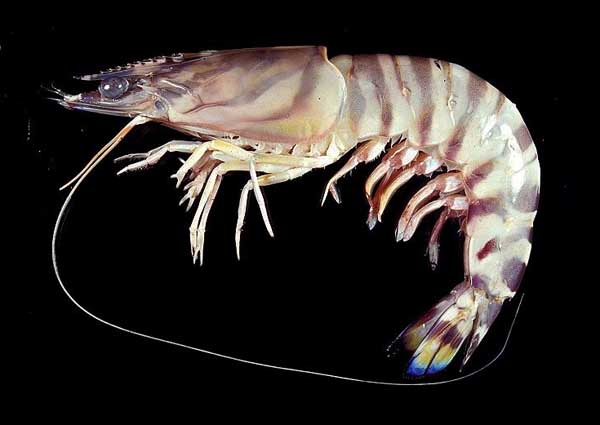
The black tiger shrimp (Penaeus monodon) is commonly known as ghost shrimp, grass shrimp, flower shrimp, bamboo joint shrimp, banded shrimp, and ox-shaped prawn, and is generally known by the Food and Agriculture Organization of the United Nations as the giant tiger prawn. The black tiger shrimp is euryhaline, able to tolerate high temperatures and low oxygen, but has weak adaptability to low temperatures. It has relatively strong disease resistance. It is large in size with a relatively thick shell, and its edible proportion is lower than that of the Chinese white shrimp (Penaeus chinensis), but its meat is delicious and nutritious. Its body shell is relatively firm and can withstand being handled by hand. It has strong endurance when exposed to air after being removed from water, and can be sold as live shrimp.
Shrimp Farm Conditions
1. Site selection: The shrimp farming site should be selected in a place with smooth tidal currents, no industrial sewage pollution, salinity of 8‰-30‰, pH 7.8-8.7, dissolved oxygen above 5 ml/L, undetectable hydrogen sulfide, concentrations of harmful substances such as copper, mercury, and zinc that comply with the nationally stipulated fishery standards, abundant bait organism resources, convenient transportation, normal power supply, flat terrain, sandy mud bottom, convenient construction, abundant sea and fresh water supply, and smooth flood drainage.
2. Shrimp pond construction: Shrimp farming ponds should be built in a rectangular shape, with a length-to-width ratio of 5:1-8:1. For tidal-range intensive earthen ponds, each pond area should preferably be 2-15 mu. Each shrimp pond should be equipped with drainage and irrigation sluice gates, with a gate width of 1.0-1.5 m. Each gate wall should have three gate grooves, with a gate board installed in the middle groove and gate nets installed in the inner and outer grooves. The gate bottom should be lower than the deepest part of the pond so that the pond water can be fully drained, which is beneficial for pond clearing and shrimp harvesting. The pond water depth should be maintained at 1.0-1.5 m. Ditches 5 m wide and 2 m deep may also be dug around and in the middle of the pond, so that when the summer water temperature exceeds 35°C, they can provide shelter for the black tiger shrimp.
Stocking Preparation
1. Pond clearing and disinfection
For newly dug shrimp ponds, water should be let in and soaked as early as possible, and disinfection should be carried out after the pH value in the pond stabilizes. For old shrimp ponds, after shrimp harvesting, the accumulated water in the pond should be drained completely, the gates should be closed and the pond should be sun-dried, and the sludge and weeds in the pond should be removed before disinfection. Currently, the main drugs used for disinfection include tea seed cake, quicklime, and others.
①Tea seed cake: The dosage is 15 g per ton of water. When using, first roast the tea seed cake dry, crush it into powder, soak it in fresh water for 1-2 days, and then evenly sprinkle it into the pond together with the residue and water, which can kill fish.
②Quicklime: The dosage is 0.5-1 kg per ton of water, evenly sprinkled into the pond, which can kill all organisms. Quicklime used in shrimp ponds with relatively low pH can not only poison harmful organisms but also adjust the pH value of the shrimp pond.
2. Cultivating basic
bait organisms: 2-3 days after pond disinfection, water can be let in and fertilizer applied to cultivate basic bait organisms. Generally, nitrogen fertilizer, phosphorus fertilizer, and organic fertilizer should be applied. Commonly used nitrogen fertilizers include urea, ammonium sulfate, and ammonium nitrate; phosphorus fertilizers include superphosphate and Thomas phosphate fertilizer; organic fertilizers include chicken manure and cow manure. The dosage ratio of nitrogen fertilizer to phosphorus fertilizer is 3:1 or 3:2, with 2-3 g of fertilizer applied per ton of water. Apply fertilizer once every 3-5 days in the early stage and once every 7-10 days in the later stage. A transparency of 25-30 cm is preferable. The water color during the shrimp fry and juvenile shrimp stages should be controlled on the principle of stability, and it is best to maintain yellow or light brown.
Shrimp Fry Stocking
1. Stocking time
After the basic bait organisms have reproduced, shrimp fry can be stocked for farming. The stocking time should depend on the weather. Stocking is not suitable during muggy weather or after heavy rain. On sunny and warm days, stocking at 8-10 a.m. or in the evening is more suitable.
2. Fry stocking operation
Before stocking the fry, the water temperature and salinity of the farming pond need to be measured to avoid death caused by too great a difference from the water temperature and salinity of the nursery pond. If the water temperature difference is relatively large, the bag containing the shrimp fry can be placed directly into the farming pond, and after the water temperature has equalized, the fry can be released. If the salinity difference is relatively large, pond water can be poured into the shrimp fry bag, then poured out after a moment, then poured in again, repeating several times until the shrimp fry can adapt to the salinity of the farming pond before release. To be safe, a small portion of shrimp fry can first be released to see whether they adapt to the water quality of the farming pond. Adapted shrimp fry quickly dive to the bottom of the pond, while unadapted shrimp fry swim around on the water surface. If the shrimp fry are found not to adapt, they must be acclimated before stocking to avoid losses.
3. Selection and purchase of shrimp fry
Whether shrimp farming succeeds depends first on stocking healthy and lively shrimp fry. Several methods for selecting and purchasing shrimp fry are introduced below. ①It is best to purchase shrimp fry from the same batch of hatching to avoid unevenness. ②Choose shrimp fry with intact limbs. ③Choose shrimp fry with clean bodies and no attached debris. ④Choose shrimp fry with antennae held together. ⑤Choose shrimp fry with relatively long abdominal appendages. ⑥Choose shrimp fry with a widely spread tail fan. ⑦Choose shrimp fry with strong vitality.
For the shrimp fry sampled and inspected above, it is advisable to take shrimp fry from the aeration hole area rather than from around the nursery pond, because healthy shrimp fry usually cling to the pond edges, while some weaker ones float around the aeration holes. Therefore, if the shrimp fry checked around the aeration holes are robust, then the vitality of the shrimp fry in that pond should be relatively good.
Feed Feeding
1. Feed types
The black tiger shrimp has omnivorous feeding habits but is slightly inclined toward plant-based food, so in the early stage allow it to feed on natural food such as diatoms, green algae, and various small animals or their carcasses, and feed some supplementary feed such as peanut bran, rice bran, and soybean cake. Later, as it grows and develops, gradually add some animal-based feed such as trash fish, small shrimp, or small shellfish. Peanut bran, soybean cake, and rice bran can be used directly as feed, and the leftovers can also serve as fertilizer for cultivating benthic algae, but a moderate amount is preferable to prevent the bottom substrate from becoming foul.
2. Daily feeding amount
For the feeding amount of shrimp, generally speaking, when feeding natural feed such as trash fish and small shrimp, for shrimp with an average body weight of 0.008-0.1 g, the daily feeding amount is about 80% of the total weight of the juvenile shrimp; for shrimp of 1-10 g, feed about 50%; for 10-30 g, feed 20%; for more than 30 g, feed about 10%. If artificial compound feed is fed, for juvenile shrimp with an average body weight of 0.2-2 g, feed about 10%; for black tiger shrimp with an average body weight of more than 30 g, feeding 4%-5% of body weight is sufficient. It is best to feed natural feed and compound feed alternately so as to achieve a nutritional complementary effect.
3. Feeding method
Feed is fed four times a day: once before dawn in the morning, once before noon, once at dusk in the afternoon, and once at 9-10 p.m. The feeding amount should be greater in the morning and at dusk, and may be appropriately reduced at noon and at night.
After shrimp fry are stocked, when to start feeding mainly depends on the natural feed in the shrimp pond. If natural feed is abundant, feeding may be temporarily withheld. If there are not many feed organisms in the water, feeding should begin after stocking; otherwise, feed will be lacking, and when shrimp are hungry they will kill each other and cause losses.
The use of artificial compound feed is advocated. If feeding trash fish, shrimp, or small shellfish, they must be fresh. When feeding peanut bran, cut it into small pieces and put them into the pond, and the shrimp will gather to feed. When using rice bran as feed, it should first be placed in a rice basket or a large iron tray, mixed with a small amount of pond water to moisten it, and only then fed, to prevent it from floating on the water surface or being scattered and lost by the wind. Trash fish should be cut into chunks or sliced with a slicing machine before feeding. Small shrimp can be fed directly. Small shellfish with relatively thin shells, when the shrimp are relatively large, can be put directly into the pond for the shrimp to feed on.
Water Quality Management
The quality of water is the key to the success or failure of shrimp farming. During the shrimp farming process, attention should always be paid to changes in water quality. Water quality can be observed using transparency as a standard. During the juvenile shrimp stage, transparency should be controlled at 25-35 cm; after the juvenile shrimp stage, it should be 35-45 cm. If the shrimp body reaches 8-10 cm and the transparency is less than 30 cm, black gill disease may appear within a week.
1. Frequent water exchange: The amount and timing of water exchange should be determined according to changes in water color, transparency, the cleanliness of the shrimp shell and gill parts, and the degree of contamination of the bottom substrate.
2. Adjust salinity: In places with abundant fresh water sources, in order to make the black tiger shrimp grow quickly and comfortably, salinity should be adjusted according to the different growth stages of the shrimp.
3. Improve water quality: Shrimp farms with the conditions may also use water quality improvers such as superphosphate, microbial preparations, and photosynthetic bacteria to improve water quality, so as to adsorb or decompose organic matter at the bottom of the pond and reduce the harm of toxic gases such as ammonia.