What is the origin of the crayfish? A guide to its origins and history
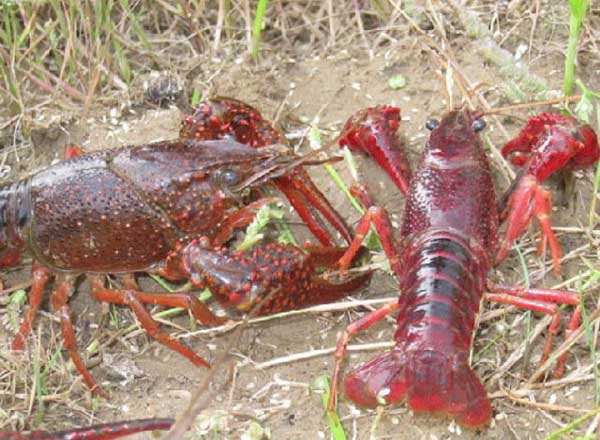
The crayfish is a world-class invasive species, native to Central and South America and northeastern Mexico. It was introduced to Japan in 1918 as bait for raising bullfrogs, and then spread from Japan to China. It has now become an important resource among China's freshwater shrimp species, widely distributed across the provinces and cities of the middle and lower reaches of the Yangtze River. In May 2013, rumors spread online that crayfish were introduced to China by the Japanese biochemical warfare units during the invasion of China specifically to dispose of corpses; this claim is purely a fabrication.
The crayfish is a lobster-like crustacean that lives in freshwater. Its scientific name is Procambarus clarkii, and it is also called the red swamp crayfish, freshwater crayfish, or fighting shrimp. The crayfish is the most widely distributed invasive crustacean species. Because of its omnivorous diet, fast growth rate, and strong adaptability, it gains an absolute competitive advantage in local ecosystems. Its diet includes aquatic plants, algae, aquatic insects, animal carcasses, and more; when food is scarce, it even cannibalizes its own kind.
During World War II, crayfish were introduced to China from Japan and began to reproduce in Nanjing, Jiangsu Province, and its surrounding counties. After a long period of expansion, the population continued to increase and its habitat continued to spread. Today, crayfish have spread to Anhui, Shanghai, Jiangsu, Hong Kong, China, Taiwan, China, and other places, forming a massive natural population and becoming an important resource among China's freshwater shrimp species.