Detailed Explanation of Key Technical Points and Management Methods for River Shrimp Farming
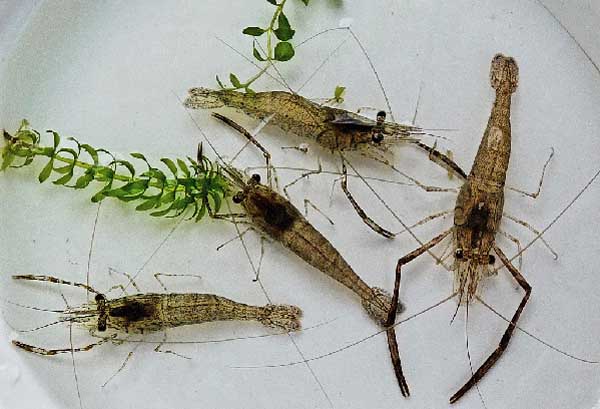
Wild-caught river shrimp (freshwater shrimp) can be artificially farmed. There are two farming methods: one is to directly catch small shrimp for grow-out; the other is to catch egg-bearing shrimp and place them in ponds so they spawn and hatch larvae naturally in the pond, which are then raised into small shrimp for farming. The key points for grow-out are described below:
Environmental Conditions for Farming
The water used for freshwater shrimp farming must meet fishery water quality standards and must be clean with sufficient oxygen. There should be no large predators in the farming pond. The pond depth should be 1.2—1.5 m, with little bottom mud and preferably a hard substrate. Freshwater shrimp are not good swimmers and are negatively phototactic, mostly hiding in dark gravel or aquatic plants during the day, meaning they are nocturnal and come out at night to feed. They spend most of their time resting on the bottom or on aquatic plants and other clinging surfaces, and prefer to inhabit slow-flowing shallow areas along the shore where aquatic plants grow densely. Therefore, farming freshwater shrimp requires a sufficient number of attachment surfaces; aquatic plants can be planted along the pond edges or netting sheets can be hung. However, under artificial farming conditions, freshwater shrimp can also feed during the day.
Freshwater Shrimp Have Omnivorous Feeding Habits
From the larval stage to the adult stage, they feed on zooplankton, algae, cladocerans, copepods, small aquatic insects, organic detritus, filamentous algae, attached algae, and invertebrates, but they prefer animal-based feed. Under artificial farming conditions, compound feed can be used; they are especially fond of animal-based feeds such as snail and mussel meat, earthworms, small trash fish, fly maggots, and silkworm pupae, so it is advisable to appropriately add some animal-based feed during the farming process.
Lifespan of Freshwater Shrimp
Based on observation and investigation, the lifespan is generally just over one year, with the longest being only a little over 2 years (male shrimp: 16—17 months; female shrimp: 26—27 months). Most people now believe that freshwater shrimp hatched in May—June die successively after completing reproduction in July and August of the following year. This is why many farmers who stock several dozen kilograms of egg-bearing shrimp in May cannot catch large shrimp by the end of the year, only small ones. Therefore, when stocking egg-bearing shrimp for farming, the large shrimp should be caught and sold promptly after spawning is complete.
Spawning of Freshwater Shrimp
There are two peaks. Late spring and early summer is one spawning peak, formed by spawning of older shrimp that have overwintered; the autumn breeding peak is formed by spawning of some of the first-generation juvenile shrimp of that year. Therefore, whether to carry out autumn breeding should be decided based on one's own farming conditions and environment. From the perspective of balanced market supply and improving yield and profitability, overall planning should be carried out, and the advantage of freshwater shrimp being able to overwinter naturally should be utilized.
Starting Farming from Larvae
Early water quality cultivation is key, requiring organic fertilizer to cultivate large amounts of zooplankton for larvae or juvenile shrimp to feed on, in order to improve the survival rate of rearing and farming. Once they reach the small shrimp stage, artificial feed or compound feed can be given. After 50—60 days of farming, hatched larvae generally reach a body length of 2.5—3 cm, and some female shrimp mature; by October—November, male shrimp can reach 4—5 cm. Therefore, during the farming process, timely arrangements should be made to catch and sell shrimp based on their growth. Selling large-sized shrimp is beneficial to the growth of small shrimp remaining in the pond.
Two-Stage Farming
To improve the growth rate and harvest size of freshwater shrimp farming, it is best to use two-stage farming, i.e., raising from larvae to 1—2 cm small shrimp stock, then raising the small shrimp to adult shrimp. If conditions permit, three-stage farming can be carried out, i.e., larvae —— small shrimp stock about 1—2 cm in body length —— large shrimp stock over 3 cm in body length —— adult shrimp. Staged farming can also improve the survival rate of farming.
Rational Stocking
For monoculture of freshwater shrimp, shrimp fry are usually stocked from mid-June to mid-July each year, at 60,000—80,000 per mu; if small shrimp are stocked, the number can be appropriately reduced. For polyculture of fish and shrimp, from mid-July to mid-August each year, 15,000 shrimp of about 2 cm are stocked per mu. If egg-bearing shrimp are stocked for farming, 25—30 jin of egg-bearing shrimp are stocked per mu. You may consider double-season pond (two-crop) farming in the second year. In addition, silver carp and bighead carp summer fingerlings or fingerlings should be stocked in the shrimp pond (by the mid-farming period, 1,000—1,500 larger current-year fingerlings can be stocked in the adult shrimp pond).
Harvesting
The main harvesting methods include ground cage nets, shrimp lift nets, and dip nets, or driving them to the pond edge where aquatic plants are present for capture. Generally, rotational harvesting should begin in September, catching large ones and leaving small ones; commercial shrimp reaching over 4.5 cm are caught and sold successively.